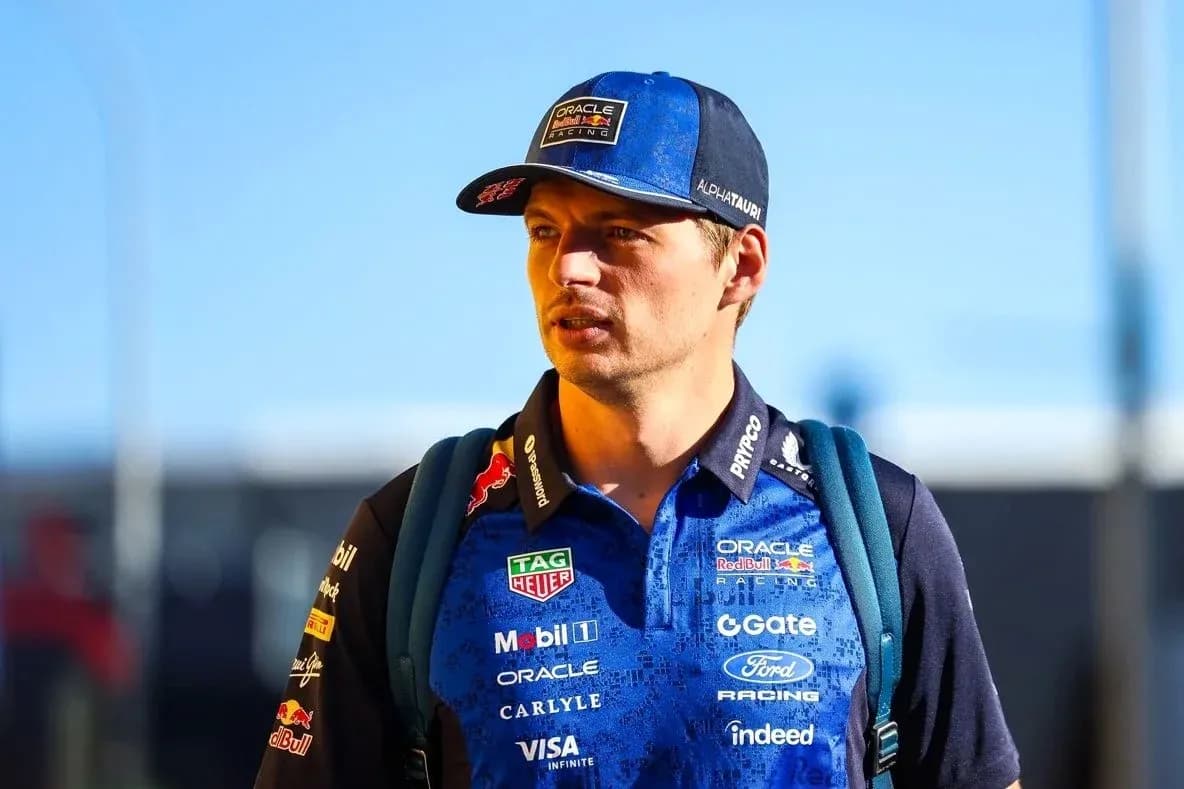
Steiner’s Stark Verdict on Verstappen: Winless in 2026
Guenther Steiner has never been one to sugar-coat. This time, his target is the driver who once made winning look routine.
The former Haas Formula 1 team principal believes Max Verstappen will go through the entire 2026 season without a single grand prix victory, arguing that Red Bull’s current package leaves him with no realistic shot at the top step of the podium.
Right now, the numbers back up the sense of struggle. Verstappen sits only sixth in the championship on 145 points, a hefty 147 behind runaway leader Kimi Antonelli. The three-time world champion has been reduced to damage limitation: second place in Austria, Hungary and Spain stands as the high-water mark of his year so far.
For a driver who built an era on domination, that is a brutal comedown.
‘He Will Not’: Steiner Doubles Down
Speaking on The Red Flags Podcast after the Spanish Grand Prix, Steiner was put on the spot in the show’s “Gas or Brake” segment: would Verstappen really go winless in 2026?
He didn’t hesitate.
“Gas, he will not,” Steiner said, backing the idea that Verstappen will fail to win a race. “Mercedes and McLaren are too strong, and it's just the car. He's not good enough. He will be Super Max, he will be on the podium, but I think that's the limit. That's the limit of that car.”
It was a striking assessment. Not just a critique of Red Bull’s machinery, but a blunt swipe at a driver widely regarded as the benchmark of this generation.
The implication is clear: in Steiner’s eyes, even Verstappen at full tilt cannot drag this Red Bull into a winning window against the current Mercedes and McLaren armada.
Madrid Exposes the Gap
The Spanish Grand Prix in Madrid underlined that reality in cold, hard laps.
Verstappen’s second place owed as much to circumstance as to speed. Polesitter Lando Norris lost control of the race when an ill-timed virtual safety car collided with a sluggish pit stop, handing Verstappen precious track position on a circuit where overtaking bordered on impossible.
Once in front, Verstappen did what he always does: he managed the pace, defended the line and refused to blink. But the stopwatch told a harsher story.
Speaking to Sky Sports after the race, Verstappen laid out the deficit.
“It's just looking at the lap times, we are quite a bit down still,” he said. “It's a mix of a lot of things, for sure maybe a little bit of deployment, but also the car itself that we still need to improve on, because when Lando was behind me he was flying. He was a lot faster, but just because of the nature of the track he couldn't get by.”
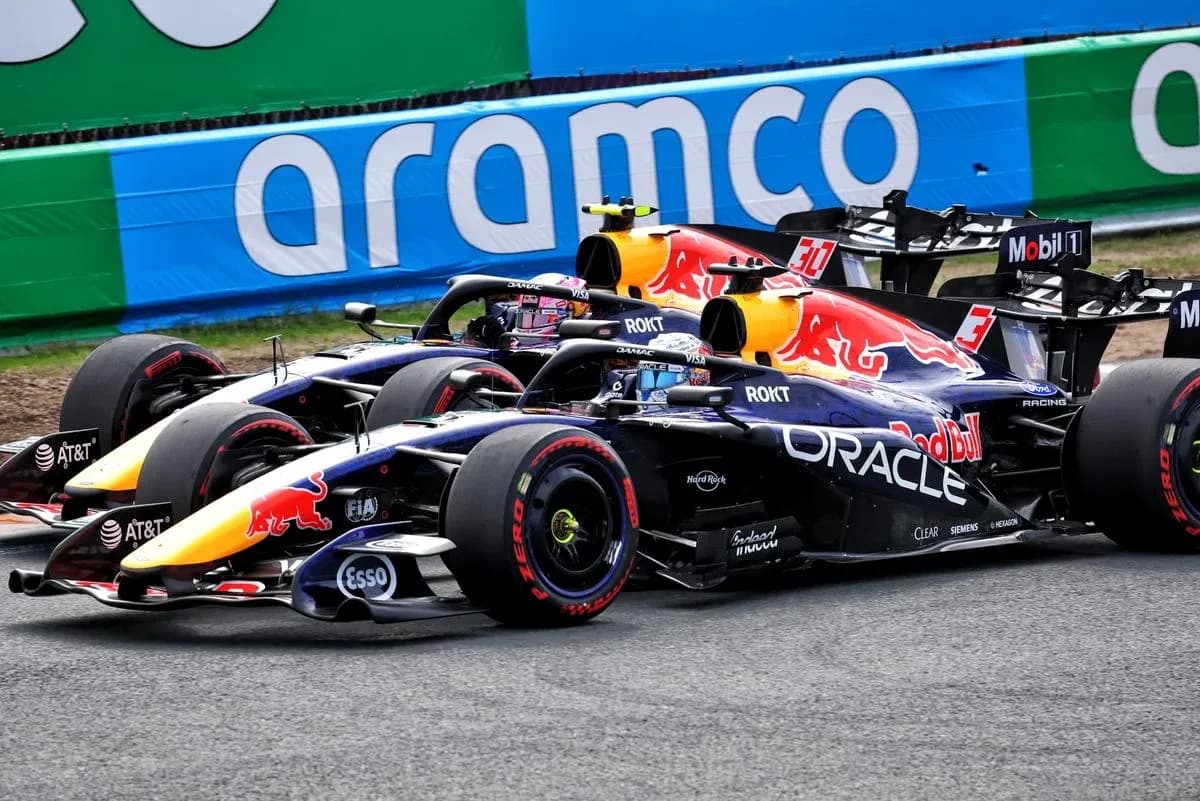
That’s the crux of Red Bull’s season. On tracks where track position is king and overtaking is suffocated, Verstappen can still turn a compromised package into podiums. On open, flowing circuits where raw pace wins out, the car simply cannot live with the orange and silver machines up the road.
A Champion Trapped by His Machinery
For years, Verstappen was the one exposing other teams’ weaknesses. Now, his own car is under the microscope.
Red Bull’s lack of deployment, the balance issues, the inability to match Mercedes and McLaren in sustained race pace — they’ve all combined to drag Verstappen out of the title picture and into a fight for scraps. Sixth in the standings, more than a full weekend’s points haul behind Antonelli, is not a blip. It’s a pattern.
Steiner’s claim that “Super Max” is capped at podiums cuts deep because it mirrors what the season has shown so far: Verstappen can still hustle, still intimidate, still execute. But the ceiling is lower. The margins that once tilted his way have gone elsewhere.
The question now is not whether Verstappen can conjure magic. It’s whether Red Bull can give him a car worthy of it.
The calendar rolls on to the 15th round of the 2026 season, the Azerbaijan Grand Prix in Baku on 24–26 September. A street circuit, long straights, chaos always lurking in the walls.
If Verstappen really is destined to go winless this year, Baku will test that prophecy to breaking point.