Alex Eala Makes History as No. 15 in WTA Rankings
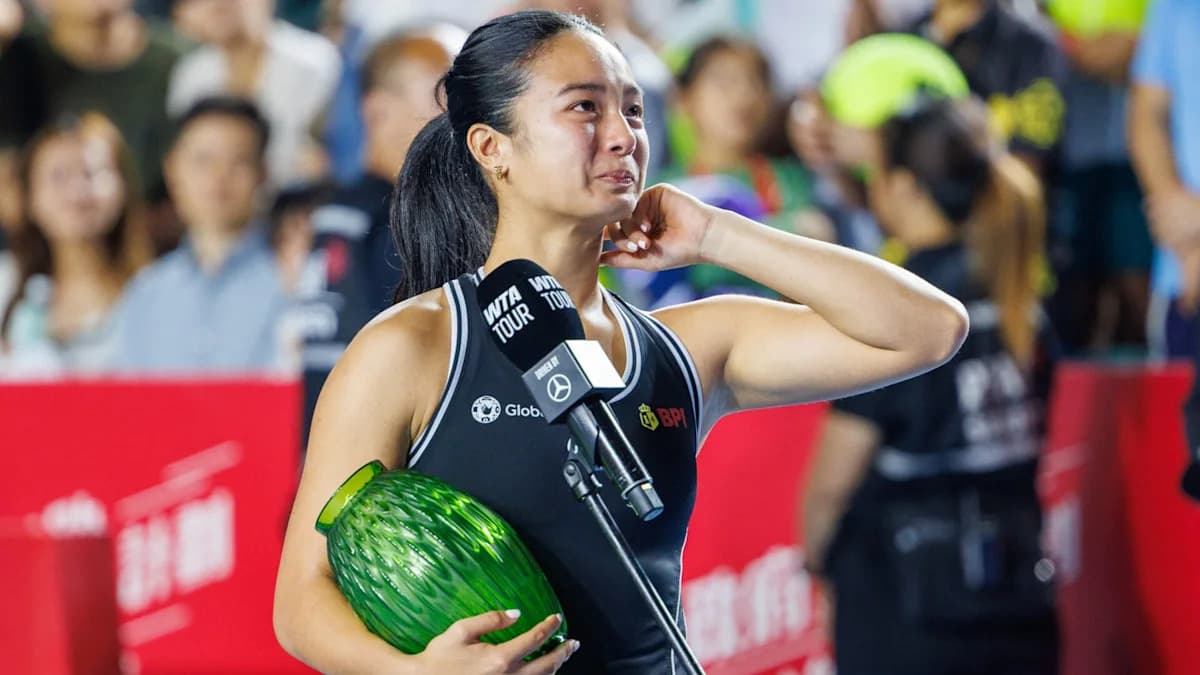
Alex Eala left Hong Kong without a trophy. She flew out with something heavier instead: history.
On Monday, November 9, the 21-year-old Filipina climbed to a career-best No. 15 in the WTA rankings, a personal milestone that landed barely 24 hours after a bruising loss to American Claire Liu in the Hong Kong Open final.
The timing felt cruel. The message did not.
A Final Lost, A Barrier Broken
Eala had walked into Sunday’s championship match chasing a second tour-level crown. She walked out on the wrong end of a 6-3, 6-0 scoreline, Liu ripping through the final nine games to seal her first WTA singles title and complete a flawless week without dropping a set.
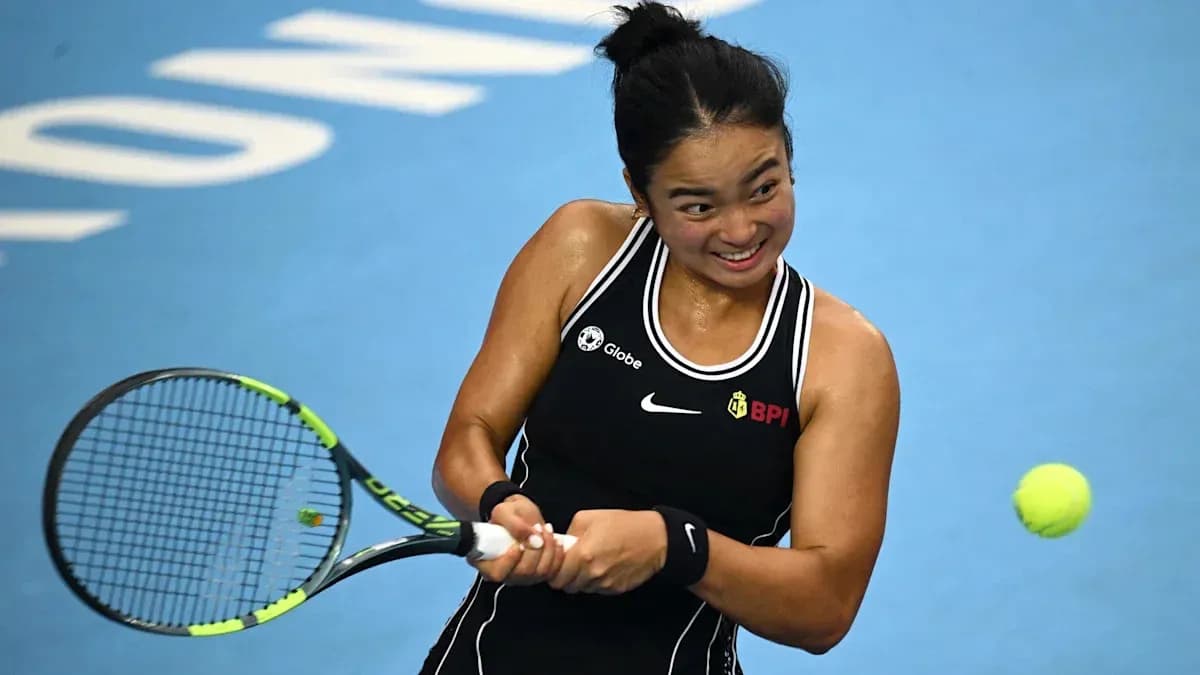
The match never allowed Eala to find her rhythm. She struggled with discomfort in her right knee, needing medical treatment during the opening set, and never truly escaped the physical drag. The scoreboard was harsh, the images stark: a rising star, taped and tested, overpowered in the final act of a long season.
Yet less than a day later, the rankings told a different story.
Eala jumped two spots from No. 17 to No. 15, sliding past Japan’s Naomi Osaka and Romania’s Sorana Cirstea. That small numerical climb carried a huge historical weight: she is now the highest-ranked Filipino and Southeast Asian player in WTA history.
For a country that has long watched tennis from the margins of the global stage, it was a line in the sand. For Eala, it was confirmation that her breakthrough season was not a fleeting run of form but the foundation of something far bigger.
Osaka, Cirstea, and a Tight Squeeze at the Top
The shuffle around Eala only underlined how tight the race has become.
Osaka, a four-time Grand Slam champion still rebuilding her ranking after time away from the tour, slipped to No. 17 with 2,315 points. Cirstea, who officially sits at No. 16, saw her own story come to a close in Hong Kong.
The 36-year-old Romanian arrived as the top seed and left having played the final tournament of a career that stretched nearly two decades. Qualifier Alexandra Shubladze ended her run in the quarterfinals, and with it, Cirstea’s time on tour. She departs with three WTA singles titles and multiple Grand Slam quarterfinal appearances, the résumé of a player who spent years in the game’s top tier without ever quite dominating the spotlight.
Eala’s surge nudged her past Cirstea on points, the gap a razor-thin six points. A tiny margin on paper, but a sharp reminder of how unforgiving the ranking race becomes as the season closes.
Australian Open Door Cracks Open
The new number next to Eala’s name brings more than bragging rights. It changes the shape of her immediate future.
At No. 15, she moves into the frame for a protected seeding at the 2027 Australian Open. Players seeded inside the top 16 are usually shielded from facing another top-16 opponent until the fourth round of a Grand Slam, a crucial layer of insulation for anyone trying to go deep at the majors.
Nothing is guaranteed. Rankings can shift before Melbourne, and Eala’s current position does not lock in her seeding. But it gives her something every player craves heading into a new season: leverage. A platform. A better draw, if the numbers hold.
For a player still finding her ceiling, that matters.
A Season That Changed Everything
The rise to No. 15 did not come out of nowhere. It was built, brick by brick, across a season that dragged Eala from promise to proof.
She captured her first WTA Tour singles title in Washington in August, becoming the first Filipino player to win a WTA singles crown. That alone would have marked 2026 as a landmark year. She kept going.
Seven wins over top-10 opponents announced her as more than a dangerous outsider. A bronze medal at the Asian Games gave her hardware on a continental stage. At Wimbledon, she pushed into the fourth round. At the US Open, she reached the third round, another step in her gradual march toward consistency at the Slams.
Hong Kong added one more final to the ledger, even if the last match ended in frustration.
By the time the season closed, she had a ranking that even she admitted exceeded her own expectations. “Dreams are only dreams until they’re not,” she told reporters after the final, a line that sounded less like a slogan and more like someone trying to process just how fast her world had shifted.
Rest, Then the Next Climb
The schedule has taken its toll. The knee issue in Hong Kong was a visible reminder of the grind she has endured across a year that never seemed to slow down.
Eala plans to step away briefly, spend time with her family, and reset before the 2027 campaign. When she returns, she will do so as the world No. 15, carrying not just a new ranking but heavier expectations and a growing sense that she belongs in the sport’s inner circle.
Hong Kong did not hand her another trophy. It handed her something subtler, but no less significant: proof that even on the days she falls short, the arc of her career is still bending upward.
The question now is not whether Alex Eala can compete with the best. It is how far, and how fast, she intends to climb.