Lando Norris Triumphs at São Paulo Grand Prix
Lando Norris danced where others tiptoed. On a soaked, snarpening Interlagos, with rivers cutting across the racing line and strategy calls turning into traps, the McLaren driver turned chaos into control to win a wild São Paulo Grand Prix that also crowned Mercedes constructors’ champions and gave Max Verstappen yet another afternoon to file under “unforgettable”.
This was a race that never settled. The weather swung, the order flipped, and reputations were either reinforced or dragged under the spray.
Norris back on the top step
In Britain, The Times framed it as a statement. Norris, they argued, did more than just win in Brazil; he reminded the paddock that his ceiling still reads “world champion”.
He did not have it all his own way. Norris lost ground at the start, then went to work as the conditions turned spiteful. Where others misjudged grip or overreached on tyre calls, he pieced the race together with the sort of precision that separates the very good from the title-worthy.
By the flag he was gone, 14 seconds clear of Verstappen. It was his third win of the season, but the manner of it mattered as much as the margin. With Kimi Antonelli already confirmed as 2026 world champion, The Times saw Norris’ Brazilian masterclass as a shot fired at 2027: give him a car, and he is still a man who can carry a title fight.
Verstappen’s charge from nowhere
In the Netherlands, De Telegraaf barely blinked at the winner. Their eyes were locked on the car that started 21st and finished second.
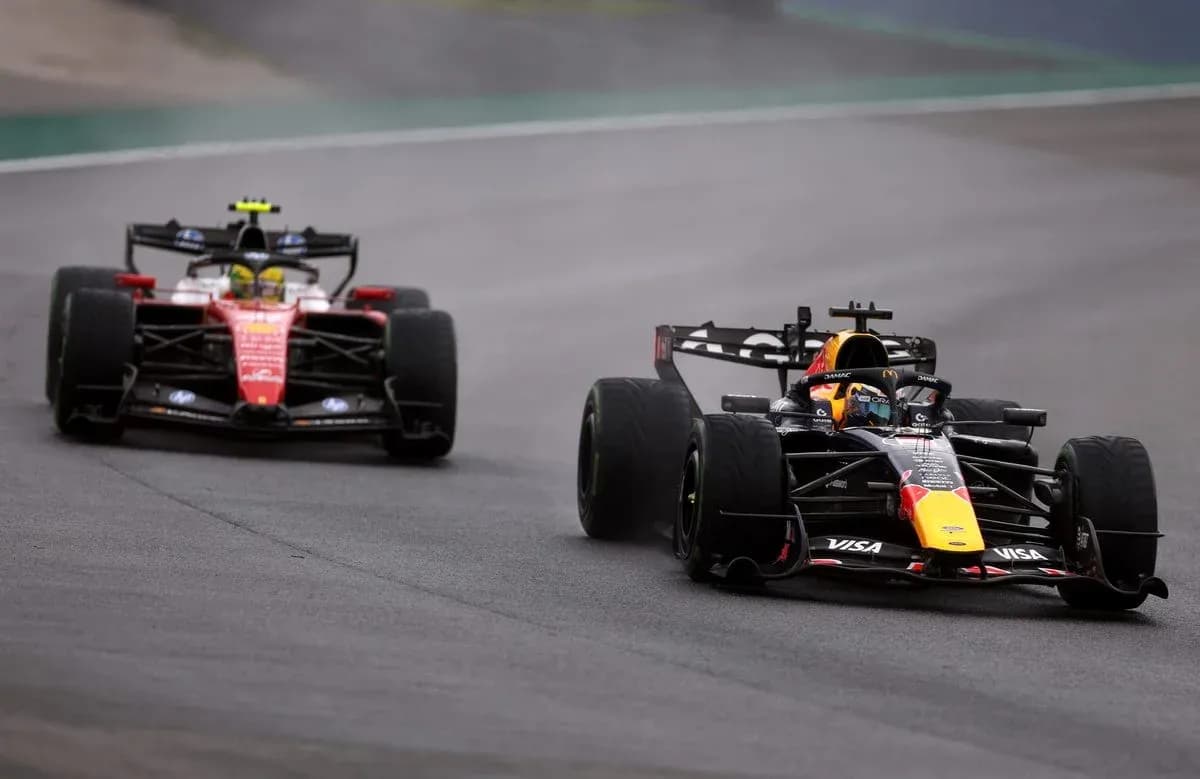
Verstappen’s Sunday was exactly the kind of performance that has defined his era. Starting near the back after a miserable qualifying, he carved through the spray with that familiar ruthlessness. Eight places in five laps in the wet. Then more, as the race ebbed and flowed and the track swung between drenched and merely treacherous.
Red Bull had struggled on Saturday; on Sunday, Verstappen made that look like a footnote. He ended the day not just in second place, but comfortably clear of his team-mate Isack Hadjar, who himself had driven a superb race.
De Telegraaf also lingered on what happened after the chequered flag. They highlighted his conduct off-track as another window into his character on a day they framed as one of his strongest showings of the season: a champion’s response to adversity, in and out of the cockpit.
Ferrari’s civil war simmers
While Norris and Verstappen dominated the headlines, Italy was fixated on something more intimate: the slow-burn power struggle inside Ferrari.
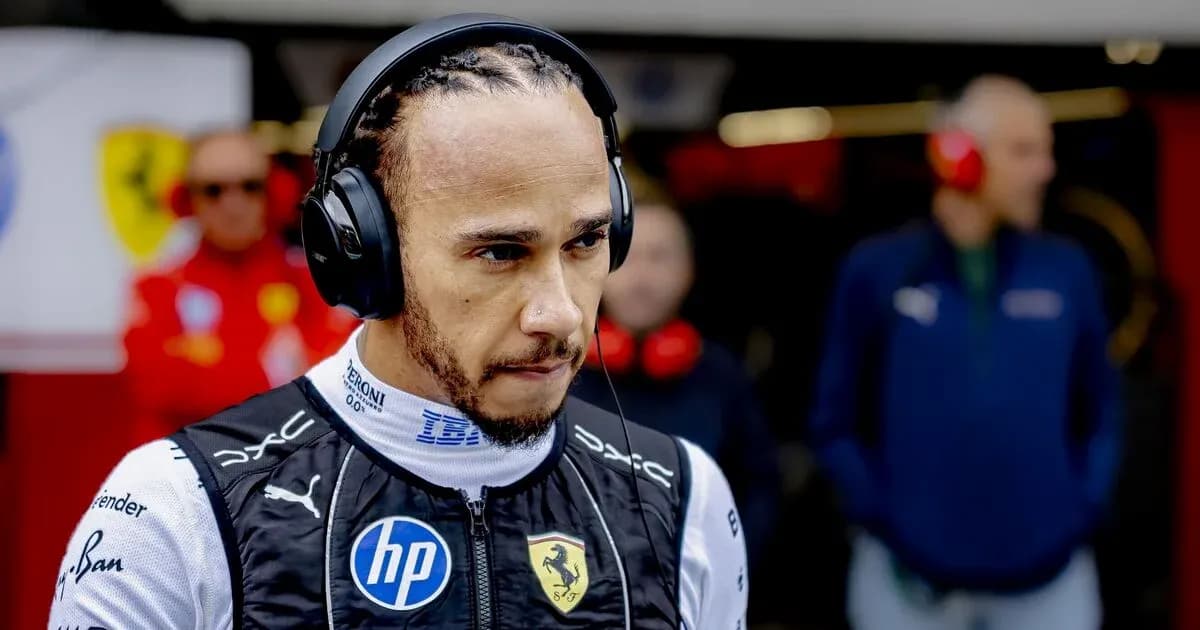
Gazzetta dello Sport drilled into the Hamilton–Leclerc dynamic, a duel that grows more pointed with every race as the 2026 season winds down. The question hangs over Maranello: who leads this team into 2027?
São Paulo added more fuel. Charles Leclerc crossed the line eighth, his day soured by a penalty after a late scrap with Liam Lawson. Lewis Hamilton, starting 20th on the grid on his 400th Formula 1 start, battled back to ninth.
On paper, it was a modest haul. In reality, Gazzetta painted it as another revealing chapter in a rivalry that will help define Ferrari’s trajectory. Two elite drivers, two contrasting routes through the same race, and a team still searching for the figurehead to drag it into a genuine title fight.
Hadjar steps into the spotlight
France had a different hero. L’Équipe turned its attention to Isack Hadjar, whose third place was about far more than a trophy.
Running second in the middle phase of the race, Hadjar looked entirely at ease in conditions that routinely expose the inexperienced. He kept his head as the track flipped between wet and dry, switched tyres with maturity, and refused to be drawn into the kind of wild risk-taking that often ruins afternoons like this.
He finished behind Norris and Verstappen, but L’Équipe framed the drive as something more permanent: confirmation of a new status within Red Bull. Intelligent, calm, and quick when it counted, Hadjar’s second podium of the season was cast as another step from promising youngster to established front-runner.
Lawson delivers, questions grow
In New Zealand, the focus was far more uneasy. The NZ Herald zeroed in on Liam Lawson and the possibility that, even after performances like this, he could be dropped by the Red Bull system for 2027.
Lawson’s race in Brazil was the kind that impresses team principals and angers fanbases when contracts go the wrong way. He surged to second in the early laps, showing sharp judgement in the spray, and eventually came home seventh. Six more points, in a car that rarely has days this good without a driver extracting something extra.
The NZ Herald called out the potential “hypocrisy” of Racing Bulls turning their back on that kind of consistency. If results in difficult conditions truly matter to the Red Bull hierarchy, they argued, how could Lawson’s body of work be ignored without raising serious questions about the logic behind their driver decisions?
Mercedes seal the silverware
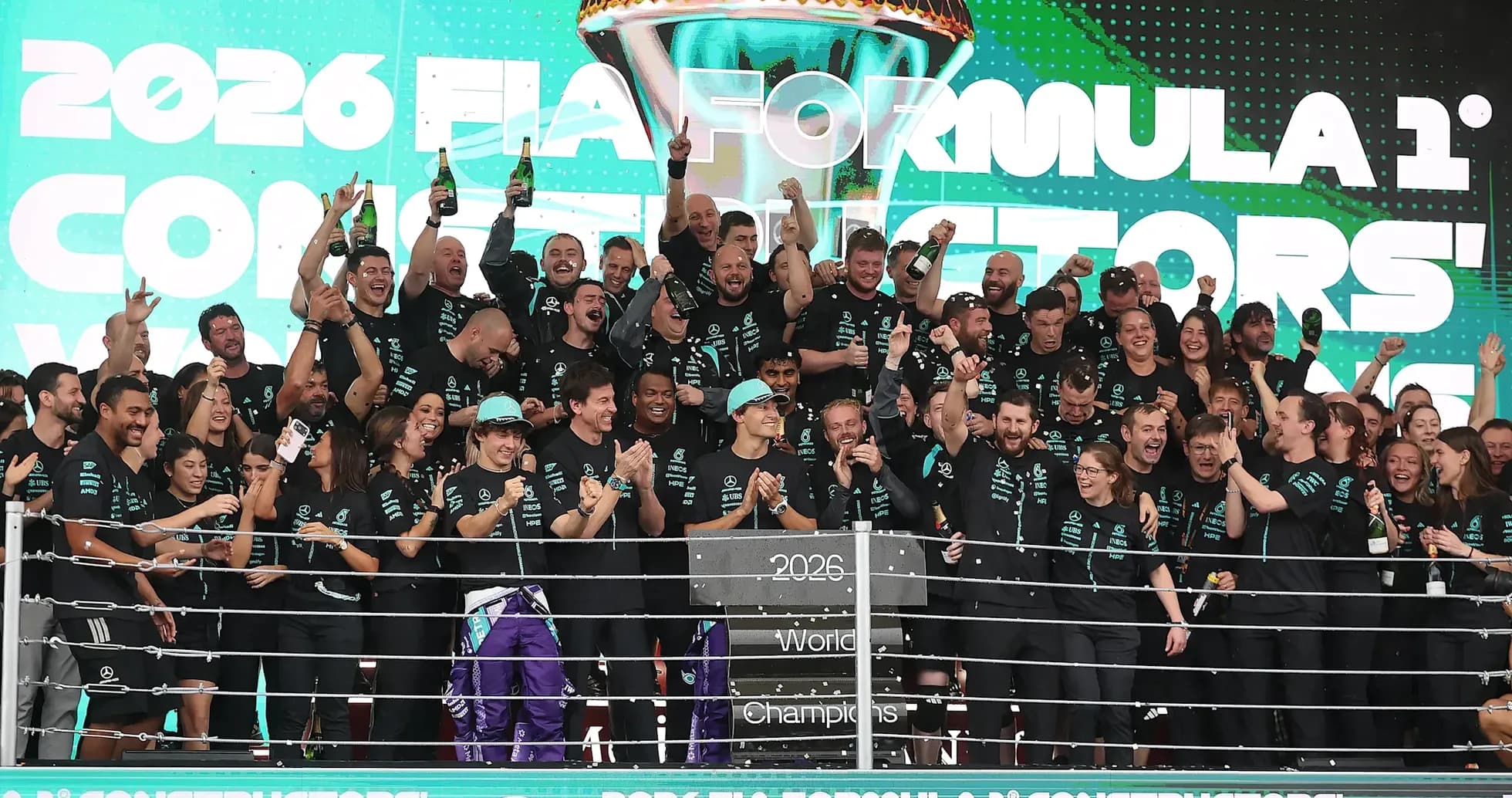
Back in Australia, the Herald Sun zoomed out to the bigger picture. Norris’ win was the headline, but the sub-plot was enormous: Mercedes wrapped up a ninth constructors’ championship.
While McLaren and Red Bull traded blows at the front, George Russell and Antonelli quietly did the job that titles demand. Fourth and fifth for the Silver Arrows locked in an unassailable lead in the standings, completing a championship double after Antonelli’s drivers’ crown was secured in Mexico.
The Herald Sun underlined the symmetry of it all. Norris’ victory underscored McLaren’s resurgence and hinted at a more crowded fight at the front in 2027. Yet on the day Mercedes clinched another constructors’ title, the sense was clear: the established powers are not stepping aside without a fight.
From the drenched banks of Interlagos to the opinion pages in London, Amsterdam, Milan, Paris, Auckland and Melbourne, the verdict on São Paulo was unanimous: this was no ordinary round 20. Norris reminded everyone what he can be, Verstappen turned a nightmare Saturday into a Sunday showcase, young talents like Hadjar and Lawson sharpened their cases, and Ferrari’s internal battle tightened another notch.
If Brazil is a glimpse of the next F1 era, the question is no longer whether the grid has enough star power. It is who dares to seize it first when 2027 comes roaring into view.