Premier League Drama: Madueke Shines and Moyes Unleashes Strikers
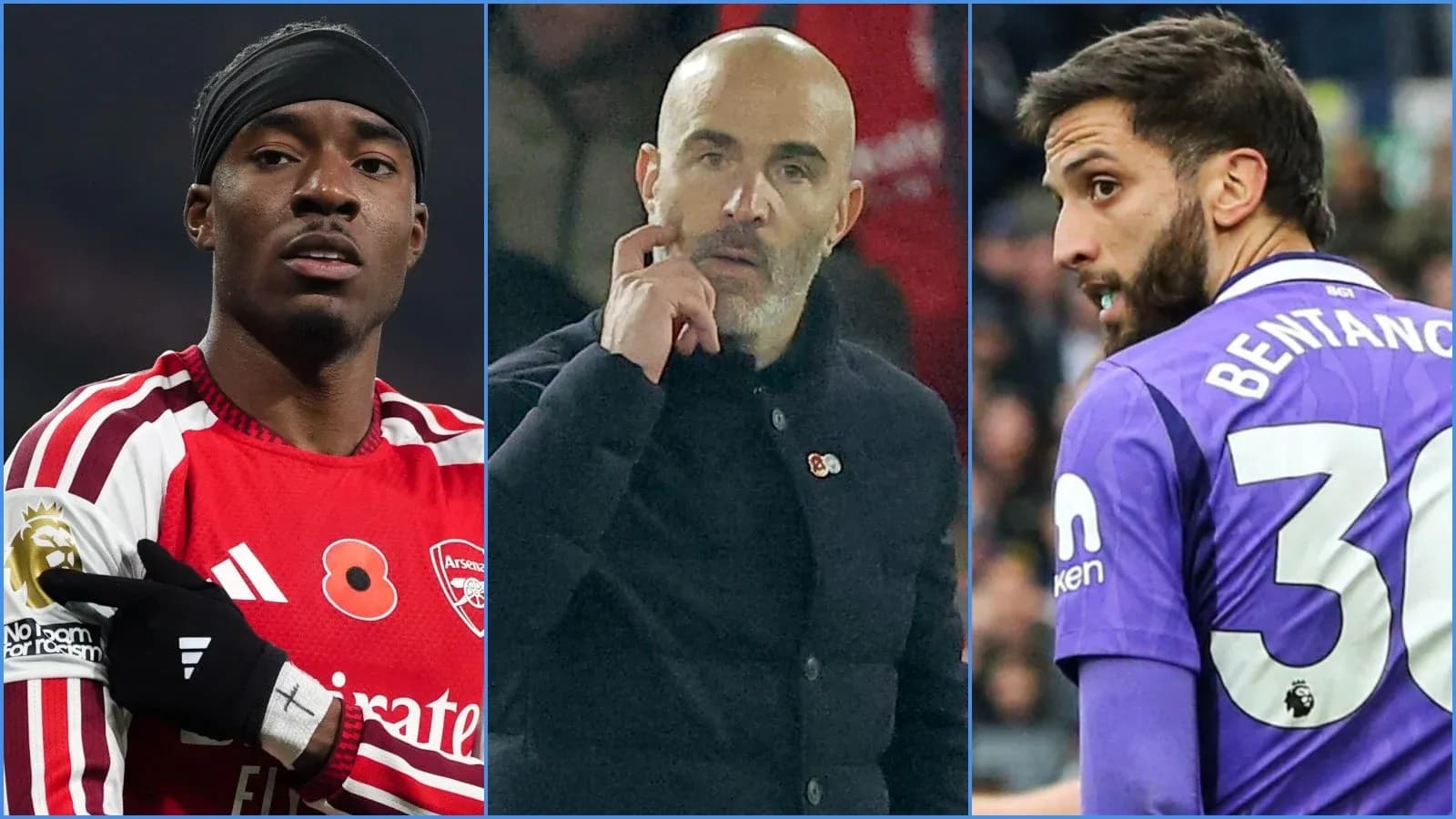
The Premier League table has barely caught its breath and already the fault lines of the season are showing. Noni Madueke is tearing through defences and training sessions alike, David Moyes has unearthed yet another centre-forward who looks born to live off scraps and chaos, and Rodrigo Muniz has reminded everyone that behind every goal is a human being with a story that matters more than any xG chart.
At the other end, Unai Emery still cannot win at Old Trafford, Manchester United are flirting with the relegation zone in November, and Spurs have somehow contrived to look worse whenever Rodrigo Bentancur steps on the pitch. The international break hasn’t dulled the drama; it has only sharpened the edges.
Brighton, Forest and the quiet march of the contenders
Nottingham Forest first. They look like a team who have read the script and decided to skip the exposition. On this evidence, they are on their way to the title, moving with the conviction of a side that already knows how the final chapter ends.
Brighton, though, are operating with a cold, ruthless clarity. Their last 10 Premier League wins have all been to nil, built on 25 unanswered goals. Once Brighton score first, the contest feels over. It’s not a trend; it’s a warning.
Field Pascal Gross and the control is automatic. Give Diego Gomez room outside the box and he will shoot from almost anywhere. Keep everything in front of Luka Vuskovic and he’ll dominate without ever needing to sprint, unless he’s suddenly arriving in the opposition penalty area. The second-best team in the country, by any reasonable reading, simply suffocates you. They score first, then OOP you into oblivion.
Liverpool sit in a strange split reality: 18th in the home form table, top of the away version and the only unbeaten side on the road. The suspicion that Anfield’s aura has turned into a weight rather than a weapon grows with every away masterclass and every flat home afternoon.
Bournemouth, meanwhile, are the quiet architects of their own evolution. In this calendar year alone they have set a club record for their longest unbeaten run and matched their best-ever sequence of consecutive wins. Two managers, same momentum. Their recruitment and succession planning look smarter with each passing month, helped by Evanilson’s talent for forcing opposition errors. They have scored at least twice as many goals from opponents’ mistakes as any other side. The only regret is timing: they met Manchester City before Marco Rose fully joined the dots, and won’t see them again until April.
Ipswich, by contrast, are living on a knife-edge. Twenty-nine Premier League games without a clean sheet. The last side they shut out in the top flight had Christopher Nkunku up front and Joao Felix buzzing around him. That feels like another era.
Madueke: from training ground standout to title-shaping force
Noni Madueke has turned an international break snub into a personal crusade. When the long reads are eventually written on what already looks like one of the most signposted title defences in recent memory, this burst of form will demand its own chapter.
Mikel Arteta called him “the best player in training in the last 10 days” and said he had “no option” but to start him once the club season resumed in October. By the time November’s pause arrived, with England again overlooking him, the manager was talking about “a different Noni”.
The numbers back it up. Across a brutal run of nine games in 28 days, no one has been as influential for the champions. In the league alone he has directly delivered four extra points: the only goal against Nottingham Forest, then the shot that forced the decisive breakthrough against Hull.
Against the Tigers he was everywhere. No player took more shots (four) or won more duels (eight). He had at least five more touches in the opposition box than anyone else on the pitch. He completed six dribbles – as many as everyone else combined.
Across the division, no player is creating more chances per 90 minutes. The sample size is only a month, but the profile is clear: this is the elite, decisive, game-breaking wide forward Arsenal spent the summer searching for and never signed. And still, he leaves chances on the table, overcomplicating a late opening born from a superb team move. The ceiling is higher yet.
His response to the last England omission was to take himself to Portugal, working alone until he turned “undesirable” into “undeniable”. Now he has another fortnight to stew, train and sharpen. Pity the full-back who stands in his way when he comes back fuelled by that same relentless, Tuchel-tinged fury.
Moyes and the eternal centre-forward
Say what you like about David Moyes – and most people have for the best part of 25 years – but the man can spot, shape and unleash a Premier League centre-forward.
Thierno Barry is simply the latest in a long line of strikers who look bafflingly effective under Moyes. At West Ham the Marko Arnautovic-Michail Antonio-Jarrod Bowen evolution will take some beating, but the pattern runs deeper. Nikica Jelavic and Beto both hit 16 league goals for him, often while looking like they were still figuring out which part of the ball to kick.
Barry is now two shy of that mark in the Moyes Premier League scoring charts. His brace against Coventry nudged him past James Beattie and into the orbit of Jermain Defoe and Duncan Ferguson, both sitting on 15.
Moyes almost certainly believes Everton would have won the title in his first spell if he’d had Barry up front. The remarkable thing? He probably isn’t wrong.
Muniz and a goal that meant far more
Rodrigo Muniz’s first Premier League goal since the opening day of last season came wrapped in something far more profound than a simple return to form.
“Last season was really difficult for me because, now I can say it, but I had the surgery,” he said after the draw with Newcastle. “My wife was pregnant last season and, unfortunately, we lost the baby, but God is good all the time and now she’s pregnant again. The goal was for my baby, and I hope this season will be different than last season.”
In a sport that can devour players as quickly as it celebrates them, it was a raw, human reminder of what sits behind a stat line. The hope is simple: that Manchester United, always hovering around a story like this, don’t find a way to sour it.
Ahoka and the art of finding what others miss
Jules Ahoka arrived at Sunderland in August for £8.6m with barely a footprint in the senior game: two professional matches, 98 minutes in total, 90 of those at centre-half.
Since then he has started five games, scored in the Europa League and now, effectively, made his full Premier League debut. Thrown on in the fourth minute for the club captain against a Chelsea side boasting a £173m midfield, he didn’t just cope. He took over.
Ahoka finished as man of the match, registering the most defensive interventions of any player on the pitch – 14 combined tackles, interceptions, recoveries, clearances and headed clearances – as Sunderland kept a clean sheet and banked a vital win for their manager.
The environment at Sunderland is far from ideal for nurturing such a precocious talent. Yet while Manchester United have poured money into a mismanaged midfield overhaul, other clubs are quietly making the identification of hidden gems look almost routine.
Liverpool on the road, Bournemouth’s brains and a keeper’s code
Liverpool’s split personality continues. At home they look strangely mortal; away from Anfield they are ruthless, organised and unbeaten. Eighteenth in the home table, first in the away. The old fear that the mythology of Anfield has become a psychological burden rather than a springboard is getting harder to dismiss.
Bournemouth’s year tells a different story: structure and strategy paying off. Records for unbeaten runs and consecutive wins have fallen under two different coaches, a testament to how well the club has prepared for change. Evanilson’s habit of coaxing errors from opponents has helped, with Bournemouth punishing mistakes more than anyone else in the division.
Then there is Senne Lammens, who produced the kind of moment that makes goalkeepers wince in sympathy. This was not one for the Goalkeeper’s Union scrapbook.
Palace, Emery and the Old Trafford curse
Crystal Palace are stuck in their usual holding pattern, publicly insisting they are not about to turn to Roy Hodgson while privately inching towards the inevitable. The charade has become part of their seasonal cycle.
Unai Emery, meanwhile, walks away from Old Trafford as both winner and loser. Winner, because Manchester United are now far less likely to come calling and drag him into their vortex. Loser, because the numbers are brutal.
Ten trips to Old Trafford with four different teams against five different managers. Nine times he has led: 0-1 on four occasions, 1-2 twice, 0-2 twice, 2-4 once. Not a single win to show for it. The hoodoo remains.
City’s hangover and United’s broken clock
Manchester City’s away days have started to feel like a fancy-dress party that’s gone on too long. The inflatable bananas, the 80-mile trips, the sense of occasion – it all loses its shine when the new-manager bounce evaporates and the siege mentality fades, leaving a club in transition on the pitch and in stasis off it.
They look like strangers at times, which tracks with a squad reshaped under a new coach. But there is a difference between teething problems and the feeling of drift. And it is far less enjoyable to play poorly with the stain of systemic cheating on your record than it is to simply keep winning.
Across town, Manchester United spent two minutes and 46 seconds bottom of the Premier League table. In November. In their tenth game. Fergie Time, once a finely tuned weapon, now behaves like a broken clock, randomly flickering into life to turn defeats into a comeback win and a scarcely believable 4-4 draw.
Yet this will still go down as their longest spell in the top-flight relegation zone since at least October 1986, when it became obvious Ron Atkinson could not carry on. That stage has long since been reached with Michael Carrick, but the club clings to the illusion that a few more wild, stoppage-time rescues might signal a corner turned in a maze that has swallowed far better managers for a decade.
Fun, of a sort.
Bentancur’s curse and Leeds’ reluctant enforcer
Rodrigo Bentancur’s season has become a case study in how everything can go wrong for one player while the manager’s faith remains unshaken. Roberto De Zerbi’s fingerprints are all over the broader failure, but Bentancur’s numbers are stark.
Spurs have scored precisely zero goals with him on the pitch in the league this season. They have conceded eight. The details are almost comical.
He started against Aston Villa, trudging off in the 84th minute at 3-0 down. Spurs promptly scored twice. He was sent off at 1-0 down to Manchester United and accidentally lit the fuse for a comeback. He then missed three games through suspension; Spurs won all three, conceding just once. He returned with a lively substitute cameo against Leeds, only to end up setting up the winning goal for the opposition.
Curse, coincidence, or something in between, the pattern is clear: Spurs are consistently worse with Bentancur involved.
Leeds, for their part, delivered a superb, fully deserved, brutally hard-fought win over Spurs. Yet ask any long-suffering Leeds fan and they will tell you the joy is tempered by the weekly ordeal of watching Tarik Muharemovic.
On the surface he looks all wrong for this league: awkward, seemingly ill-suited to the physicality, the subject of every terrace grumble. The punchline? He leads the entire division in clearances and headed clearances, both by some distance. Leeds will roll their eyes, complain, and keep picking him. Someone has to.
Brentford’s red mist, Hull’s defiance and Newcastle’s missing goals
Brentford have picked a bad time to lose their heads. Two red cards for violent conduct in three games is more than a blip. There is more understanding for Igor Thiago than there was for Yehor Yarmoliuk, but both incidents screamed of a naivety Brentford should have outgrown by now.
They have not seen this many reds since their first Premier League season. If they fail to absorb the lesson, that total will rise – and so will the cost.
Hull, back in the big time, are discovering a different kind of pain. The last time they were in the Premier League, only four of their 22 defeats were by a single goal. This time around, all three losses have been 1-0 or 2-1. The winless run is up to nine games, but the margins speak of organisation, energy and resilience. They refuse to accept the hammerings many predicted in pre-season.
Next up after the break? Brighton. Of course.
Newcastle’s problem is not a lack of goals in absolute terms – this squad has 255 Premier League strikes between them – but where those goals actually live. Only two current players have ever reached double figures in a single top-flight season: Harvey Barnes for relegated Leicester in 2022/23, and Yoane Wissa across two campaigns at Brentford that have already cost Newcastle dearly in the market.
Joelinton, third on their internal all-time list with 24 league goals, has spread them across six seasons. Jacob Murphy, the hero against Fulham, has 23 in his ninth. Fifth is Fabian Schar, which tells its own story.
In Newcastle’s last 36 Premier League matches, only Will Osula (seven) has outscored Anthony Gordon and Bruno Guimaraes (six each). Neither is a natural finisher. A huge chunk of goals walked out in the summer, and despite spending well over £250m, Newcastle never truly replaced them.
Colwill, Chelsea’s illusions and a long defensive memory
Levi Colwill has joined a long queue of defenders destined to sit on a podcast in 20 years, voice cracking as he explains to an AI-generated Jake Humphrey that Brian Brobbey was the toughest opponent he ever faced.
Colwill’s reputation grew last season while he was unavailable, the gap filled by injury, absence and Enzo Maresca’s public frustration. Performances like his latest outing do not kill off talk of Barcelona interest – these links have their own momentum – but they do underline a truth Chelsea keep trying to ignore.
The table will move again after the international break. Madueke will come back sharper, Moyes will keep feeding his strikers, and someone, somewhere, will pay for the quiet work being done in Sunderland and Bournemouth. The only real question is which of the Premier League’s supposed heavyweights can finally stop lurching between crisis and escape act long enough to look like contenders again.