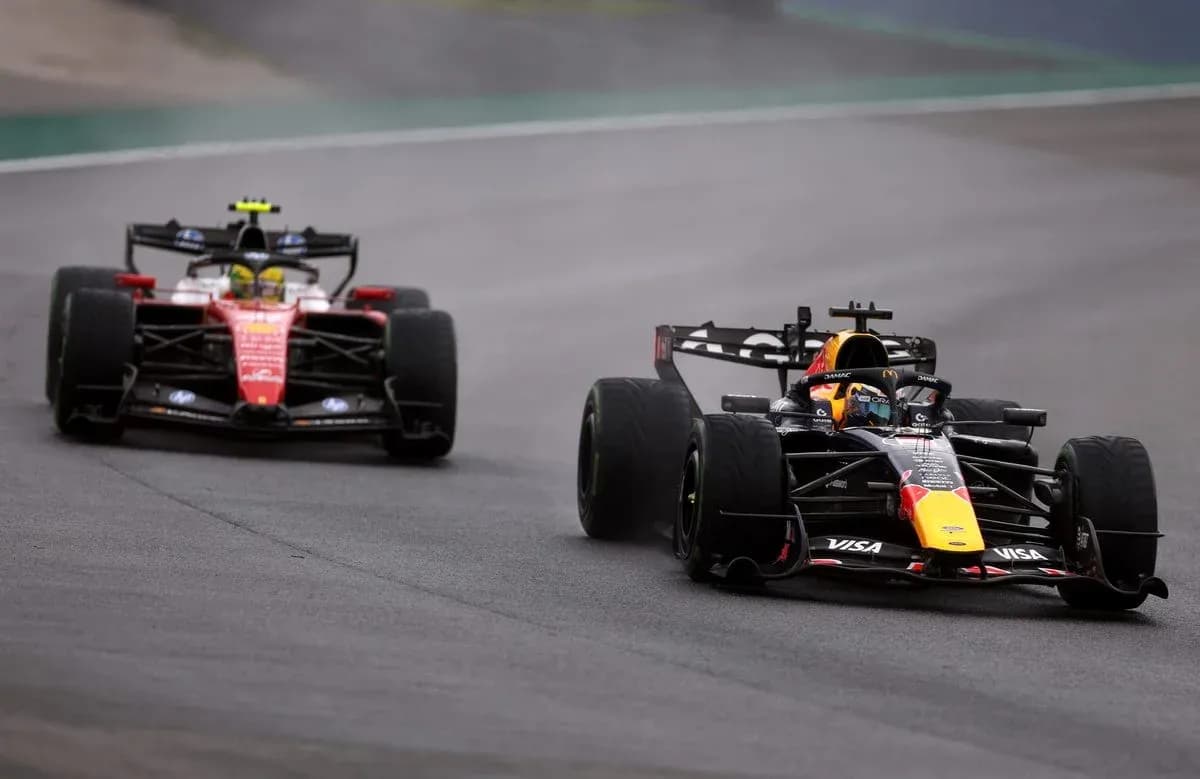
Interlagos Chaos: Verstappen's Recovery and Mercedes' Stumbles
Was this the best race of the 2026 Formula 1 season? If it wasn’t, it was certainly the most revealing.
Interlagos did what Interlagos always threatens to do: rip up the script, expose weaknesses, and hand out reality checks to champions, rookies and title contenders alike. From Max Verstappen’s storming recovery drive to Mercedes’ strangely fraught coronation, from Rafael Camara’s bruising debut to Alpine’s wet-weather implosion, Brazil turned the paddock into a debrief room.
Verstappen flies – and still thinks he left a win on the table
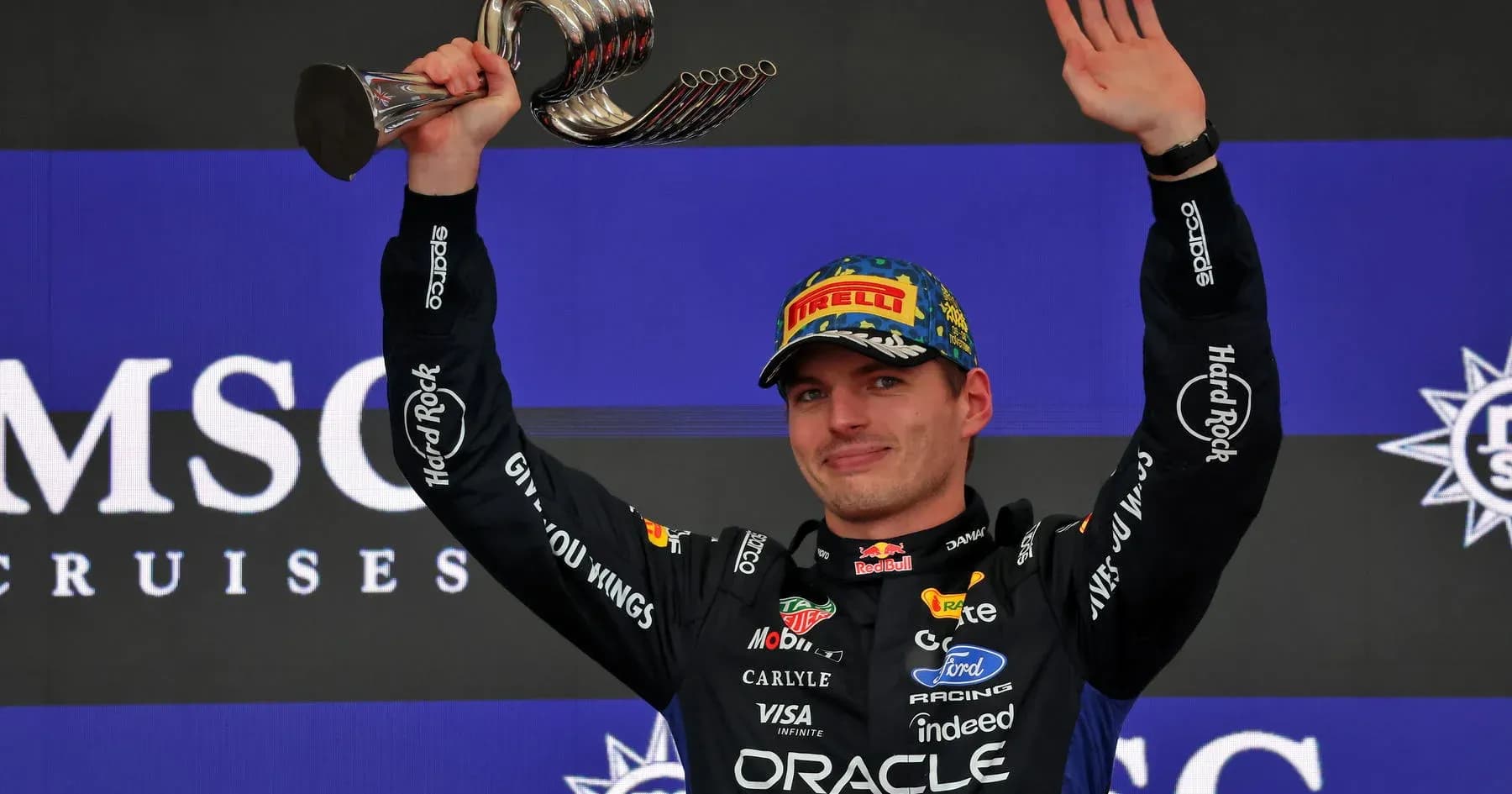
Max Verstappen started 21st and finished second. That alone sounds outrageous. The detail underneath makes it more so.
The Red Bull driver was adamant something went wrong with his car mid-race. He didn’t know exactly what, but he knew how it felt. When he switched from intermediates to slicks, the RB’s balance flipped: extreme high-speed oversteer, a clear loss of aerodynamic grip in his eyes. When the rain returned and he bolted inters back on for the final stint, the car suddenly came alive again. Night and day, as he put it. Same car, different beast.
And still he carved his way through the field, slicing from the back to second, just 14.6 seconds behind race winner Lando Norris.
Could he have beaten Norris? That lives firmly in the land of hypotheticals. What’s less speculative is the evidence from the other side of the Red Bull garage. Isack Hadjar, in the sister car, was seriously quick – not just in bursts, but over long phases of the race. On 22 of the 38 laps where their performances can be directly compared, on the same tyre and strategy, Hadjar was faster.
This was arguably Hadjar’s most complete F1 drive yet, capped by another podium and the sort of pace that had team principal Laurent Mekies openly calling it his best race for Red Bull so far. It didn’t flatter Verstappen. It made the Dutchman’s complaints about a wounded car sound plausible.
Red Bull will go hunting for answers in the data. Verstappen is expected to have the edge over a still-developing team-mate. If the numbers back up his feeling of aero loss, the uncomfortable question follows: did a technical glitch cost him a win from the very back?
Mercedes crowned, but the coronation stumbles
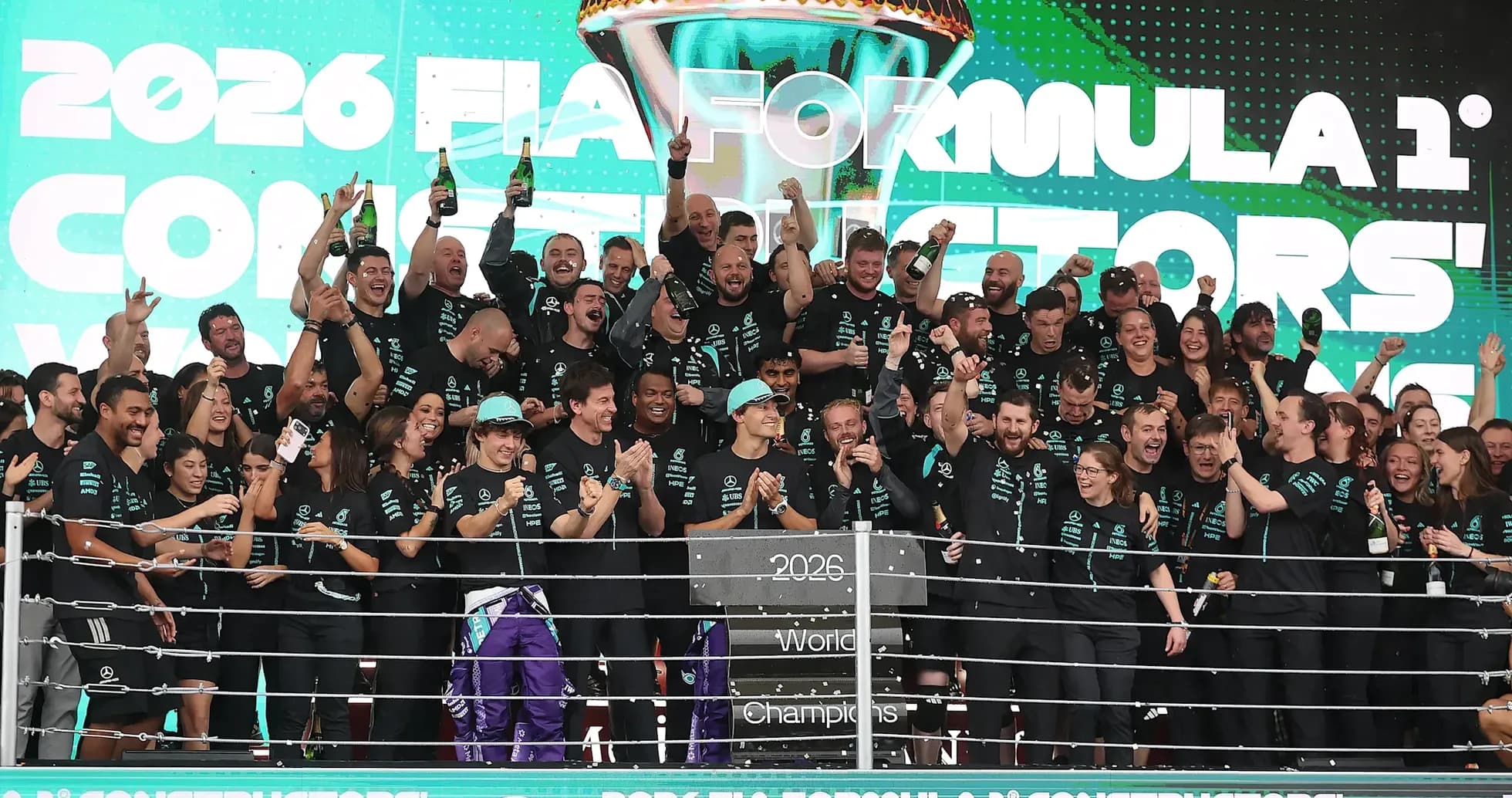
Mercedes left Brazil as double world champion: Kimi Antonelli already confirmed as drivers’ champion, the team finally wrapping up its first constructors’ title in five years. The outcome was right. The route there was scruffy.
For 19 laps it looked serene. Antonelli led from the front on a wet but drying track, the textbook opening for a newly crowned champion and a team closing in on the big trophy.
Then the track dried a little more, and the judgment calls started to fray.
Mercedes kept Antonelli out on inters longer than most. On paper, it was understandable. He had the most to lose, and the team didn’t want to roll the dice too early. On the stopwatch, it hurt. Norris and McLaren nailed the crossover. Norris pitted a lap earlier, used the grip, and erased Antonelli’s hard-earned lead in a handful of corners.
Under pressure, Antonelli cracked. Mistakes crept in, and suddenly the driver who had looked in total control was tumbling away from the podium, never mind the win.
It was uncharacteristic, and Antonelli knew it. He was angry with how the victory slipped away. You could point to Canada, where he got rattled in battle with George Russell, or Silverstone, where he didn’t adapt quickly enough to car damage. This felt like another chapter in the same story: a 20-year-old world champion still learning how to manage chaos, not just speed.
The other Mercedes didn’t even make it that far. Russell’s race for the win ended in the pitlane, of all places. On slicks in a wet, winding Interlagos pit exit, he spun as the limiter came off. Rare, ugly, but easy enough to explain: he admitted he’d gone “quite high-risk” chasing an opportunity and paid for it.
His pace once reset was strong, right up there with Antonelli and Norris on the softs. He clawed his way back to beat his team-mate on the road. Yet when the rain returned and everyone switched back to inters, both Mercedes faded badly.
While Norris kept punching in laps, the silver cars bled time – upwards of half a second per lap slower. Russell’s theory was that his inters overheated on the outlap, when the track was at its driest, and never came back, spiralling into what he called a “negative” cycle.
So Mercedes left Brazil with the big prize secured, but also with a reminder: even the class of the field can look ordinary when strategy caution, driver errors and tyre management all slip by a fraction on the same day.
Camara’s brutal debut hints at something more
Rafael Camara’s first F1 weekend was the kind of baptism that can make or break a rookie’s self-belief.
Called up at the start of the week. No prior running in the Haas or any 2026 car. A forecast that screamed “lottery” from the moment the paddock landed. It was always going to be hard.
The headline result – 20th, two laps down – looks bleak. The story underneath is less damning.
Camara flashed real speed in qualifying, hustling the car into a promising position in treacherous conditions. On another day, with a slightly cleaner session, a debut Q3 appearance wouldn’t have been a shock. Instead, his confidence took two heavy hits: first when aquaplaning and wheelspin sent him fishtailing down the Reta Oposta and off the road, then with a lock-up at Juncao and a solid thump into the barriers at Turn 12, a corner that caught out plenty of more experienced names.
You could see the scars at the start of the race. On inters, in the most delicate phase of the grand prix, he was cautious. Haas almost certainly urged him to stay away from heroics. The gap to team-mate Ollie Bearman ballooned in both intermediate stints, early and late.
Once the track dried and the softs went on, a different driver appeared. Across two slick stints, Camara’s pace was only about a tenth per lap slower than Bearman on average, despite Bearman’s race being skewed by traffic. For a driver with no mileage in this machinery, that’s a solid baseline.
By the time the final inter stint arrived, there was nothing left to chase. The priority was survival, not statement. He brought it home, battered on paper but with enough glimpses of raw pace to suggest this weekend might look very different in hindsight.
Given the circumstances, his F1 career almost has to get better from here. The ceiling he hinted at in both qualifying and the dry phases of the race says the story of Camara in F1 is only just starting.
Lawson turns a contract dilemma into a PR nightmare for Red Bull
Liam Lawson has now won F1’s midfield fight for five consecutive weekends. In Brazil he even ran as high as second. And yet, with three rounds to go, he still doesn’t have a confirmed seat for 2027.
That’s the absurdity of the situation Red Bull has created for itself. The decision for Racing Bulls next year is down to two seats for three names: Lawson, Arvid Lindblad and Nikola Tsolov.
The momentum is with Lawson. The Race understands he is closing in on keeping his place, and his recent form is the main reason why. He is making himself almost impossible to drop.
There are very few modern precedents for a midfield driver performing at this level and being cast aside. Sergio Perez losing his Racing Point seat for 2021 is the obvious comparison – and even that ended with Red Bull swooping in to sign him.
Earlier in the season, this would have been a different conversation. Back then, rookie Lindblad was going blow for blow with Lawson. But the balance has shifted. Lindblad, who is still expected to stay on, admitted in Brazil that he “lost [his] rhythm a little bit” after Madrid and Baku. Lawson has gone the other way, raising his game through the Austin–Mexico–Brazil triple-header just as the pressure on his future peaked.
Drop him now and Red Bull wouldn’t just be making a tough sporting call. It would be inviting a storm of questions it doesn’t need. No wonder an extension for Lawson before Las Vegas now looks the most likely outcome.
Ferrari behave – but only when the stakes are low
A week on from the self-inflicted Mexico mess, Ferrari’s drivers finally went wheel-to-wheel without detonating the team’s race.
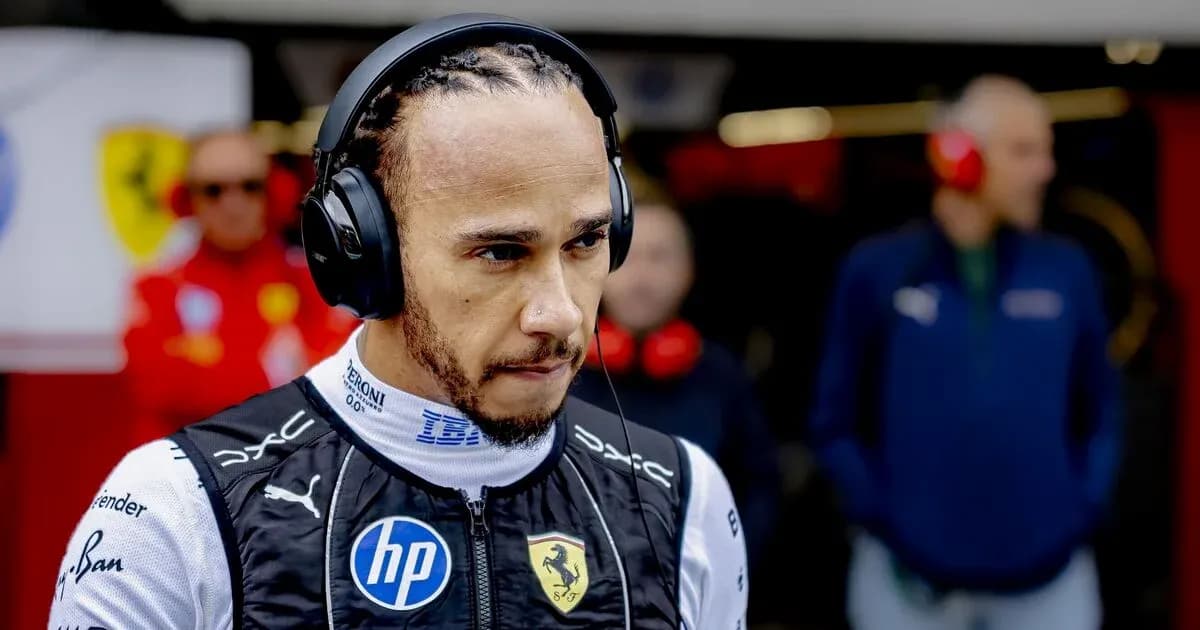
Charles Leclerc and Lewis Hamilton found themselves racing each other again in Brazil, this time for scraps in the lower points. No drama, no contact, just clean, measured exchanges in horrible conditions.
Given the fallout from Mexico – the lost 1–2, the scrutiny on Fred Vasseur’s authority, the questions over whether the drivers could be trusted – you might have expected the Ferrari boss to crack a joke about them only behaving when it didn’t matter. Instead, he cut straight to the point: you simply can’t compare a fight for the win with a fight for nothing.
Leclerc knew the score too. “Lewis was much faster than me, so at that time there was no point for me to fight,” he said. Pragmatic, if painful.
The real issue for Ferrari wasn’t discipline. It was pace, or rather the maddening inconsistency of it. Grid penalties meant this was always going to be a damage-limitation race, but Verstappen showed what was possible from deep in the pack in a truly quick car. Ferrari didn’t have that kind of weapon.
Leclerc climbed from 14th to seventh. Hamilton rose from 20th to ninth. On paper, both are respectable recoveries. In context – off the back of a run of strong dry-weather performances – this was a flat, frustrating afternoon that exposed just how narrow Ferrari’s operating window still is.
Alpine exposed as rain reveals a “broken” car
If any team left Interlagos with more questions than answers, it was Alpine.
Pierre Gasly didn’t mince his words. In the wet, he said, the car feels “broken”. The weekend did little to contradict him.
Both cars fell at the first qualifying hurdle, 17th and 18th in Q1. There was no miracle Sunday comeback, no repeat of the famous double podium from a few years ago. Franco Colapinto and Gasly finished 13th and 14th, a lap down, never truly in the mix for anything meaningful.
This wasn’t about a missed strategic gamble or a clumsy error. It looked like pure, raw lack of performance whenever water hit the track. Gasly spoke of the car doing “very odd stuff” aerodynamically in the rain, the sort of feedback that makes engineers wince.
Once the surface dried, the picture shifted. On fresh tyres before the final shower, Colapinto was flying, punching in laps that suggested genuine midfield pace. The car came alive on a dry track with soft rubber. Confidence returned.
That split personality hints at a specific weakness: either a fundamental flaw in how the car generates downforce in the wet, or a set-up misstep that the weekend’s constant rain simply magnified. Alpine managing director Steve Nielsen had already called out how wasteful the team has been this year. Brazil felt like another entry in that file.
Considering how strongly the season started, this looked like a new low in a campaign that has steadily unravelled.
Intermediates under the microscope in F1’s first real wet test of 2026
For all the chaos, Brazil also answered one big 2026 question: could the new-generation cars and tyres actually race in proper rain?
This time, the answer was yes. The FIA let qualifying run in heavy conditions, and the field coped. The grand prix itself, with its swings between inters and slicks, passed without the kind of mass incidents that have made race control so cautious in recent years.
That didn’t mean the drivers were happy with everything. Carlos Sainz was blunt: the full wets are “not good enough” at the moment, and the intermediates are hard to fire up and don’t feel as grippy as last year’s.
The root cause lies with the 2026 regulations. Pirelli has been forced to stiffen the construction of the intermediate tyre to withstand the extra forces created by F1’s new straight mode. That stiffness is the opposite of what you want in a rain tyre, and the result is a compound that takes longer to switch on and offers less bite on a cold, soaked surface.
The upside for the drivers is that Pirelli has already been working on fixes. A revised intermediate, aimed at improving warm-up and grip, is scheduled for 2027. Until then, races like Brazil will keep exposing the limits of the current wet rubber.
Aston Martin’s chassis shines as Honda stumbles again
Fernando Alonso didn’t produce one of his trademark miracle points finishes this time. His chance to do so probably vanished within seconds of the lights going out.
Following Ollie Bearman through the spray at Turn 3, Alonso slid wide, understeered onto the runoff and dropped from eighth on the grid to 12th on the opening lap. From there, it was a slog. He fought hard, picked his battles well, and in the wet he could at least lean on the Aston Martin’s strengths. But 12th at the flag was all he had to show for it.
His verdict was telling. “Obviously I'm still missing a lot of straightline speed and that's difficult to compensate,” he said, before pointing out that at various stages he could at least fight Ferraris early on and even Mercedes late in the race. For him, that meant one thing: “the car was phenomenal.”
This isn’t a new story. The gap between what the Aston Martin chassis can do and what the Honda power unit is delivering has been a running theme. In Brazil, the wet conditions masked some of the engine’s deficit. Even then, Alonso hinted that Honda had cost the team a final shot at points on a day when the car itself was good enough to be at, or above, the midfield benchmark.
Worse than the lack of top speed was yet another reliability concern. Lance Stroll suffered battery problems on both Saturday and Sunday. Honda still doesn’t know why.
So Aston Martin leaves Interlagos with a car that looks better than its results, an engine partner searching for answers, and a veteran driver who can see exactly what might be possible if the straightline speed and reliability ever catch up.
The question now is whether that convergence comes in time to change the shape of this project – or whether weekends like Brazil become the story of what might have been.