Red Bull Restores Line-Up Ahead of Baku: Hadjar Returns
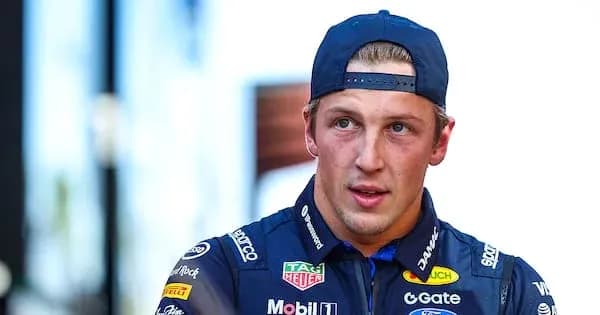
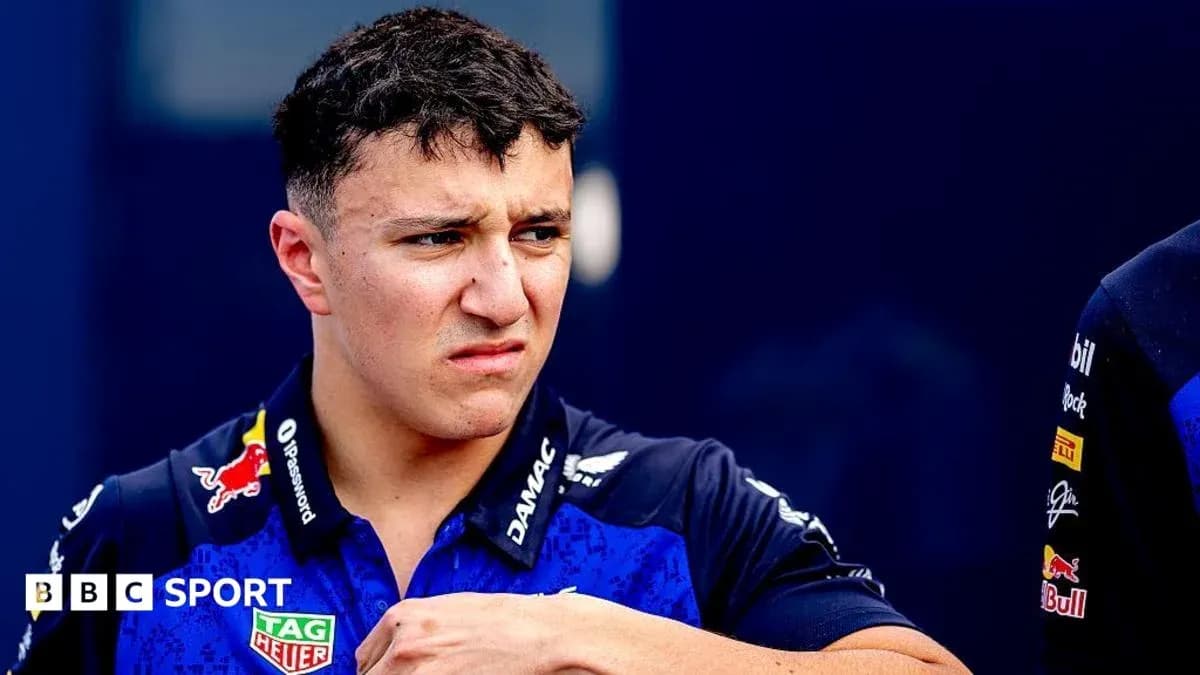
Red Bull resets its frontline in Baku. Isack Hadjar is back, the first-choice pairing restored, and with it a clear message to everyone inside the camp: the bar has just been raised.
Liam Lawson returns to Racing Bulls, Yuki Tsunoda slips back into reserve duty, and the three-race detour after the summer break leaves a very different landscape for Red Bull’s five-driver pool heading into the final stretch of 2026.
This wasn’t just a holding pattern. It was an audition. For some, it confirmed what we already suspected. For others, it sharpened the expectations.
Hadjar must ride Red Bull’s rising wave
Hadjar walks back into the Red Bull garage with his seat safe but his comfort zone gone.
Before the injury, his season had been quietly impressive. Across the first 11 races, he averaged 6.5 points per grand prix to Max Verstappen’s 9.9. If Verstappen usually finished around fifth, Hadjar tended to be just a place or two behind. That’s exactly what Red Bull had wanted: a solid, fast, dependable lieutenant.
Now that’s no longer enough.
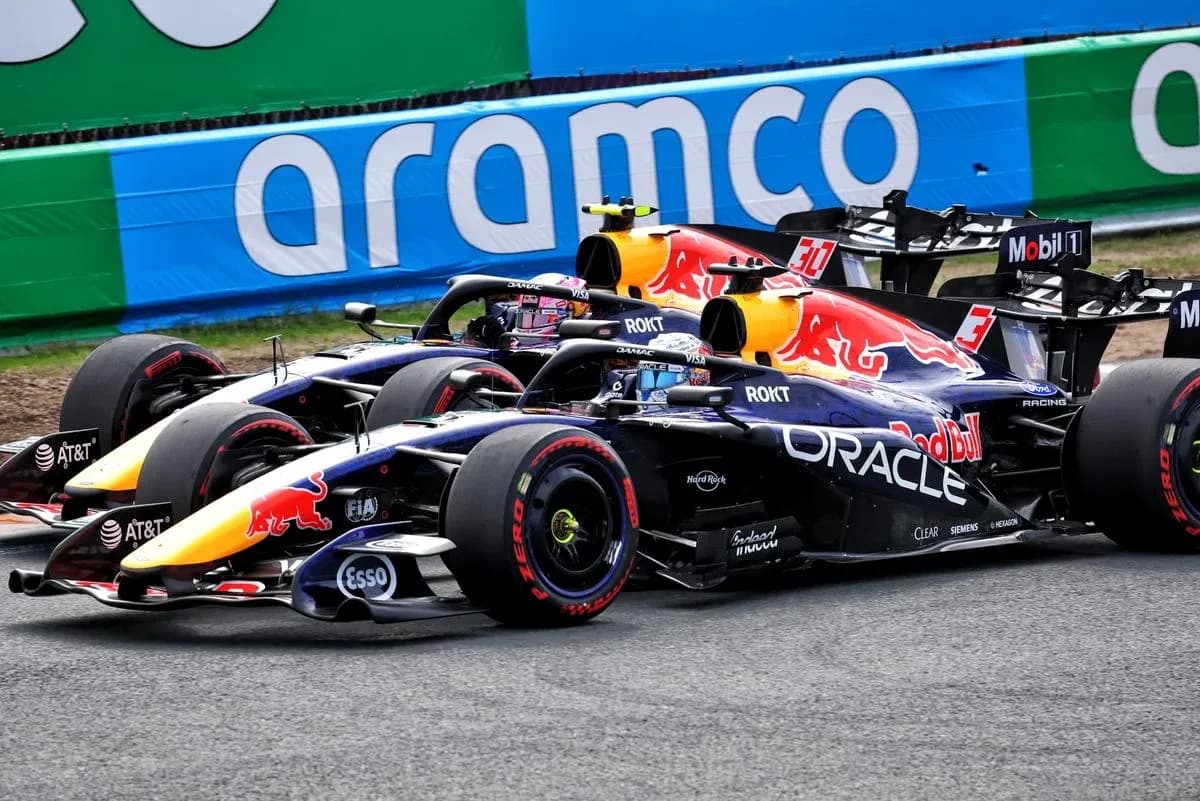
While Hadjar watched from the sidelines, Verstappen turned the screw. Across the three races Hadjar missed, Verstappen’s average leapt to 12 points per race, even with a crash at Zandvoort, thanks to podiums at Monza and the Madring. The team’s peak has shifted upwards. The reference lap is quicker. The standard has moved.
Lawson, dropped into the car with no prior mileage and shuffled between teams yet again, did a respectable job. He averaged 4.7 points per race and, crucially, kept Red Bull’s tally ticking along. He did what a stand-in is supposed to do.
Hadjar is not a stand-in. He returns with the expectation that he’ll match, or get very close to, the level Verstappen has just laid down. If he can’t, Red Bull’s decision to restore the original line-up starts to look like sentiment rather than hard-nosed performance thinking.
And then there’s the physical test. A triple-header is unforgiving at the best of times. For a driver coming off an injury, it’s a full examination: of his rehabilitation, of his concentration over long race stints, of how quickly he can snap back to qualifying sharpness.
Before the break, Hadjar looked like a rising force. Now he has to prove he can rise with a Red Bull that’s clearly found more speed since he last raced it.
Lawson shows he belongs – just not in Verstappen’s seat
Lawson’s stock within the Red Bull system was already high before the summer. A steady, points-scoring first half of the year with Racing Bulls had made him the standout driver outside the top four teams. The numbers backed it up, but so did the mood inside the garage.
Those closest to him spoke of a different driver over the winter. More focused. More ruthless. His engineering group, in particular, admired how he’d parked his dislike of the 2026 regulations and dug into the details, finding gains in energy management that nudged Racing Bulls forward.
The plan seemed simple enough: keep Lawson alongside Arvid Lindblad for another year. The line-up worked, the team was progressing, and there was no urge to meddle with a combination that clearly wasn’t broken.
Then Red Bull called.
The promotion to the senior team gave Lawson a chance to rewrite the memory of his bruising 2025 start. This time, he settled in quickly to a tricky car. Twice he scored points. The outlier was Monza, always going to be damage limitation from the back with an engine penalty.
He didn’t transform the picture at Red Bull. He didn’t force a late rethink about who should partner Verstappen next year. That was always going to be a stretch over just three races.
What he did do was underline that he is exactly what Racing Bulls needs as it tries to finish at the head of the midfield: quick, technically sharp, and reliable under pressure. His cameo at the top team was less a job interview and more a confirmation of what those in Faenza already knew.
Tsunoda reminds everyone what he is – and what he isn’t
Yuki Tsunoda’s brief 2026 return to Racing Bulls didn’t rewrite his reputation. It reinforced it.
Four full seasons at Red Bull’s second team had already painted the picture: give him a decent car and he will score points. A tough year spent alongside Verstappen at the senior team hadn’t erased that core truth.
Dropped into the 2026 Racing Bulls at Zandvoort, he was immediately on the pace. He qualified just a tenth slower than Lindblad. For a driver climbing back into unfamiliar machinery, that’s sharp.
At Monza, he turned a scruffy Saturday into a productive Sunday. A Q1 exit and some questionable grid positioning at the start didn’t stop him collecting the first point of his comeback – a result Audi is now trying to overturn on procedural grounds.
Madrid never really got going for him. Damage ended any realistic shot of repeating the trick. Yet across the three races, Tsunoda showed exactly why teams love having someone like him in reserve: he adapts quickly, he’s fast enough to score, and he doesn’t need a long runway to get up to speed.
What he didn’t do is force the conversation. He was good, not unignorable. The kind of stand-in you’re happy to have, but not necessarily one you reorganise your future around.
His own verdict was simple: “I gave it my all and there’s nothing to regret.”
If this is the final chapter of Tsunoda’s 114-race F1 story, it’s a much more fitting end than being left flailing a long way behind Verstappen.
Lindblad steps up as Racing Bulls’ quiet leader
Arvid Lindblad came into 2026 as the lone rookie on the grid. He already looked the part before the summer. The last three races pushed the examination a little deeper.
The Lawson–Lindblad partnership has been one of Racing Bulls’ biggest strengths. Between them, they’ve kept the team ahead of Alpine in the constructors’ standings. It’s a pairing that works: balanced, fast, and increasingly polished.
When Tsunoda dropped in for his cameo, Racing Bulls knew it had an experienced hand in one car. What it needed was a leader in the other. Lindblad filled that role.
At Monza, he had no business beating an Alpine on raw pace, yet he did just that – aided by Franco Colapinto’s self-inflicted chaos, but only after putting himself in the right position to capitalise. At the Madring, the weekend was messy in patches, yet he still dragged two points out of it. At Zandvoort, a harsh in-race penalty knocked him out of contention, but he still played a crucial part in limiting Pierre Gasly’s score and giving Tsunoda the best chance to grab that comeback point.
Seven consecutive Q3 appearances now sit on his record. Racing Bulls still has breathing room over Alpine in the standings. None of that happens by accident.
He’s 19. He’s delivering under pressure. And the people who make the big calls at Red Bull will have noticed.
The question isn’t whether Lindblad belongs in F1. That’s already been answered. The question now is whether the balance of power at Racing Bulls is starting to tilt in his direction.
A fit Hadjar is exactly what Verstappen needs
Max Verstappen cares deeply about who sits in the other Red Bull. It shapes his weekends, his strategy options, and the way rivals can attack the team.
Right now, Red Bull is trying to fight at the sharp end against Mercedes, Ferrari and McLaren – all of whom can usually rely on both cars being in the mix. Red Bull hasn’t always had that luxury.
Lawson’s stint in the senior car came with caveats: no testing, constant shuffling between teams, and a car that still isn’t fully tamed. Even so, he never finished within a minute of the race winner. However you dress it up, Verstappen was often fighting with one hand tied, even if he was the one who exited spectacularly at Zandvoort.
Hadjar’s return offers a way out of that. If he can immediately hit the level he showed before the injury – and then climb above it to match Red Bull’s new performance ceiling – he becomes a real factor in race outcomes. He becomes the second punch in a fight where everyone else is swinging with both arms.
For Verstappen, that’s more than just helpful. It’s essential if Red Bull is serious about climbing from fourth in the constructors’ championship.
There’s one more twist. Hadjar has missed three races and spent two months out, yet if he comes back instantly sharp, Verstappen gains another data point in an argument he’s been making all year: that F1 2026 isn’t as physically demanding as it should be.
Red Bull arrives in Baku with its preferred line-up restored, its rookie on the rise, its super-sub vindicated, and its long-serving lieutenant back on the sidelines. The auditions are over. Now the question is simple: who turns this chance into something permanent?