Pierre Gasly Loses Monaco Podium as FIA Court Reinstates Penalties
Pierre Gasly has lost his Monaco Grand Prix podium – three months after he stood on it.
The FIA’s International Court of Appeal has overturned the stewards’ decision to rescind his pit-lane speeding penalties, reinstating two five‑second sanctions and dropping the Alpine driver from third to seventh. Red Bull’s Isack Hadjar is restored to the podium in his place.
What began as a feel‑good story in Monte Carlo has become a legal and regulatory flashpoint for Formula 1.
From Third on the Road to Seventh on Paper
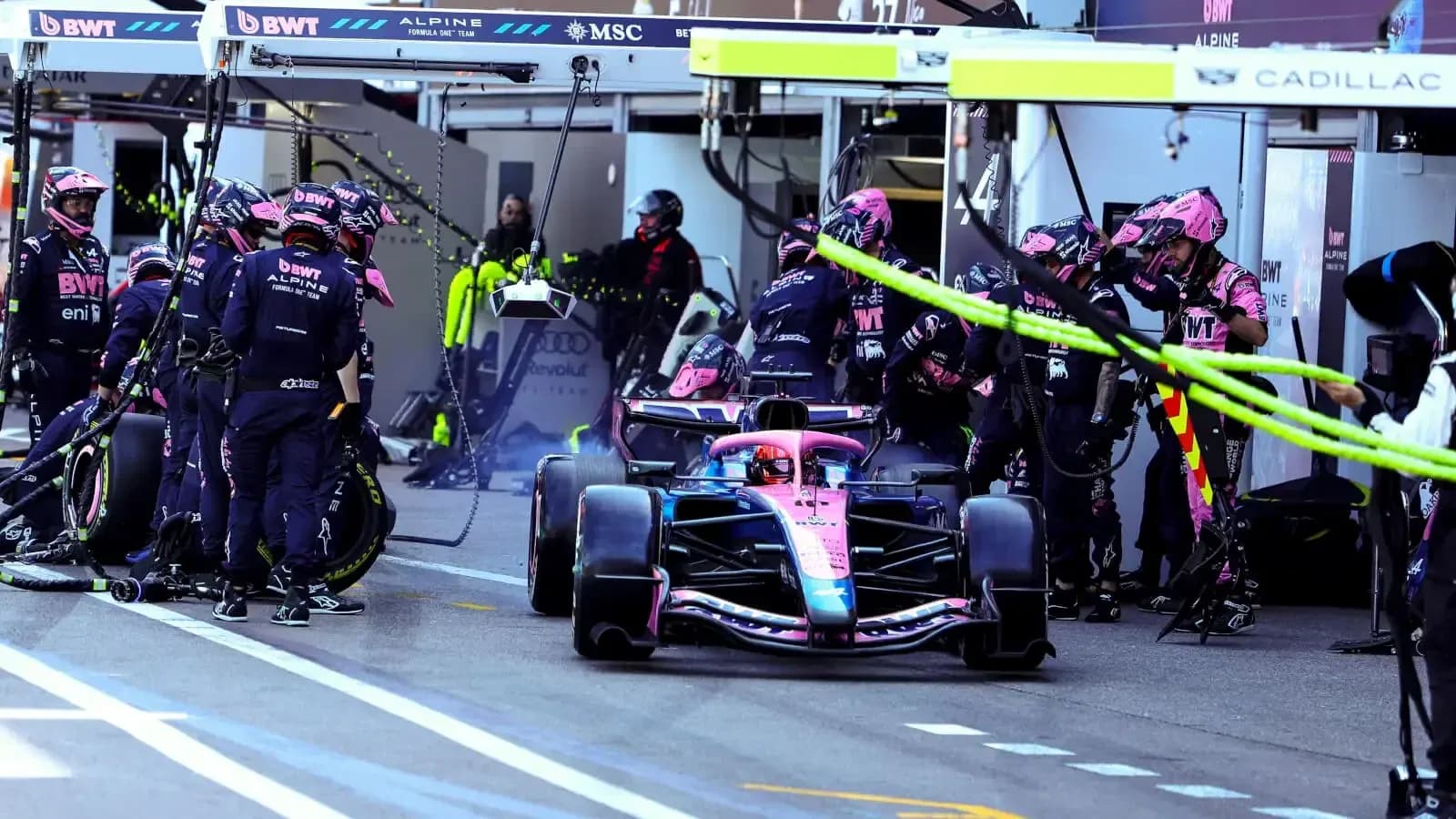
Gasly finished third on track in June’s Monaco Grand Prix, but two separate pit-lane speeding infringements saw him hit with a pair of five‑second penalties. Those penalties initially pushed him down to seventh after the chequered flag.
Alpine fought back. The team argued that the stewards could not conclusively prove Gasly had exceeded the 60 km/h pit-lane limit because of uncertainty over the exact distance used in the timing system’s calculations. With questions raised about the positioning of the timing loops and the distance between them, Alpine secured a right of review.
Crucially, while five of the six drivers flagged for pit-lane speeding served their penalties during the race, Alpine delayed Gasly’s until after the finish. That decision kept the door open. It allowed the team to challenge the sanctions once the dust had settled.
The stewards sided with Alpine. They accepted that the regulations did not explicitly state the official timekeeping system was the sole arbiter of pit-lane speed. Without clear proof Gasly had broken the limit, they threw out the penalties and handed him back third place.
That ruling triggered a backlash.
McLaren and Red Bull appealed to the International Court of Appeal, arguing the stewards had gone too far in unpicking their own decision. The case was heard behind closed doors in Paris in the days after the Dutch Grand Prix. On Friday at Monza, the verdict landed. The appeals were upheld, Gasly’s penalties reinstated, and Hadjar promoted back to third.
The Core of the Dispute: One Benchmark, or Many?
McLaren and Red Bull built their case around sporting fairness and equal treatment.
Their argument was blunt: the stewards should not have overturned the original penalties when every team had run the race using the same official timing benchmark. FOM’s timing system – the one the FIA stewards rely on – had been used to calibrate the pit-lane speed limit. That system calculates average speed between timing loops at the start and end of the pit lane, not an instantaneous reading.
Teams set their pit-lane limiters to that system. They live and die by it on Sundays.
The challengers insisted that this established, accepted calibration had to be treated as authoritative. If one team could later replace it with its own bespoke recalculation, they argued, the entire framework of predictable, safety‑based rules would start to fray.
They also leaned on safety. The pit-lane speed limit exists first and foremost to protect mechanics, marshals, and officials. Allowing a competitor to undermine the official calculations after the event, they warned, would weaken the consistency of safety rules and the trust in the FIA’s regulatory tools.
The language from the appealing teams was sharp. They said the stewards’ controversial Monaco decision failed to meet the “standard of proof applicable to the case,” and contained “evidentiary errors” that were “insufficient, contradictory, and legally inadequate.”
Motorsport UK, appearing as an interested third party, pushed the point further. It warned that if the Monaco stewards’ decision stood, national authorities would be left in a “difficult position”, facing the implication that an “established and accepted official measurement system may be set aside after the event” on the basis of a one‑off recalculation by a single competitor.
In other words: everyone should race under one common yardstick. You cannot rewrite that yardstick after the flag for one car.
Alpine’s Defence: The Rule, Not the System
Alpine did not back down.
The team’s counter was built around the wording of the regulations and the question of proof. The rule says cars must not exceed 60 km/h in the pit lane. It does not, Alpine stressed, explicitly state that only the official timekeeper’s method can be used to determine that speed.
The team also pointed to the FIA’s own admission earlier in the saga that the distance parameter used in the timing system – 2692 cm between the loops – did not match the actual minimum possible distance a car could travel through that section.
Alpine launched its own investigation into the pit-lane geometry. It used three methods:
- FOM’s GNSS data
- Leica laser measurements taken by Alpine
- An independent survey by Ridge & Partners LLP
That work suggested the relevant minimum distance was 2615 cm, not 2692 cm. On that shorter distance, Alpine calculated that Gasly’s recorded times would equate to an average speed below 60 km/h. No breach, they said. No penalty.
The team insisted that using the corrected, shorter distance did not compromise safety. It argued that an illegitimate penalty should be overturned, regardless of how other competitors had been treated, and that those teams had not themselves sought a right of review.
To Alpine, the issue was simple: if Gasly did not exceed 60 km/h, he should not be punished.
How the Court Saw It
The International Court of Appeal chose a different line.
It did not question the 60 km/h limit. Instead, it zeroed in on how that limit was measured and applied during the event.
The Court noted that FOM’s timing system used a distance parameter – 2692 cm – between the pit-lane timing loops. That figure, it stressed, was not a precise physical tracing of each car’s path but a notional input used consistently for every competitor. Teams calibrated their pit limiters against that benchmark. Every driver ran under the same assumptions.
Crucially, the Court decided that 2692 cm was not an “error” in the sense Alpine claimed. It was an alternative geometric interpretation of the pit lane, one that had been locked in for the event. Later, more refined geometric analysis, it ruled, could not be allowed to override that common parameter retrospectively for just one team.
Sporting fairness and equal treatment sat at the heart of the decision. The Court held that the 2692 cm benchmark had to stand as the reference for all competitors, because that was the basis on which the race had been contested. That stance, it said, reflected the FIA’s own principles.
The judges were careful on one point. They did not declare the timing system untouchable. They accepted that it could be challenged where there was evidence of malfunction, incorrect timing, misidentified signals, or other technical faults.
Alpine’s approach, however, crossed a line. The Court found it impermissible to replace the common calibration parameter after the event with a different measurement methodology for a single car.
It put it starkly: competitors cannot be required to calibrate their cars and make technical and strategic decisions against one official benchmark during the event, only for that benchmark to be swapped out later for a different geometric method after the race has concluded.
The numbers underlined the problem. Gasly’s recorded times through the pit-lane segment in question were 1.604 and 1.602 seconds. At an average of exactly 60 km/h, his actual path lengths would need to be around 2673 cm and 2670 cm. FOM, though, had not measured his precise trajectory and could not prove he had travelled those exact distances.
Alpine’s reconstruction of Gasly’s line was, by its own description, a “best estimate”. It could not guarantee centimetre‑level accuracy. That meant the team could not show with sufficient precision that Gasly’s path was short enough to guarantee he had stayed under 60 km/h.
In the Court’s view, the Monaco stewards had erred in setting aside the penalties on the basis of that later reconstruction. The appeals from McLaren and Red Bull were granted, the rescinding decisions quashed, and Gasly’s two five‑second penalties brought back to life.
The FIA and Alpine were ordered to share the Court costs.
Alpine’s Anger, FIA’s Reflection
Alpine left the process frustrated and unconvinced.
The team issued a statement expressing “disappointment and frustration” with the outcome and reiterating its belief that Car #10 did not exceed the pit-lane speed limit at any point in the race. It acknowledged the Court’s ruling but maintained it felt “unjustly punished”, even as it stressed its focus remains on-track performance and a tight championship battle.
Behind the scenes, the team is weighing its next move. Options on the table include escalating the matter to the Court of Arbitration for Sport, a step that would drag the Monaco controversy into an even broader legal arena.
The FIA, for its part, has taken the verdict as a cue to look inward.
The governing body confirmed it is reviewing the methodology and operation of the current Formula 1 timing system, along with the related regulations. It also plans to examine judicial procedures, including the right of review and appeal processes, while underlining its support for the stewarding system and the independence of its panels.
The FIA pointed out that stewards work in a different environment to the Court, without the same depth of legal counsel, and that ICA decisions are fed back into stewarding for “continuous improvement”.
So Gasly loses a podium, Hadjar gains one, and a timing loop deep in Monaco’s pit lane has forced Formula 1 to confront where precision ends and fairness begins.
The question now is whether Alpine will keep fighting – or let this stand as a one‑off case that reshapes how the sport measures its own limits.