Spanish Grand Prix 2023: Performance Insights and Verdicts
The Madring didn’t deliver a classic, but it did deliver a stress test. On a new circuit that punished tiny errors and strangled overtaking, the Spanish Grand Prix became less about fireworks and more about execution, timing and who could live on the limit without stepping over it.
Some aced it. Some were mugged by the Virtual Safety Car. Some never really turned up.
Here’s how the grid actually performed.
Lando Norris – Started 1st, Finished 3rd
Verdict: Only bad luck cost him victory.
Lando Norris produced the lap of the weekend when it mattered on Saturday. Pole at the Madring was an ambush: McLaren knew it didn’t have the outright fastest car, yet Norris found enough in a mighty Q3 effort to snatch top spot. It could have been one of those all-time qualifying laps too, but for the rear stepping out at the final corner and costing him three tenths. That snap was his misread of how hard he’d leaned on the tyres earlier in the lap – a reminder that even on a day of brilliance, the ceiling was higher still.
He handled the start superbly from a low-grip pole slot, held the lead, and built a proper cushion in the early phase. On pure race pace, he was the benchmark. What he couldn’t legislate for was the perfectly timed Virtual Safety Car that flipped the race on its head and stripped him of the lead he had earned.
Late on, he chased Max Verstappen but never really got close enough to launch something realistic. Given how stubborn the Madring proved for overtaking – and Verstappen’s reputation in wheel-to-wheel fights – that wasn’t the missed opportunity some might paint it as. The win was in his hands until the VSC intervened. After that, it was damage limitation from a driver who had done almost everything right.
Pierre Gasly – Started 9th, Finished 7th
Verdict: Probably his best through-weekend execution in F1.
This was Pierre Gasly at his sharpest. An alarming moment at La Monumental on his first Q2 run could easily have rattled him. Instead, he reset, then delivered what he himself called “one of the best” laps he’s ever done to haul the Alpine into Q3, top the midfield and beat team-mate Pierre Gasly’s benchmark rival for the weekend, Arvid Lindblad.
From there he nailed the ceiling of the car. Beating Lindblad in Q3 gave him the best possible starting spot for an Alpine, and on Sunday he ran at the front of the midfield train, defending stoutly to keep Oscar Piastri behind and even overachieving by a place. Yes, he left a couple of tenths on the table in Q3 relative to his theoretical best, but it didn’t change his grid slot.
Could he have made more progress had he cleared Gabriel Bortoleto? Possibly. But with overtaking as constrained as it was, that’s nitpicking. This was a rare weekend where Gasly squeezed almost everything out of what he had.
Esteban Ocon – Started 13th, Finished 11th
Verdict: A well-executed weekend that merited a point.
Esteban Ocon quietly stitched together a solid Madring performance. His final Q2 lap was tidy and honest; the three-tenths gap to Bortoleto underlined that Haas simply didn’t have Audi’s one-lap punch. He did what he always seems to do when there’s a sniff of reward: launched well, jumped to 11th and moved ahead of both Audis. Lewis Hamilton’s early retirement turned that into a provisional 10th.
That should have become a point. Instead, the VSC pitstop window exposed Haas’s less advanced pit equipment, and he lost out to Nico Hulkenberg in the lane rather than on track. From there, the race flattened out on him.
With Ollie Bearman’s weekend imploding before qualifying, there was no real intra-team reference, but there was nothing in Ocon’s driving to suggest he left meaningful laptime or positions on the table. In the eighth-best car, this was about as clean as it gets without a reward.
Max Verstappen – Started 3rd, Finished 2nd
Verdict: Largely made the most of the Red Bull.
Max Verstappen did not have the dominant Red Bull of old, but he wrung most of what it could offer. The car was better over one lap than over a stint, and he got close to its qualifying ceiling without quite nailing a perfect lap. In the race, he did the ugly, necessary work: kept Norris behind when it mattered and stayed in the fight long enough for the chaos around him to tilt things his way.
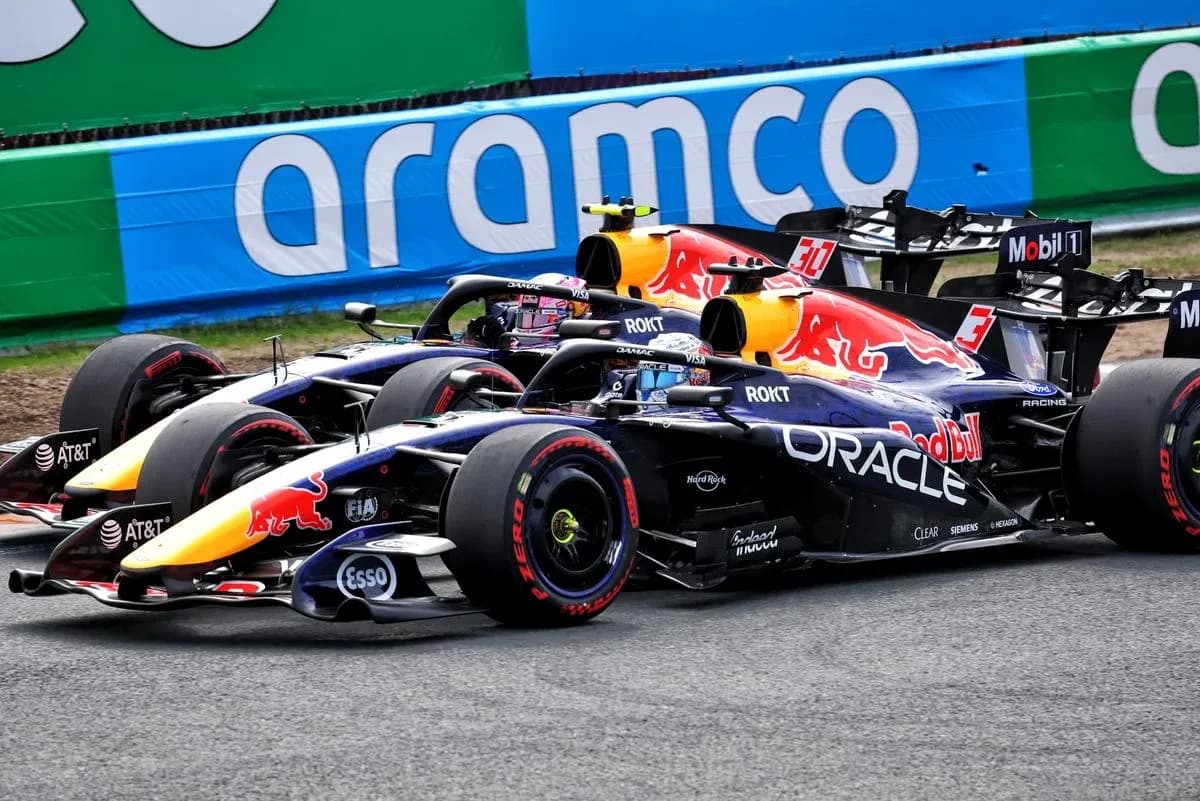
The first-lap skirmish at Turn 1 – with its inevitable chicane cut – left him on the wrong side of the Hamilton/Antonelli shuffle, and you can argue that his move made that sequence almost inevitable. Once he’d served the consequences of that, though, he managed the race smartly. Even if he’d stayed third rather than jumping Norris via timing fortune, that would probably still have represented the limit of what this Red Bull could do on Sunday.
Lewis Hamilton – Started 2nd, Finished 1st
Verdict: No question about his pace, but a little untidiness.
Lewis Hamilton walked away with the win, but it wasn’t the clean, crushing variety. What it was, above all, was quick. He was clearly the faster Mercedes driver all weekend, his advantage over George Russell obvious in both rhythm and raw pace.
The race itself was mostly composed and controlled. Hamilton showed restraint when Charles Leclerc led on a long opening stint, avoiding impatience and waiting for the race to come to him. When fortune swung his way with the VSC and the unfolding strategy picture, he was perfectly placed to seize track position over Verstappen and Norris.
The blemishes came early. The first lap was scrappy, with track cuts at Turn 1 and Turn 5 that shuffled him back to third and briefly threatened to unravel his afternoon. Once he settled, the speed took over. Luck gave him the platform; his pace made sure he didn’t waste it.
George Russell – Started 5th, Finished 4th
Verdict: No major negatives, but still not at his absolute best.
George Russell spent the weekend in Hamilton’s shadow but nowhere near a disaster zone. Carrying some older-spec power unit components after his Monza crash, he still qualified just 0.005s shy of Hamilton – an impressive headline, even if he suspected he’d left a little time out there, especially in the early part of the lap with less-than-ideal prep.
His race was clean and measured. The long hard-tyre stint was executed with minimal fuss, and once Hamilton retired from the picture, Russell was always on a path to fourth given the car’s pace and the way the race shook out.
He talked about having delivered a “quite a clean lap” in qualifying with “a few moments here and there,” and that summed up his weekend. Solid, competent, but short of the razor-edge version of Russell that can occasionally trouble Hamilton on outright speed.
Sergio Perez – Started 18th, Finished DNF
Verdict: A strong weekend as the quicker Cadillac driver.
Sergio Perez’s numbers over Valtteri Bottas in qualifying were skewed by Bottas being impeded, but the direction of travel was clear: Perez had the upper hand in the Cadillac. He looked the quicker driver throughout, then confirmed it with a strong final lap to put a respectable gloss on a lowly grid slot.
On Sunday, he went to work. The Turn 1 chaos handed him positions, and he then settled into a solid chase of Alex Albon, showing enough race speed to hint at a meaningful recovery drive. A water leak in the power unit shut that down, first hobbling his pace, then ending his race entirely.
There was no real blot on his copybook. The only frustration was that the second half of his afternoon never happened.
Alex Albon – Started 16th, Finished 15th
Verdict: A strong weekend, with one costly FP3 mistake.
Alex Albon’s Madring story was one of recovery. Deployment issues on Friday left him adrift of Carlos Sainz and short on data. Then came the FP3 wall clip, a small but expensive error that cost him valuable running at exactly the wrong moment.
When it mattered, though, he delivered. His Q1 lap was sharp and resilient, edging Sainz by 0.005s and getting the Williams as far up the order as it realistically belonged. With no fresh softs left for Q2, 16th was the ceiling.
The race was straightforward. The car didn’t have the speed to climb into the points and Albon drove within its limits, avoiding drama and executing what was available. Strip out that FP3 brush with the wall and this was one of his cleaner weekends in a car still short on weapons.
Fernando Alonso – Started 17th, Finished 17th
Verdict: A decent weekend, but Q2 was just out of reach.
Fernando Alonso spent most of the weekend as the quicker Aston Martin, even if the timesheets didn’t always flatter him. The car was oddly split: strong in certain corners, sluggish on the straights, and he drove around that as best he could.
He narrowly missed out on Q2 after dropping a tenth and a half to his own best in sector three on his final lap – the tiny margin that swung the fight with Albon away from him. That lapse stung, because the underlying pace was there.
The race became an exercise in persistence. Deployment issues and a front wing change after Sainz hit him wrecked his rhythm and cost him big chunks of time, but he kept going to the flag. There was more in the package than the result suggests, but the circumstances never let him show it fully.
Charles Leclerc – Started 4th, Finished DNF
Verdict: Had the pace for more, but never got to show it.
Charles Leclerc’s weekend always felt like it was about to ignite, but never quite did. His FP3 crash was the first blow, costing him half the session and, crucially, his qualifying simulation. He tried to drag the damaged car back to the pits against the team’s wishes, but the time was gone.
Qualifying itself was decent but not devastating. A small early-lap mistake cost him time and left the sense that he hadn’t quite maximised what looked like the stronger underlying Ferrari pace on his side of the garage. Even so, fourth on the grid was a respectable salvage job.
The race never became a proper sample of his speed. Brake problems ended his day and turned what could have been a strong points haul into an empty afternoon. The numbers don’t show it, but the pace for more was there.
Arvid Lindblad – Started 10th, Finished 9th
Verdict: Recovered well from a costly FP2 crash.
Arvid Lindblad’s Friday crash at Turn 13, where the rear snapped instantly on turn-in, could have derailed his whole weekend. It robbed him of time on a day when he was genuinely quick and delayed his FP3 running until late in the session.
Even with that dent in confidence, he made Q3. That alone was a statement. On Sunday he made another by jumping Piastri at the start and running ahead in the first stint. Later, when the McLaren came back at him on fresher mediums, there was little he could do – that was a tyre story, not a driver one.
Holding off Hulkenberg late on rounded out a strong recovery. The FP2 crash carried a heavy cost, but Lindblad’s response underlined why he’s being taken seriously.
Nico Hulkenberg – Started 11th, Finished 10th
Verdict: A solid weekend that put Audi roughly where it belonged.
Nico Hulkenberg won the imperfect-execution contest at Audi. He edged his team-mate in Q2 by 0.165s, then used a soft-tyre start and perfectly timed VSC stop to carve out a point.
He didn’t quite unlock everything in qualifying – a slot in Q3 was there if he’d threaded the needle – but the gap wasn’t huge. In the race, he executed the plan cleanly and made the strategy work. Late on, there might have been a narrow opening to attack Lindblad, yet given how stubborn the Madring proved, failing to force that move hardly counts as a major failing.
This was Hulkenberg doing what he often does: quietly lifting the car close to its natural ceiling.
Liam Lawson – Started 8th, Finished 6th
Verdict: Solid but unspectacular, with an effective race drive.
Liam Lawson’s weekend sat firmly in the “good, not great” bracket. Once again, he couldn’t quite follow Verstappen’s pace steps as qualifying evolved, ending up a respectable but clearly second-best 0.352s down. For a third outing in a Red Bull, that still placed him among the typical second-driver cluster at a top team.
His race craft, though, was neat. He lost out to Franco Colapinto at the start, then quickly made amends with an important early pass to reclaim the place. Staying out on hards during the VSC looked like a risk, but he made the strategy work well enough to profit when Bortoleto bottled up Colapinto.
It wasn’t flashy, but it was efficient. A quiet, competent sixth is not a bad way to underline his case for a longer stay.
George Russell – Started 6th, Finished 5th
Verdict: A step back from Antonelli in terms of pace.
Russell’s second entry in this narrative – in his more familiar Mercedes context – told a different story. While he delivered a clean, largely error-free weekend, there was never a moment where he looked on Kimi Antonelli’s level for outright speed.
Starting on hards was a deliberate gamble to open up strategic options if an early interruption came. When Leclerc ahead did the same, that avenue closed, forcing Russell into a more conventional path that was then complicated by the mediums’ limited range and the need for a second stop. He still produced one of the few successful overtakes of the day by passing Lawson after the latter’s second stop.
But qualifying exposed the gap. He overcooked the tyres at Turn 11 on his final Q3 lap, losing time he could ill afford, and he had already been slipping away from Antonelli before that. Clean, yes. Convincing against his team-mate? No.
Oscar Piastri – Started 7th, Finished 8th
Verdict: A lacklustre weekend.
Oscar Piastri never quite latched onto Norris’s level. The opening-lap front-wing damage wasn’t his fault and skewed his race, forcing an early stop and a compromised strategy. Even so, the underlying pace gap to his team-mate lingered in the background.
He did manage to clear Lindblad once the pitstops cycled through, using the hard/medium strategy without the VSC crutch. But late in the race he found himself bottled up behind Colapinto and couldn’t find a route through, even with a theoretically stronger package underneath him.
On a day when Norris showed what the McLaren could do, Piastri’s weekend never rose above ordinary.
Kevin Magnussen – Started 12th, Finished 13th
Verdict: Middling, and slightly behind Hulkenberg.
Kevin Magnussen’s Madring outing sat in the grey middle. He admitted he hadn’t extracted the maximum from the car in qualifying, being too conservative into Turn 1 and immediately putting himself on the back foot versus Hulkenberg.
A poor start, dropping him to 15th, didn’t help – though starting on hard tyres offered some mitigation. He responded with a tidy long stint on that compound, keeping the quicker Colapinto behind for a time and showing decent race management. The VSC timing, with his hard-tyre start, hurt his prospects.
Overall, this was serviceable but unspectacular, and just a shade less effective than Hulkenberg’s more polished execution.
Yuki Tsunoda – Started 14th, Finished 12th
Verdict: Poor qualifying defined his weekend.
Yuki Tsunoda’s pace was there in patches, but never when the stopwatch truly mattered. He felt baffled by the drop-off between a car that felt strong in FP3 and one that struggled for grip in qualifying, pinning it on poor tyre prep on the outlap. The result was a lacklustre session that left him deeper in the pack than his underlying speed warranted.
On Sunday, he showed decent race pace, especially on the hards, but the timing of the VSC worked against him. Staying out on that compound meant he never got the strategic springboard that might have vaulted him into the points.
The final sting was a five-second penalty for speeding in the pitlane. It didn’t cost him a position, but it underlined the sense of a weekend where small details went wrong at the wrong time.
Valtteri Bottas – Started 19th, Finished 18th
Verdict: Bad luck, but still short of Perez’s level.
Valtteri Bottas’s 2.098s qualifying deficit to Perez looked horrific on paper and wildly misleading in reality. Traffic ruined his second run, Sainz impeded his third, and he had to fall back on his first attempt. The raw gap didn’t reflect the true picture.
Even so, across the weekend he never quite matched Perez’s authority in the Cadillac. The race quickly became an exercise in damage management after he picked up damage through no fault of his own, snuffing out any real chance to show what he could do.
Between the bad luck and the lack of standout pace, this was a forgettable outing.
Lance Stroll – Started 21st, Finished DNF
Verdict: No chance to shine, and no hint of Alonso-like pace.
Lance Stroll’s weekend was effectively over before it began. A water leak in Q1 meant he couldn’t set a time, and with a 40-place grid penalty for power-unit changes already hanging over him, his Saturday was little more than a formality.
In the race, he briefly ran ahead of Alonso before slipping back approaching Turn 13. Any hope of a meaningful comparison vanished once brake troubles and debris damage took hold, rendering his stint irrelevant from a performance standpoint.
Even so, the absence of any flashes of Alonso-level single-lap pace in practice lingered in the background. Circumstances were brutal, but they also concealed an underlying deficit that never looked close to being overturned.
Franco Colapinto – Started 15th, Finished 14th
Verdict: A nothing weekend, undone by qualifying and damage.
Franco Colapinto never really got his Madring campaign off the ground. Qualifying was a struggle, with a hefty 0.880s deficit to Lindblad that stemmed from being far happier on scrubbed tyres than fresh ones. He simply couldn’t unlock the peak grip window and found himself stranded.
The race offered no real redemption. Damage at Turn 1 after being clattered by Sainz left his car wounded and his chances of recovery minimal. Within that context, his race pace was respectable, but the early delay behind Perez capped any realistic ambitions.
With both qualifying and the race compromised, there was little to salvage.
Carlos Sainz – Started 20th, Finished DNF
Verdict: Pace was there, but errors piled up.
Carlos Sainz arrived at the Madring looking sharp. Friday pace backed that up. Then the weekend unravelled.
Qualifying brought a narrow defeat to Albon – just 0.005s – with Sainz pointing to poor timing of his final run and a straightline speed deficit. The bigger flashpoint, though, was his role in impeding Bottas, something the team took responsibility for on the pitwall but which still demanded a sliver of driver accountability, even with limited visibility.
The race collapsed almost immediately. Caught out by the predictable Turn 1 concertina, he then compounded matters by hitting Alonso, damaging his own race and others’. The raw speed never translated into anything meaningful on the scoreboard.
Ollie Bearman – Started 22nd (pitlane), Finished 16th
Verdict: A good recovery drive overshadowed by a big FP3 crash.
Ollie Bearman’s weekend will be remembered for the wrong moment. The heavy FP3 crash – tagging the inside wall in the Turn 10/11 sweep after an earlier warning at Turn 15 – destroyed his car and wiped out his chance to qualify. Starting from the pitlane was the inevitable consequence.
Once the race began, he did what he could. He drove well, made the expected passes on a damaged Bottas and a compromised Stroll, and avoided further trouble. But with that starting position and no strategic miracle to rescue him, there was a hard ceiling on how far he could climb.
The race hinted at composure. The crash ensured that’s all it could be: a hint.
The Madring might not go down as a classic, but it stripped away the gloss and exposed who could think, adapt and deliver when overtaking was a luxury and timing was everything. For some, it was a launchpad. For others, a warning shot as the season grinds on.