Mercedes Faces Challenges After Zandvoort Points Haul
Mercedes leaves Zandvoort with a haul of points, a bigger championship lead for Kimi Antonelli – and a car its own engineers are calling “rubbish” in the very corners that mattered most.
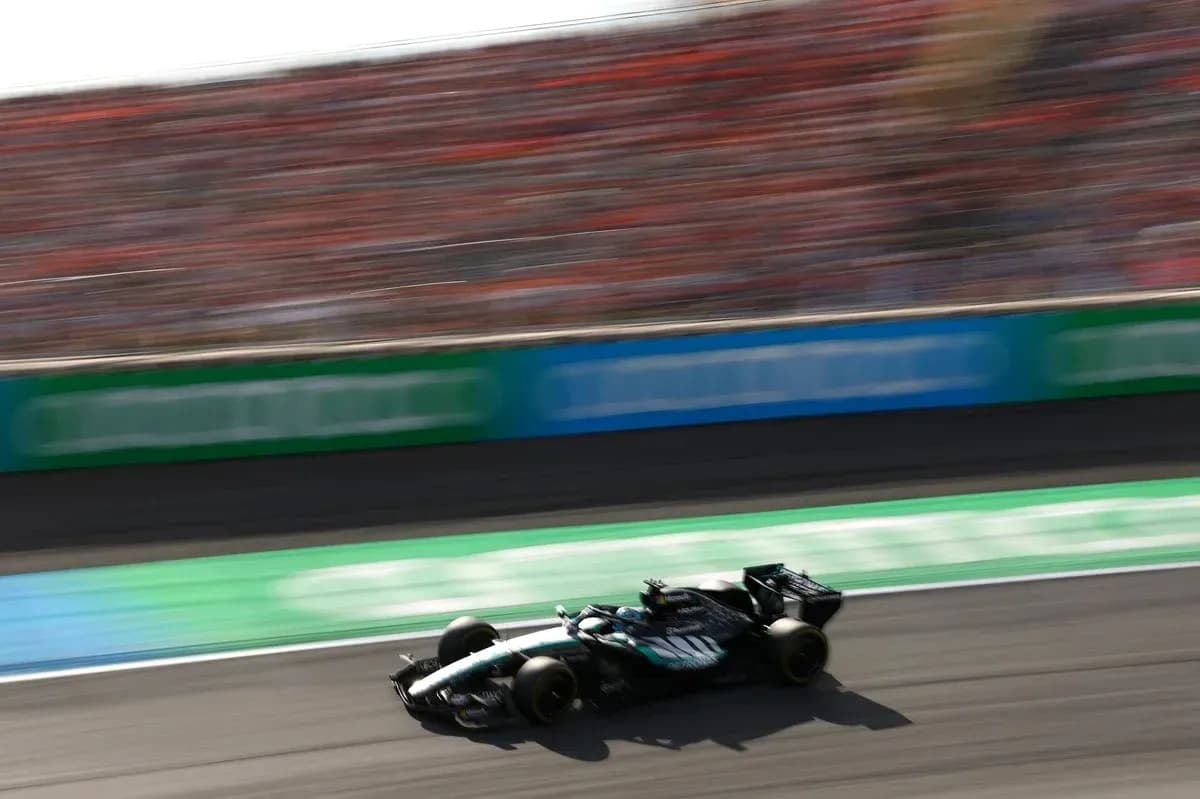
Andrew Shovlin, the team’s trackside engineering director, did not dress it up. The high-speed sweepers at Zandvoort, particularly the 7-8-9 sequence, exposed a weakness Mercedes neither expected nor properly understood, turning what began as a dominant weekend into one where McLaren and Lando Norris seized control of the grand prix.
From early control to chasing Norris
The tone of the weekend flipped sharply.
George Russell opened by taking pole for the sprint and converting it into victory, a statement of intent that suggested Mercedes had the measure of the field around the tight, undulating Dutch circuit. Over one lap, the car looked hooked up. Over a short sprint distance, it looked even better.
Then came Sunday.
Norris and McLaren stepped forward, Norris grabbing pole and then dictating the grand prix. Mercedes still locked out second and third in both qualifying and the race, with Antonelli beating Russell on Sunday to stretch his championship advantage to 59 points. On paper, that is a powerful result.
Inside the garage, it felt anything but straightforward.
“We've got a few things on the performance side to try and dig into,” Shovlin admitted on the team’s Nu Silver Arrows Radio Show, outlining a picture of a car that swung unpredictably between strong and vulnerable, sometimes from stint to stint, sometimes from corner to corner.
“Pretty rubbish” where it hurt most
The problem areas were brutally clear to the engineers.
“There were a few corners where we were pretty rubbish, like that combination of [Turns] 7, 8, 9,” Shovlin said. The high-speed direction change punished the left-hand tyres and exposed a trait Mercedes had not seen this season, especially on circuits with long, loaded corners in one direction.
The car looked fine in the slower, more technical parts of the lap. Sector times backed that up. But as speeds climbed and the lateral loads rose, the W15 fell away from the benchmark.
“We were a bit off the pace in the fastest of those [turns]. And then our problems kind of grew a bit as we went through. All the other corners look solid.”
That inconsistency – strong in some places, vulnerable in others – is what left Mercedes scratching its head. The team has raced at tracks with similar demands on one side of the car without this kind of drop-off. Now, with more high-speed circuits looming on the calendar, it has a new puzzle to solve.
Same car, different race
What really unsettled Mercedes was how little they changed between sessions and how differently the car behaved.
“We didn't change the car,” Shovlin stressed. Tyre compounds varied across stints, as expected, but there were no radical setup swings, no hidden experiments. Yet the rhythm of each driver’s race told a different story.
Russell’s opening stint underwhelmed compared to his later runs. Grip, balance, confidence – all seemed to come to him as the race unfolded. Antonelli’s race went the other way. His first stint was strong, then the pace faded in the second, dropped again in the third, and only partially recovered.
“It wasn't like we were playing around with electronic settings or up and down on flap angles,” Shovlin said. “And for him, the balance of the car was quite different stint on stint.”
By the chequered flag, the two drivers were describing almost opposite cars.
Russell reported a more understeery balance, the front reluctant to bite in the way he wanted. Antonelli, by contrast, wrestled with oversteer, the rear more nervous and eager to step out. On the data sheet, their setups did not justify such a stark divergence.
“The two drivers, normally they report similar things with a car at the end of the race,” Shovlin noted. This time, they did not – and that disconnect between what the engineers expected and what the drivers felt has become the central question back at Brackley.
Big points, bigger questions
For all the technical frustration, the scoreboard still flatters Mercedes.
The team banked 46 points at Zandvoort, its second-biggest haul of the season, trailing only the 55-point sweep in China. Both came on sprint weekends, when more points are available, but that does not diminish the value of leaving a difficult Sunday with a 2-3 finish and a healthy championship buffer for Antonelli.
“So, though, really good to have a strong point-scoring weekend when we weren't at our best in terms of performance,” Shovlin reflected. He spoke of the pitwall enjoying the intensity, the rapid-fire calls, the tactical juggling that comes with a tight race. The team rose to that part of the challenge.
The engineering side is a different story.
“But yeah,” he added, “a bit of head-scratching to do over the next few days.”
Mercedes has lived through far bigger crises than a misbehaving high-speed corner sequence at Zandvoort. Yet in a season where margins at the front are brutally fine and McLaren and others are circling, understanding why a car can look like a winner on Saturday and a chaser on Sunday might define how long this title lead really lasts.