McLaren Unveils ‘H-Wing’ for Monza in Title Fight
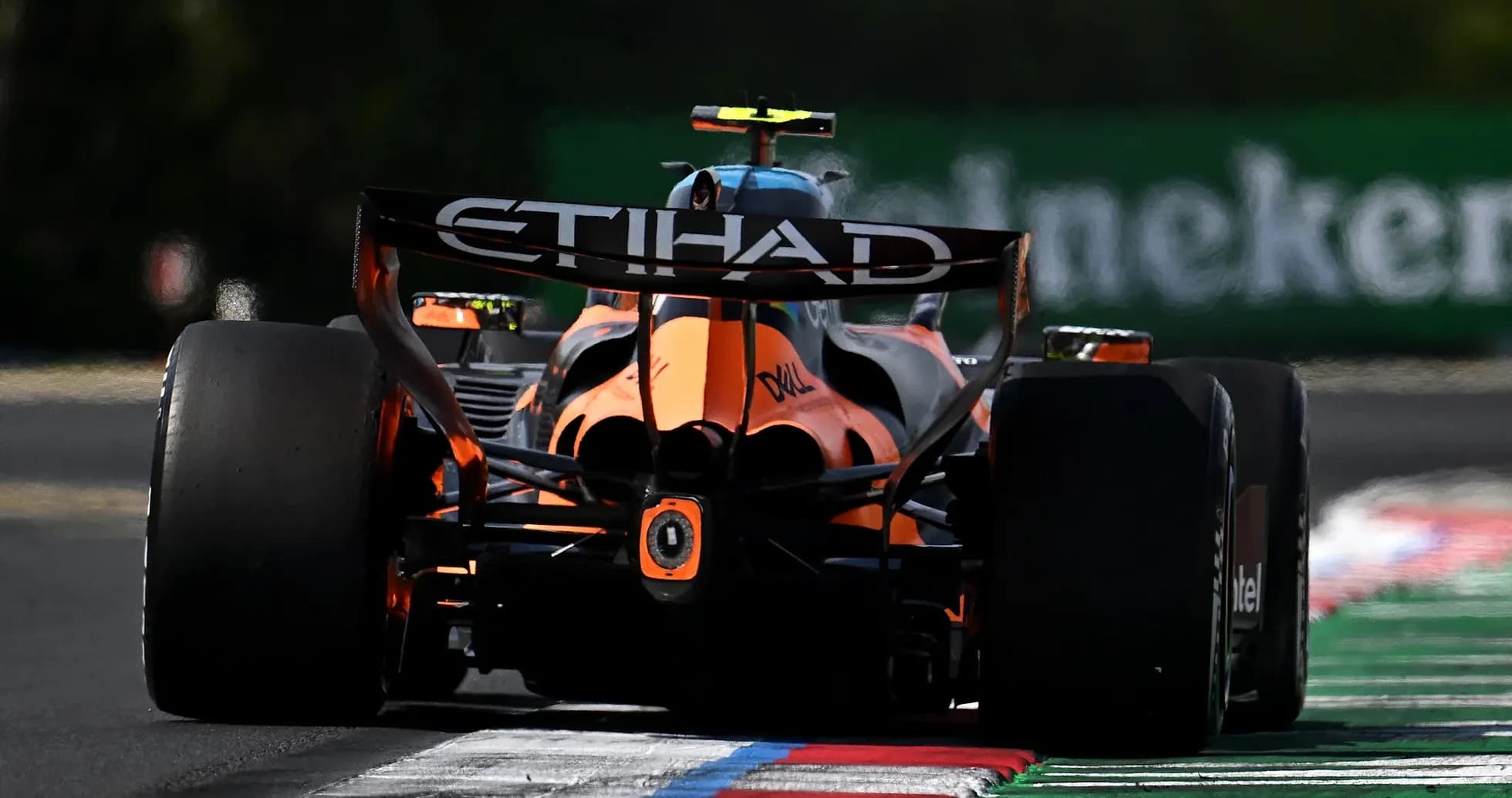
McLaren arrive at Monza riding a wave of form and armed with something new – and very visible – on the back of the MCL40. The team will roll out a fresh low-drag rear wing package for the Italian Grand Prix, headlined by the debut of what they’ve christened the ‘H-Wing’.
It’s not just another quirky name from the aero department. It’s a deliberate nod to one of McLaren’s most notorious innovations.
A modern echo of the F-duct
The label comes with a bit of internal folklore. The team’s preview explains that the ‘H-Wing’ follows the same naming logic as the infamous F-duct that shook up the 2010 season. Back then, McLaren’s clever airflow trick took its name from the ‘F’ in the sponsor branding next to the system’s inlet on the chassis.
This time, the ‘H’ is lifted straight from the Etihad Airways branding that sits across the rear wing as part of the team’s partnership with the airline. The concept itself sits in the same lineage: creative aero thinking, tightly integrated with the car’s bodywork and branding, aimed squarely at clawing back those last few tenths.
Ferrari fired the opening shot in this particular arms race with their rotating ‘flip-flop’ rear wing during pre-season testing. Red Bull answered with their own version at Round 4 in Miami. McLaren then quietly joined the conversation with a rotating design trialled in Free Practice 1 in Hungary.
Now they’re ready to let it loose over a full weekend at the fastest track on the calendar.
Built for Monza’s brutal simplicity
Monza strips a Formula 1 car down to its essentials. Long, punishing straights. Heavy braking zones. Aggressive kerb-riding through the chicanes. There’s nowhere to hide a weakness.
“Monza presents a unique challenge, with its long straights placing a premium on drag reduction, while the heavy braking zones demand stability and the chicanes require good ride performance,” said Neil Houldey, McLaren’s Technical Director of Applied Engineering, as he set the scene for the weekend.
That balance – minimal drag without turning the car into a handful under braking – is exactly where this new rear wing specification comes in. McLaren will run a low-drag package that includes the H-Wing, alongside a series of smaller aerodynamic tweaks and alternative low-drag options that will be assessed before they lock in a final configuration for qualifying.
The team confirmed they’re also bringing “minor aerodynamic updates” tailored to Monza’s unusual layout, as well as “previously declared parts that are specific for such a unique track”.
The energy game and the ‘yo-yo’ effect
Monza isn’t just about top speed. It’s also a test of how smartly a team can use its hybrid systems over a lap that offers limited chances to recharge.
“Energy will also be limited around the lap, so understanding the best way to recharge and deploy it will be an important focus during practice,” Houldey explained. Get that wrong, and a car can fly down one straight only to be a sitting duck on the next.
“Managing overtakes will therefore be particularly important, as different approaches to harvesting and deploying energy could create a yo-yo effect, with cars trading an advantage at different points around the lap.”
That’s where the new wing and the energy strategy intertwine. A slipstream, DRS, and a low-drag configuration can turn Monza into a high-speed chess match, with cars surging and fading in different sectors depending on how aggressively they harvest or deploy power.
Tiny margins, big decisions
At the sharp end of the grid, the room for error is vanishingly small. Houldey knows it.
“The margins at the front remain extremely tight, so the accuracy of our pre-event simulation and simulator work will be critical in giving us a strong baseline,” he said. The message is clear: the groundwork has already been done behind closed doors. Now they need clean, uninterrupted practice sessions to validate the numbers, tune the ride over the kerbs, and unlock the best version of the car-driver package.
“This weekend, we have brought what we believe is needed to be competitive, including a new low-drag rear wing specification, including the first use of our H-Wing, alongside some small aerodynamic and low-drag options that we will evaluate before deciding the final specification for Qualifying.”
The H-Wing might grab the headlines, but inside the garage the story is about detail – how all those small pieces stack up into lap time.
Houldey is under no illusion that McLaren have reached the ceiling of this car yet. “Overall, we know there is still more performance to unlock from the MCL40, both through maximising the package we already have and through further upgrades planned for the races ahead.”
Monza will show whether this latest step keeps them in stride with their fiercest rivals – or whether the next round of upgrades can’t come soon enough.