Madring Circuit: Formula 1's New 'Car Killer'
They are calling it a “car killer” before a single Formula 1 lap has even counted.
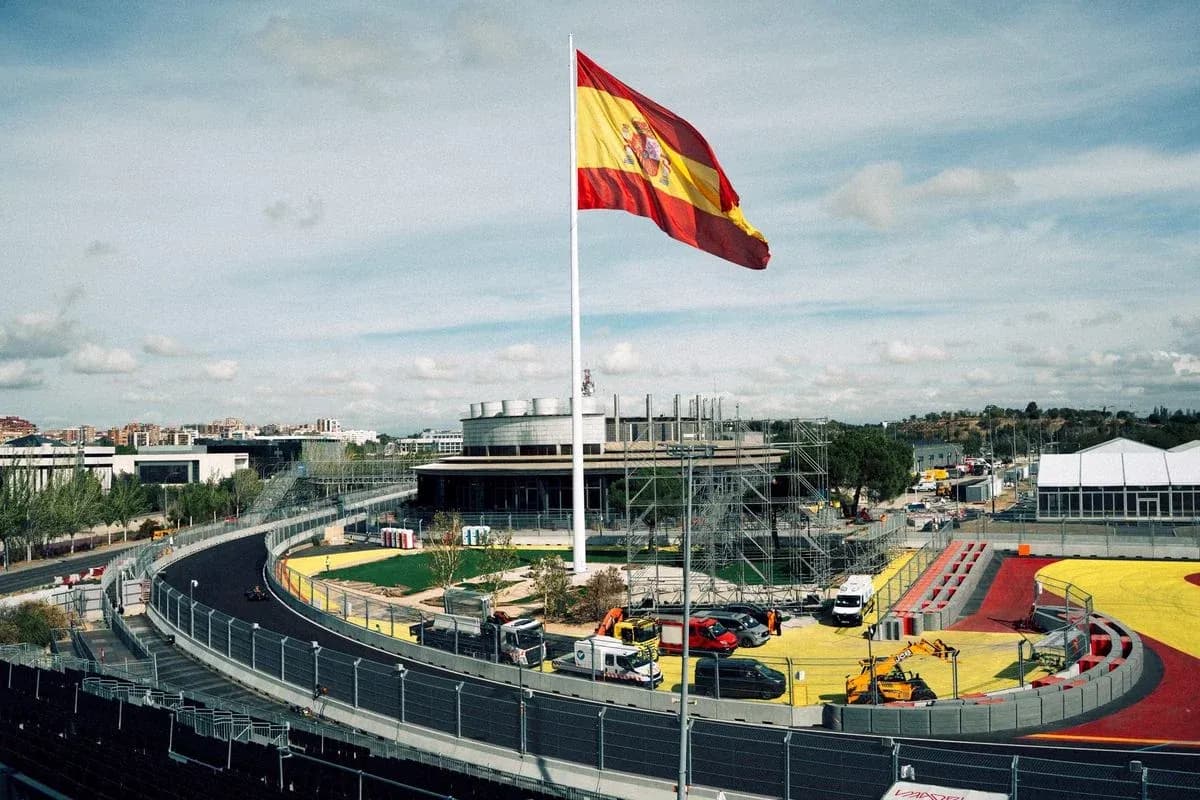
Madrid’s brand-new Madring circuit arrives on the calendar this weekend with a reputation already dripping in bent suspension and shattered carbon fibre. Drivers who’ve sampled it are reaching for the most evocative references they can find: a mash-up of Monaco’s walls, Macau’s madness and Jeddah’s speed, squeezed into a tight, unforgiving ribbon of tarmac on the outskirts of Spain’s capital.
This is not another flat, anonymous street loop. It bites back.
A warning written in broken F3 cars
The first real clue came a couple of weeks ago, when Formula 3 turned up for a two-day test and left with a repair bill that made team managers wince.
- Nineteen red flags.
- Three broken chassis.
- Suspensions snapped, cars dragged back on flatbeds.
“In the Formula 3 test there were 19 red flags and three broken chassis, broken suspensions… OK, they’re Formula 3 drivers, but it’s a track that kills cars,” Williams team principal James Vowles told Spanish outlet Sport.
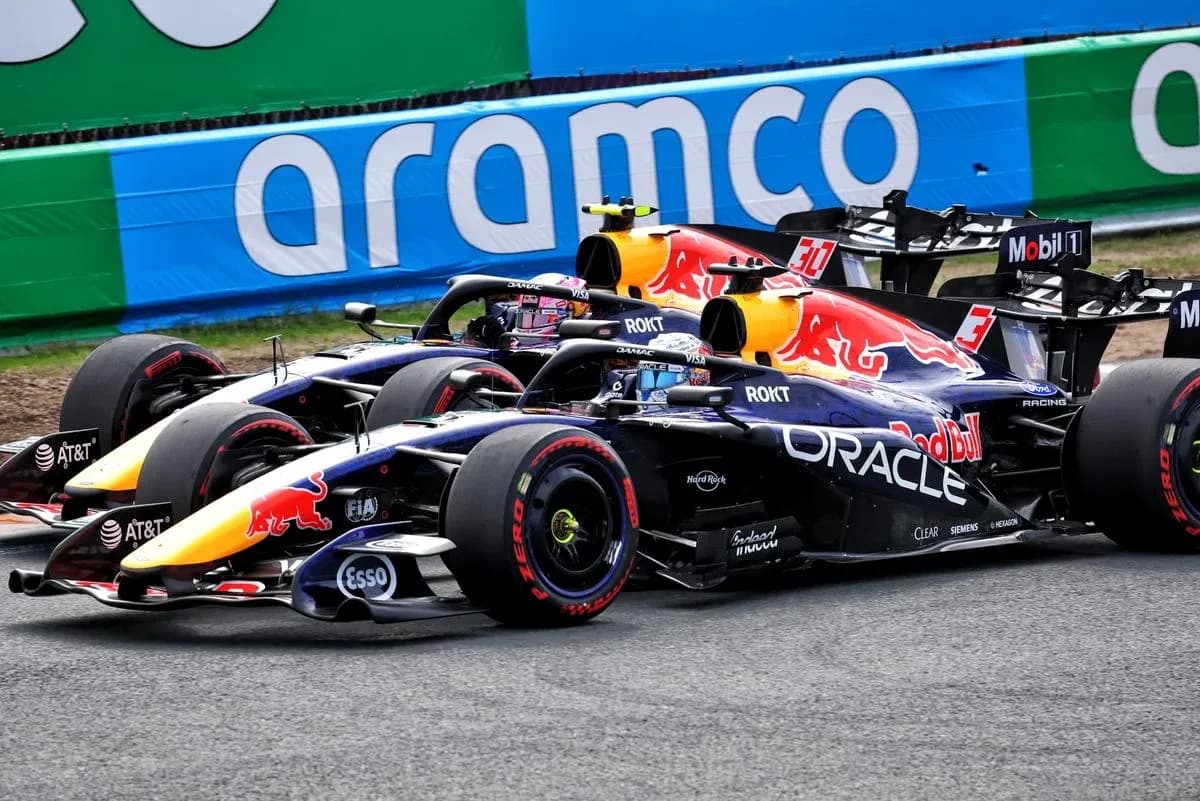
Some F3 outfits were far from thrilled about being the crash-test dummies for F1’s latest showpiece. But that bruising test was exactly what the organisers wanted: a live shakedown to avoid a Las Vegas-style embarrassment, where loose infrastructure wrecked Carlos Sainz’s Ferrari and shredded the schedule.
Ferrari had already tiptoed around the circuit on a filming day in July, but that was on a rougher, earlier surface. The F3 test was the first proper run at the finished product. And what it revealed worried plenty of people in the F1 paddock.
Those 19 red flags weren’t concentrated in one obvious trouble spot. Incidents were scattered all around the lap. No single “problem corner” to tame, just a string of places where a slight misjudgement sends you into the wall and your accountants into meltdown.
With teams counting every cent of development spend under the cost cap as 2026 approaches, this is the last weekend anyone wants to write off a chassis.
A lap that never lets you breathe
Ask the drivers why the Madring is so punishing and the same themes keep coming up: no forgiveness, no margin, and walls that seem to move towards you, not away.
Audi-backed F3 points leader Freddie Slater summed it up simply. The corners are tight. The exits are hemmed in by concrete. You’re always driving away from the wall, not leaning on it. To be quick, you have to push. If you don’t push, you’re nowhere. If you do, you risk ending up in it.
Yet Slater still called it one of the best tracks on the F3 calendar. Old-school. Macau energy. A circuit you have to attack, not manage.
The lap opens with a slow chicane reminiscent of Jeddah’s first flick, then unleashes the cars flat-out through Turns 3 and 4. That feeds directly into the first major hazard: a high-speed chicane that became a graveyard for F3 machinery.
It’s brutal. Arrive at around 340km/h, stamp on the brakes, throw the car across aggressive kerbs, and trust that you’ve judged the wall on exit to the centimetre. Get it wrong by a fraction and the trajectory is simple: head-first into concrete.
This section is one of only two straight-mode deployment zones on the circuit, so cars will be at full harvest and full commitment. It’s exactly the kind of place where a straight-mode failure, like those that hit Max Verstappen’s Red Bull earlier this year, would turn nasty very quickly.
Survive that, and the track ducks under an underpass and climbs uphill into another complex that chewed through F3 wings and wishbones. There’s no rhythm of long, flowing corners here; it’s a series of technical punches, each one demanding precision.
Then comes the part everyone will talk about.
La Monumental: F1’s wild new wall of banking
La Monumental is the Madring’s signature – a 24% banked corner that makes Zandvoort’s swooping turns look tame.
The run-up to it is already fraught. A tight chicane, then a rapid right-left at Turns 10 and 11 that’s easy to misjudge, spits the cars straight into the banking. Get greedy there and you arrive at La Monumental out of shape and out of luck.
Pirelli’s chief engineer Simone Berra has called it “the most severe turn” on the calendar. His numbers back that up: La Monumental loads the tyres 20–30% more than Zandvoort’s banking. And unlike Zandvoort, this isn’t about engine power. It’s grip-limited, the tyres and suspension straining to keep the car glued to the surface.
The exit is blind. The line is anything but obvious. During the F3 test, drivers experimented with multiple approaches, searching for a way to be fast without bottoming out over the crest.
Slater said it felt like being in an IndyCar on an oval. In an F3 car it’s almost flat. In F1 trim, with more power, more weight and more downforce, it will be a far edgier proposition.
La Monumental is only halfway around the lap. From there, the circuit just keeps coming. More tight, technical corners, including a nasty right-hander at Turn 17, keep the pressure on. There’s barely a moment to reset. Go conservative and you’re slow. Push and you flirt with disaster.
Monza F3 sprint winner Taito Kato put it bluntly: to find lap time, you have to get close to the walls. It’s risky. It’s fun. It’s expensive if you misjudge it.
“Shocked” drivers and the safety question
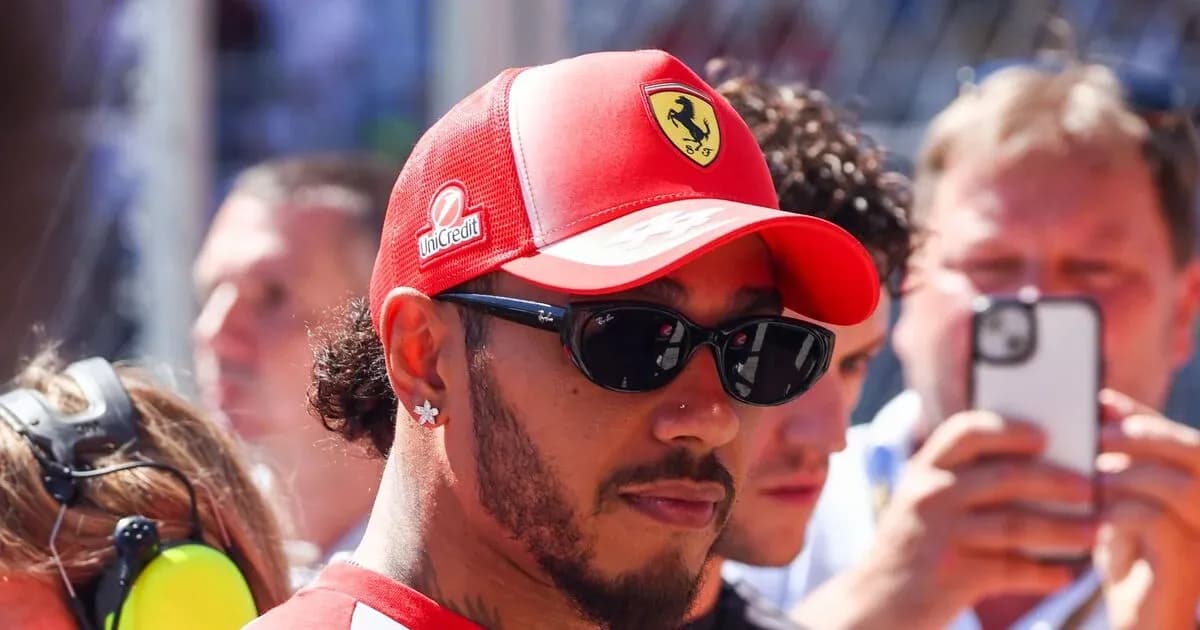
By the time the F1 field rolled into Monza, word of Madrid’s new monster had spread. On the drivers’ parade, Carlos Sainz said “everyone seemed quite shocked by the track that Madrid has come up with”.
Sainz, an ambassador for the event, meant that as a compliment. In an era of copy-paste street circuits, here is a venue with real character – and real consequences.
He knows the F3 test turned the place into a car cemetery. Whether F1 machinery will suffer the same fate is still unknown, but Sainz is already braced for a chaotic weekend. He’s expecting safety cars, red flags and yellow flags in qualifying alone.
Audi F1 driver Gabriel Bortoleto called it “very interesting” and “dangerous”, but also “very challenging”. Sergio Perez, asked if it crossed the line, simply said it wasn’t any more dangerous than Jeddah.
That’s not exactly reassuring. Jeddah has already produced some enormous shunts, including Mick Schumacher’s 2022 qualifying crash that destroyed his Haas and ruled him out of the race.
So when people say Madrid is “no more dangerous” than that, they’re still talking about a track that can rip cars apart.
The hope, from purists at least, is that such a high-risk, highly technical layout lets drivers make the difference. Arvid Lindblad has already dubbed it “a real drivers’ track”, and the ingredients are there for a knife-edge qualifying session with tiny margins and the potential for a shock result.
But what thrills on Saturday can suffocate on Sunday.
Will the race live up to the qualifying?
Strip the romance away and the layout raises an awkward question: can you actually race here?
The corners are tight. The straights are short. Heavy braking zones are scarce. On paper, it looks more like a place to set a hero lap than to pull off a clean overtake.
Energy recovery opportunities are plentiful, which should stop the battery-management games we’ve seen at some venues. Yet the overall picture hints at a Hungary-style grind rather than a Monza, Silverstone or Spa-style free-for-all.
Alex Albon captured the mood with a deadpan line: “I don’t think there’s going to be any overtaking. I hope you guys got your fix in [Monza] and ignore next weekend.”
Chaos might change that. Safety cars and red flags can flip any race on its head. And there’s another variable: Formula 2 and Formula 3 will pound around the place in five races before the grand prix, including the F3 title decider. That means plenty of rubber, plenty of incidents and a constantly evolving track.
There’s a precedent for this. When F1 first went to Baku in 2016, GP2 produced one of its wildest weekends, with 17 retirements across two races. F1 drivers, watching the carnage, dialled down the risk. The grand prix itself turned out to be a surprisingly flat affair. The chaos came in later years instead.
Sainz remembers that well. He expects F1’s more experienced field, with bigger responsibilities to factories and budgets, to show similar discipline in Madrid. The cars are faster, the consequences higher, but the instinct to protect equipment is strong.
He also expects the circuit to evolve across the weekend. F1 drivers, he says, can already spot problem kerbs and awkward cambers just from an FP1 run and feed that back to the FIA and race director. Adjustments can follow, but they’ll come in real time, with the world watching.
Still, it feels inevitable that someone will get caught out. There aren’t many places around here to make a mistake and get away with it.
Madrid’s big audition
Sainz has urged his colleagues to hold off on snap judgements. He wants a proper debrief after the race, a clear-eyed look at what worked and what didn’t.
He knows the first attempt doesn’t have to be perfect. Miami, he points out, had what he called a “bit of a disaster” of a debut in 2022 before evolving into a “great grand prix”. Circuits can be tweaked. Kerbs can be reshaped. Walls can be moved. The Madring will not be frozen in time.
But the political reality is harsher. Cities are queuing up to host F1. Madrid, even with a 10-year contract in its pocket, cannot afford a forgettable first impression. It needs theatre. It needs jeopardy. It needs a moment.
On that front, the circuit has already delivered one thing: personality. It looks old-school. It punishes errors. It might shred budgets. Qualifying should be electric.
The lingering doubt hangs over Sunday. Will the race match the spectacle of one-lap heroics, or will the “car killer” reputation end up overshadowing the show it was built to create?