Madrid Street Circuit's First Grand Prix: A Mixed Review
The new Madrid street circuit has survived its first Spanish Grand Prix weekend. Now it has to change.
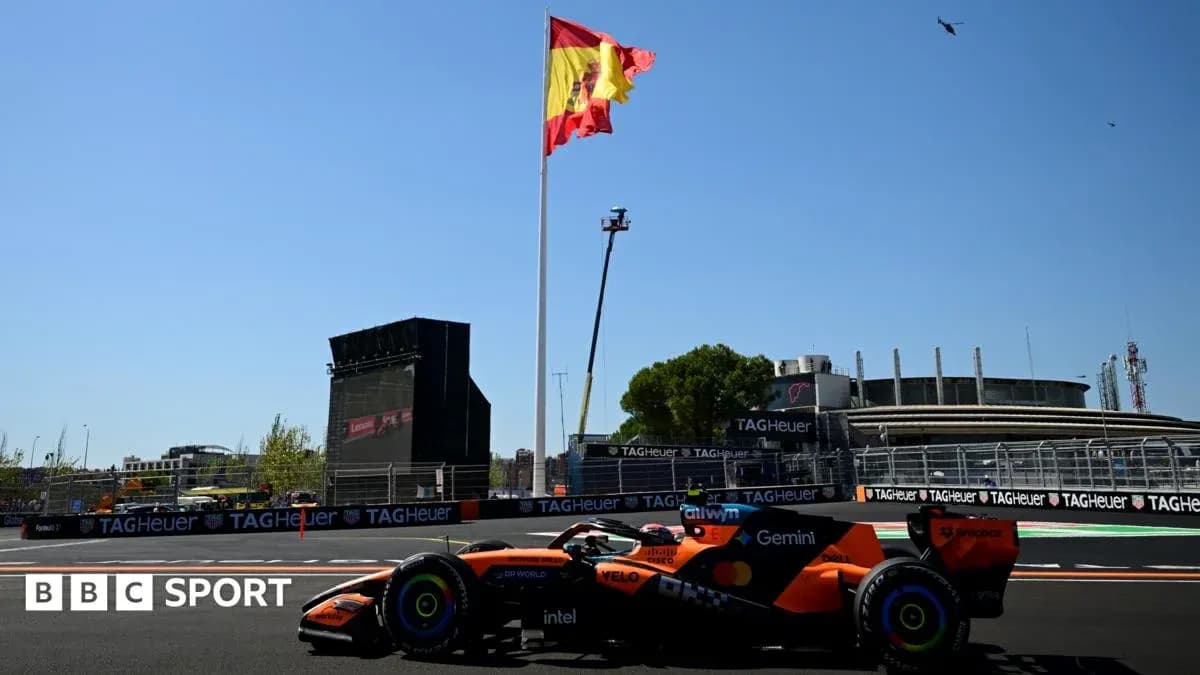
What played out around the Ifema exhibition centre was a striking, high-gloss event wrapped around a race that left drivers and fans largely unmoved. The show worked. The circuit, as a racing venue, did not.
A spectacle with no sting
From the paddock, the verdict split in two almost along job lines.
Team bosses loved it. The teams rolled into a purpose-built paddock village a short hop from Madrid’s international airport, with space to breathe and room to dream even bigger. Frederic Vasseur called the event “mega”, and he meant it.
“The infrastructure, we were mega welcome in the city,” the Ferrari team principal said. “We have also to be fair with them and to congratulate Madrid for the job done on this side.”
Toto Wolff went further. For the Mercedes boss, as a first attempt, Madrid set a new bar.
“For a first [race], it's probably one of the best, or maybe the best, that I've seen so far,” he said. “It's a temporary circuit. They've built something that is challenging for the drivers. A mini Macau or a mini Monaco. The location is good.”
So the backdrop impressed. The problem lay on the asphalt.
Drivers bored in the cockpit
Once the lights went out, the weekend’s gloss dulled quickly. The new Madring layout – a hybrid of existing Ifema roads and permanent sections, crowned by the banked Turn 12, La Monumental – simply refused to race.
Over one lap, drivers enjoyed the challenge. In traffic, they felt trapped.
Williams’ Alex Albon did not dress it up. The race, he said, was “pretty boring”. Audi’s Gabriel Bortoleto went even harder, admitting he “almost fell asleep”.
Race winner Kimi Antonelli, who should have been basking in the glow of a breakthrough victory, instead spent part of his debrief dissecting a layout that punished ambition.
“It definitely doesn't create overtaking opportunities and it doesn't push you to try and make a move because 80% of the time you might have a contact,” he said. “There are some corners that need to be changed to create more overtaking opportunities because right now, yes, it's nice over one lap, but for sure in the race you're just stuck behind.”
When the man standing on the top step calls the circuit a traffic jam, organisers have to listen.
Norris: “I don’t know how someone looks at this design and goes, ‘mint’”
World champion Lando Norris, denied victory by the poorly timed arrival of a virtual safety car, still had enough energy left to take a scalpel to the layout.
He homed in on the closing sequence.
“There are some obvious changes they should make,” the McLaren driver said. “They should get rid of [Turns] 18, 19 – useless. Just have more of a straight into a hairpin.
“I don't know how someone looks at this design and goes, 'mint'.”
His criticism cut, but it came with a challenge rather than a dismissal.
“There's a lot of opportunity. They can make it into a track that's good for racing, and I'm excited to come back here next year if they can make these changes because I think it's a track that is good fun to drive and it can be a great racetrack.”
That is the crux. The bones of something exciting are there. They are simply in the wrong order.
Open doors, open minds
Behind the scenes, the message from Madrid has been clear: nothing is sacred, not even a brand-new layout.
The organisers have already told Formula 1’s commercial rights holder and the FIA that they are ready to rework the circuit for 2025. Vasseur believes they have the freedom to act.
“They are keen to do modifications in the future,” he said. “They have probably more latitude in Madrid than in Monaco to change something. Let's work together to see if we can do something.”
Wolff echoed that sense of flexibility after talks with the circuit’s hierarchy.
“I had a discussion yesterday with the CEO of the circuit and they are totally open-minded about next year and say we've had the discussions with the FIA – ‘what is it we should do? How is it that we should lay the track out when it comes to overtaking also?’”
His conclusion was blunt: “There is a constant discussion and I think that they are on it and understand that we can tweak it a little bit here or there.”
For a venue that must reinstall the track each year, change is not a burden. It is built into the business model.
Fans find the rough edges
Away from the pit wall, the verdict from many fans was harsher.
Social media filled with complaints about access and facilities. Some spectators reported being left to sit on bare earth at trackside. Others pointed to poor visibility, broken amenities and a venue that looked and felt unfinished.
Everyone knew Madrid had raced the clock to be ready. The deadline was met. The polish, clearly, was not.
That contrast – a paddock impressed by infrastructure and a paying public pointing at teething problems – will sting. The organisers want Madrid to be a destination race, not just a corporate showcase.
“We will be open”
Madring managing director Luis Garcia Abad, once Fernando Alonso’s manager, did not respond to requests from BBC Sport on Monday. His stance, though, was already on record.
Speaking after the race, he told Autosport that the governing body had already mapped out a path to improvement.
“The FIA defined clearly which is the way to improve the track layout, and we will be open because we will have to reinstall the track for the next year,” he said.
“I really believe that the drivers enjoyed qualifying a lot. But for sure we will try to make an improvement for next year.
“We have the space, we have a venue, we have the facilities, we have the capacity to do it. I'm sure that FOM, FIA and ourselves, we will try. If we can improve something, we will do it.”
Space. Capacity. Willingness. For a new race on the calendar, those are powerful assets.
Now Madrid has twelve months to turn a visually striking, technically demanding layout into a circuit that does what Formula 1 demands above all else: produce a grand prix that no one could ever call boring.