Madrid Welcomes F1 With Royal Presence
The Spanish Grand Prix came home to Madrid after 45 years, and the city responded with noise, color and a royal touch. On a sun‑drenched Sunday at the brand‑new Madring semi‑street circuit, the cameras kept drifting back to three familiar faces in the paddock: King Felipe, Princess Leonor and Infanta Sofía.
The monarch had flown in from Norway, where he attended the funeral of King Harald V. By the weekend, he was back on home soil, swapping black tie for paddock passes and bringing his daughters along for a very public, very symbolic first: Leonor and Sofía’s official Formula 1 debut.
A First Lap for the Heirs
For the Princess of Asturias, 20, and her 19‑year‑old sister, this was more than a casual day out. It was their first time at a Formula 1 race in an institutional role, on a weekend when the sport itself was returning to the capital for the first time since 1981.
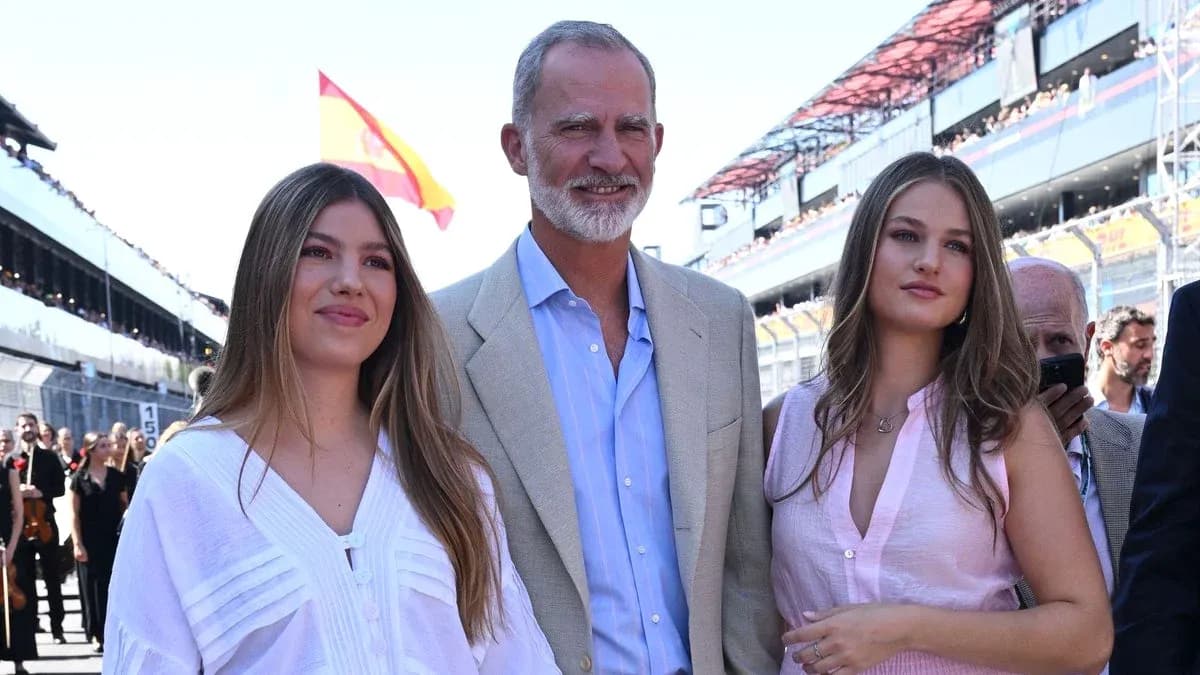
The scene felt strikingly relaxed for a royal engagement. Felipe arrived at the circuit with both daughters at his side, clearly in his element. The King is a long‑time motorsport enthusiast, and on this occasion he looked less like a distant head of state and more like a father sharing a long‑held passion.
Queen Letizia stayed away from the spotlight this time. That absence only sharpened the focus on the easy, unforced dynamic between Felipe and his daughters as they walked the paddock, chatted, and watched mechanics and engineers at work. It was a rare, almost behind‑the‑scenes view of the family at one of Spain’s biggest sporting weekends.
The royal trio posed with the country’s two modern standard‑bearers in Formula 1, Fernando Alonso and Carlos Sainz, underlining the connection between the monarchy and Spanish elite sport at a moment of renewal for both.
Inside the Nerve Center
The visit wasn’t confined to handshakes and photo calls. One of the standout moments came when King Felipe, Leonor and Sofía stepped into the garage for a close look at the Formula 1 Safety Car.
Guided by circuit officials, they inspected the Mercedes‑AMG machine that leads the field when chaos breaks out on track. They listened as experts broke down the technology, performance and preparation that turn this car into one of the most crucial tools in race control.
The three leaned in, asked questions, studied details. Around them, the hum of generators, the hiss of air guns and the sharp smell of fuel and rubber framed a very modern royal engagement.
Throughout the day, Felipe never drifted far from his daughters. They talked, laughed, pointed out details on track. Whenever the cameras found them in the stands or in the paddock, the warmth between the three was obvious, a family enjoying a landmark sporting day that also carried institutional weight.
Paddock Style With a Royal Finish
Leonor and Sofía matched the occasion with a paddock look that felt carefully judged without being stiff.
Leonor opted for a fresh, understated outfit: a sleeveless dusty‑pink top with a fitted smocked waist, paired with flowing, high‑waisted white wide‑leg trousers. A coordinated clutch tied the look together, polished but relaxed enough for a day among garages and grandstands.
Sofía went for an all‑white ensemble that stood out against the metallic chaos of the pit lane. A long‑sleeved V‑neck blouse and wide‑leg trousers formed the base, sharpened by a slim brown leather belt and matching clutch that cut through the monochrome.
Felipe’s look stayed true to his familiar, unfussy style. A beige jacket over a light‑blue open‑collar shirt, navy trousers and dark sunglasses gave him the air of a seasoned paddock visitor rather than a stiff VIP, a tailored but easy outfit that fit the setting of a hot, high‑pressure race day.
An Official Date With the Grid
This was no private family outing. The Royal Household had flagged the visit in advance, underlining its significance on the national calendar.
“Don Felipe, accompanied by the Princess of Asturias and Infanta Sofía, will attend the Formula 1 TAG Heuer … on Sunday, September 13, at the new circuit,” read the initial announcement. A separate statement reinforced the formal nature of the engagement: “His Majesty the King, accompanied by Their Royal Highnesses the Princess of Asturias and Infanta Doña Sofía, will attend the Spanish Grand Prix.”
The timing matters. The Grand Prix comes just as the sisters prepare to disappear back into academic life. Leonor has begun a Political Science degree at Carlos III University of Madrid, while Sofía is about to return to France for her second year of college, this time at Forward College’s Paris campus.
Sunday, then, doubled as one of their last public appearances before the rhythm of lectures, exams and campus life takes over again.
Madrid’s New Circuit, Old Emotions
The royal presence added another layer to a weekend already heavy with meaning for Spanish motorsport.
Formula 1 last raced in Madrid in 1981, when Gilles Villeneuve triumphed at Jarama. The new Madring layout, a 5.4‑kilometer semi‑street circuit featuring the much‑discussed “La Monumental” turn, has stirred intense curiosity and debate among fans and drivers alike.
Spanish supporters flooded the stands, many draped in the colors of Fernando Alonso or cheering for local hero Carlos Sainz. For Sainz, though, the build‑up brought frustration. A difficult qualifying session left him openly disappointed.
“It was a very bad qualifying session,” he admitted, offering no excuses as he faced a long afternoon’s work on home asphalt.
All of it played out under the gaze of the royal box, where the King and his daughters watched a new chapter of Madrid’s racing history begin.
A Sporting Thread Through Royal Lives
Leonor and Sofía’s presence at the Grand Prix didn’t come out of nowhere. Sport has run like a thread through their public lives from the moment they were old enough to appear alongside their parents.
They have long been visible, vocal supporters of Spanish athletes and national teams. Most recently, they celebrated Spain’s victory in the 2026 World Cup final, joining the squad in the celebrations and underlining how closely the monarchy has tied itself to the country’s sporting triumphs.
Those spontaneous scenes sit alongside increasingly formal duties: the traditional reception at Marivent Palace, meetings such as the audience with Pope Leo XIV at the Royal Palace, and now official appearances at major international events on Spanish soil.
Their history as fans goes back to 2010. Leonor was four, Sofía just three, when they tried to help lift the World Cup trophy with goalkeeper Iker Casillas at Zarzuela Palace after Spain’s triumph in South Africa. The image became iconic, and they reprised it in 2012 after Spain’s Euro victory, this time older, but no less enthralled.
As teenagers, their role evolved. In 2022, they traveled to Brentford for the Women’s European Championship, their first official trip abroad without their parents, to support Spain. A year later, Sofía stood on the pitch in Sydney, celebrating with the national team after its historic Women’s World Cup win.
The pattern continued at the Paris Olympics in 2024, where they followed Spanish stars such as Rafael Nadal and Carlos Alcaraz from the stands, again blending fandom with institutional visibility.
Their commitment has had tangible effects. During the 2026 Princess of Girona Awards, organizers moved the ceremony to an earlier slot so the entire Royal Family could watch Spain’s crucial World Cup match before the final. Football, in that moment, shaped the royal agenda.
From football stadiums to Olympic arenas and now the F1 paddock, Leonor and Sofía have become recurring figures at Spain’s biggest sporting stages, mirroring their father’s own habits. Felipe attended the Formula E race at Jarama in March; on Sunday, he brought that same enthusiasm to Madring.
As the engines fell silent and the grandstands began to empty, one thing was clear: Madrid’s return to the Formula 1 calendar had arrived with royal backing and a new generation on the grid walk. The question now is how often the Princess of Asturias and her sister will swap lecture halls for pit lanes as Spain’s sporting story keeps accelerating.