Madrid Embraces F1: A New Era for the City
Madrid is used to noise. The Bernabeu roars, the songs roll down from those terrifyingly steep stands, and another superstar glides into town every few months to pull on the white shirt. This is a city that measures itself in European Cups and Galacticos, not lap times and tyre strategies.
So Formula 1 has picked a fight with the heavyweight.
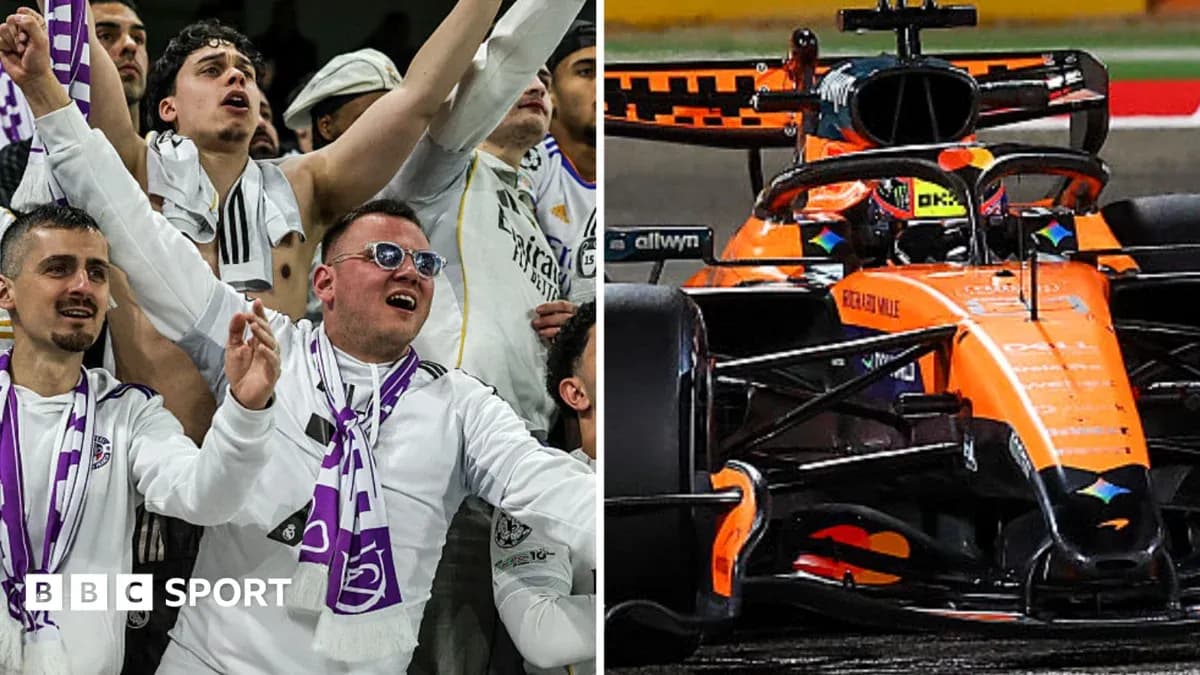
On one side: Real Madrid, 15-time kings of Europe, 36 La Liga titles, and a lineage of icons from Zinedine Zidane and Ronaldo to Jude Bellingham and Kylian Mbappé. On the other: a sport that has not crowned a Spanish world champion in 20 years, and has not raced in Madrid since 1981.
Does F1 really need another European stop? Madrid is about to give its answer.
A football citadel opens the door
At the end of August, 75,000 Madridistas watched Mbappé cushion a volley into the net to make it 3-0 against Malaga inside half an hour. Atletico Madrid lurk close behind in La Liga. The city barely goes a week without elite football.
So what more could its sports-mad residents possibly want?
Yet walk around the newly transformed Bernabeu – a gleaming steel spaceship of a stadium that somehow keeps all the menace of its old vertical terraces – or the more modest, atmospheric home of Real Madrid Femenino, which sits a short distance from the new F1 layout, and the conversation has started to change.
"Yes, [the F1 race] is good for Madrid," says one fan. Pride is the word that keeps coming up. Pride in a city that wants to be seen as more than a football factory. Pride in an “open city with open people and open minds.”
"The race can [take] Madrid's [identity] outside of football," he adds. Curiosity, not blind devotion, drives him: "I'm more than excited… I'm curious – I want to see how it goes."
Another supporter has longed for this for years. "We've always been dreaming of having something [from F1] closer to home. Having it back is great. I've been to Barcelona and the Belgian GP and I think let's see how it goes. Organising tends to be messy in the first year – I don't want to be the guinea pig."
There’s ambition in his voice too. "Let's hope it brings the city more into the spotlight. Madrid has a lot to learn from F1 about how to run a global spectacle; F1 could probably learn the true Spanish way. Barcelona is more international, the drivers and fans coming to Madrid will get more of a taste of Spain."
From Palacios to paddock
Madrid knows how to stage beauty. The Prado hangs masterpieces; crossing signals chirp like birds; Mexican conifers sway over traffic framed by grand palatial facades. It’s a city of elegance more than chaos.
That elegance, though, doesn’t automatically lend itself to a street circuit. The inner city’s flat, gridded layout and tight arteries would have made life difficult. So the race has landed somewhere that, at first glance, feels almost anonymous: an expo zone by the airport, run by the Ifema organisation.
"It started as a joke, it was a fantasy," admits Luis Garcia Abad, the Madring boss and former manager of Fernando Alonso. An F1 grand prix, he says, is “like a unicorn” – always chased, rarely caught. The queue of cities begging for a slot is long. Madrid has jumped it, and signed for 10 years.
Seven or eight years ago, the idea was just talk. Then Ifema called. “After one morning [here] I said: ‘It's possible.’”
The choice looks pragmatic. Madrid is compact for a capital and boasts a strong public transport network. Organisers have slashed car parking and are urging fans to leave their vehicles at home. The stars, of course, will glide into VIP compounds rather than queue for the pink line at Avenida de America, but the message is clear: this is a city race, not a car park festival.
Building a unicorn
So what exactly are fans walking into?
"It's a real experience, not just to be in Madrid but for F1," says Abad. Every section of the Madring, he insists, has its own personality. One corner towers above the rest – literally and figuratively.
Turn 12. Monumental.
More than 30,000 spectators will surround that single corner. The banking hits 26 degrees, steeper and longer than Zandvoort’s famous sweep. The section cuts through what will feel like a pop-up town on race weekend, topped by a VIP area fit, quite literally, for a king.
From a distance, Monumental looks like a fortress on a hill. Up close, in 44C heat, it’s a punishing climb even on foot. Sitting on it? Forget it.
"Luis wanted to think of something recognisable in our circuit. Something iconic," says Carlos Jimenez, operations director for Ifema. They’ve certainly got that.
The circuit’s construction has been anything but straightforward. Jimenez talks of sustainability – renewable energy powering the race, existing buildings pressed into service – but the numbers tell their own story: 65m euros poured into additional structures, 85m euros on the track alone.
Then came the weather. "We started building it in the wettest winter in 20 years in Spain. The rain was torrential. We suffered a lot, and had to stabilise parts of clay which behaves badly with wet conditions. It was very challenging. There are three layers of asphalt here. We learnt from one layer to the next."
Back in 2022, the whole thing sounded like a “crazy idea” even to those involved. Now Jimenez talks about momentum. Madrid, he says, is vibrant, globally known for football, and ready to show another side of itself.
He leans on a familiar comparison: "Like a ski resort must have entertainment for apres-ski, a circuit must have good after-race entertainment." On that front, the city sells itself – food, nightlife, a mild September climate, a reputation for parties that run until dawn. "The party in Madrid is unbeatable."
A street circuit with teeth
Strip away the hospitality suites and branding, and Madring is still a street track at heart. Part public road, part purpose-built. Stand on it and the walls feel close, almost claustrophobic. The width, or lack of it, jumps out. Overtaking? It looks brutal.
"From a driver's point of view it's quite a harsh circuit," says Abad. Twenty-two corners, elevation changes, banking. The layout has been tailored to F1’s current regulations, but it won’t hand out passes for free.
"I spoke with Charles Leclerc and he said it was an amazing track," Abad adds. "In the race I believe you will have the opportunity to overtake, but not by free. We're talking about gladiators – the best drivers in the world."
Plenty of those future gladiators have already had a taste. Formula 3 has tested here, and the feedback has been anything but lukewarm.
"It's going to be really edgy," says Madrid’s own F3 driver Bruno del Pino. "You are always on the limit, the corners are quick and the walls are close. It's like [Saudi GP circuit] Jeddah but with more difficulty."
He lingers on Monumental. "With Monumental, you see so much of an angle it never ends. The first time around, you see it going straight up and you feel like you'll fly straight out [of the track]. It is flat for us because of the downforce so it's not really a corner, but the previous combination of Turns 10 and 11 are high speed and close to the wall – quite a few drivers will kiss the wall."
Britain’s F3 racer Freddie Slater goes even further. "A lap of Madrid is so exhilarating, and the adrenaline is pumping – it's an incredible track to drive. It's one of the best tracks on calendar, if not the best. It's got character, it's got bumps, uphill and downhill – it's a bit more old-school."
Old-school is not a word often thrown at modern F1 venues. It matters.
Does F1 need Madrid – or Madrid need F1?
Abad keeps circling back to one point. The asphalt, the banking, the VIP suites – they all matter. But they won’t decide whether this grand prix becomes a fixture or a footnote.
The people will.
"Not just Madrid needing F1, maybe even F1 needing Madrid," he says. The investment, in his eyes, is not just into a race but into a living, breathing experience inside a city that already understands how to own a global stage.
"The future of the [F1] championship is something in this direction – we need to take care of customers and spectators. They are our future."
So the question is no longer whether F1 can muscle in on football’s turf. The question is what happens if a city that worships the Bernabeu decides it has room in its heart for a banked, brutal Turn 12 called Monumental.