Lando Norris Triumphs at Sao Paulo Grand Prix Despite Setbacks
Lando Norris left the most painful blow of his Sao Paulo Grand Prix victory for after the chequered flag.
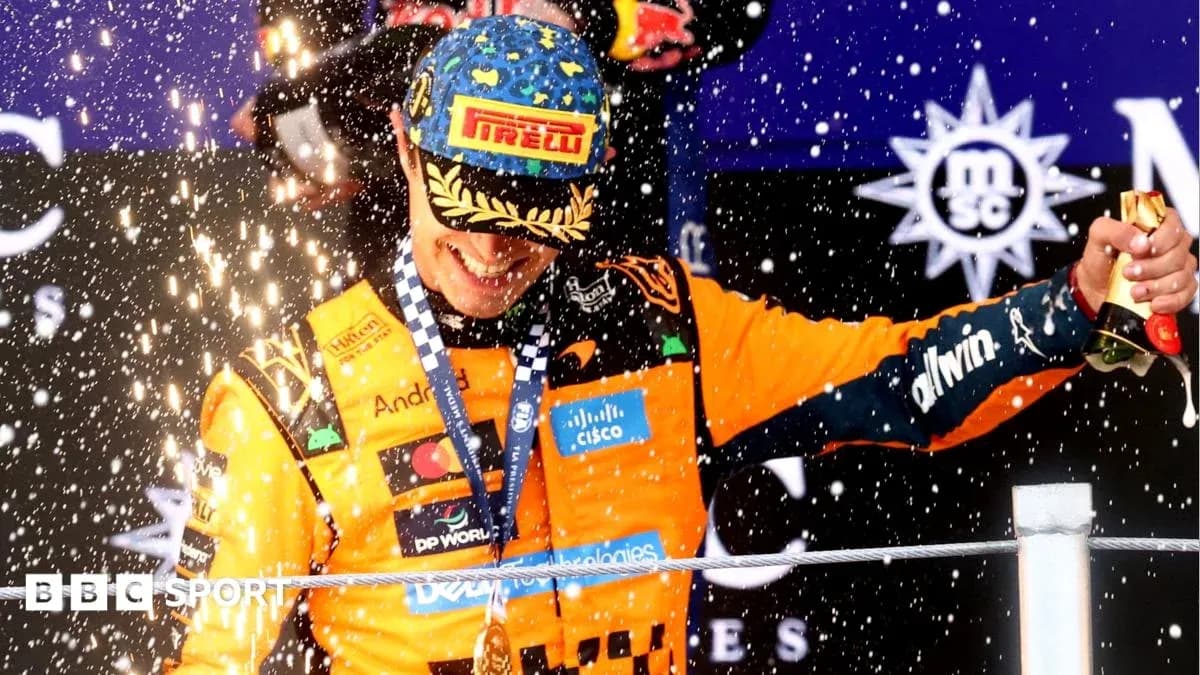
On the podium, riding the high of one of the drives of his career, he launched into his trademark celebration – leaping from the top step and trying to crack open the champagne by slamming it on the floor. The bottle lost. It shattered in his hands. As he held the broken top aloft in mock triumph, he stepped back and stuck the side of his head straight into the spray of fireworks erupting from the stage front.
Max Verstappen and Isack Hadjar offered no sympathy. They soaked him.
McLaren team principal Andrea Stella later confirmed Norris was fine, and the Briton looked it – sharp, wired, and utterly satisfied – as he dissected what he called “one of the hardest races of the year in terms of focus needed every lap and therefore one of the best”.
On a day when Interlagos showed its full, treacherous repertoire, Norris was close to flawless.
Norris hunts down the new king
The circuit started wet, dried out, then threatened to drown them again late on. It was the sort of day when world champions usually rise and pretenders get exposed. Instead, the new champion blinked.
From pole, Norris fluffed his lines. Compared with Kimi Antonelli’s launch, the McLaren looked almost sluggish. The Italian exploded off the line and disappeared, carving out an eight‑second cushion in 13 laps. For a while, it felt like a coronation drive to go with the title he had wrapped up a week earlier in Mexico.
Then the track began to come to Norris.
As the surface dried, McLaren rolled the dice first. Norris stopped for slicks a lap earlier than Antonelli and turned a seven‑second deficit into nothing. He emerged right on the Mercedes’ tail and started to lean on the new champion, corner after corner, lap after lap.
The pressure finally snapped the Italian’s composure. Three laps later, Antonelli spun at Turn One. No contact. No warning, in his own words. Just a rear end gone and a golden chance thrown away.
Norris swept into the lead and, from that moment, never looked like giving it back.
“A lot was thrown at everyone on a day like today,” Norris said. “We boxed one lap early on to the slicks. I came out and was right behind him and forced him to push a little bit more, and obviously he went into a mistake and I could capitalise on it.
“Also, from my side, just not making any mistakes, which is so easy to do on a day like today. So, great performance from the whole team. Certainly up there with one of the best I’ve ever had.”
It was not just the win. It was the way he dismantled the man who has made the rest of the grid look ordinary for much of the season.
Stella’s complete driver
Stella has seen Norris grow from raw talent into a driver who can bend a race like this to his will. In Sao Paulo, he saw the full package.
“When Lando operates at his best, he’s definitely one of the best drivers on the grid,” Stella said. He highlighted the same thing the rest of the paddock has begun to notice: in mixed conditions, Norris finds the edge faster than almost anyone.
In qualifying in the wet, he had already been electric. In the race, whenever the track hovered between damp and dry – that horrible, murky middle ground – Norris thrived. That was when he made the most time on everyone else.
Stella called him “very sensitive in understanding how much grip is available” and “complete as a driver” despite his age, pointing to his ability to deploy the car’s tools, adapt to imperfect balance and extract whatever grip exists. On a day when perfection is a fantasy, adaptability is king. “He’s definitely a master,” Stella said.
For McLaren, it was a badly needed reminder of who they are and where they still can go.
They had started the year on the back foot, having paid a price for throwing resource at last season’s title double and slipping behind on their 2026 car. By mid‑summer they had clawed their way back, Norris stitching together back‑to‑back wins across the summer break and missing out narrowly on another in Madrid.
Then the tide turned again. Other teams found gains. McLaren stumbled in qualifying. The car stopped flattering its driver.
Sao Paulo changed that narrative, at least for a weekend. New parts, a circuit that played to the car’s strengths, and Norris at his ruthless best in the wet and the greasy in‑between put McLaren back in the fight – and reminded everyone that one of the drivers of the year has not always had a car to match his ambitions.
Verstappen’s charge stalls on slicks
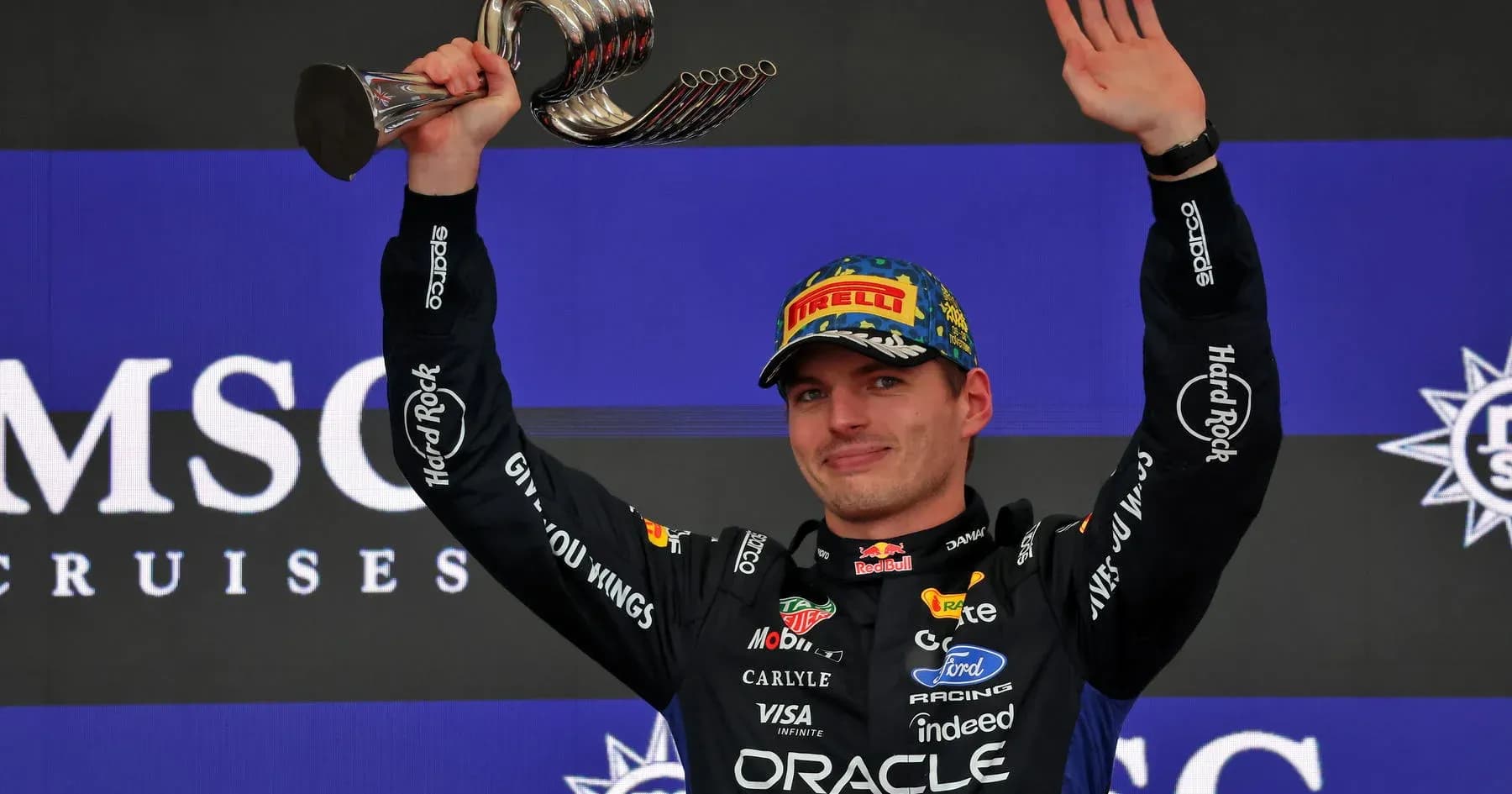
On most days, a drive from 21st to second would dominate the headlines. Verstappen’s recovery run would usually be the story. Norris made sure it wasn’t.
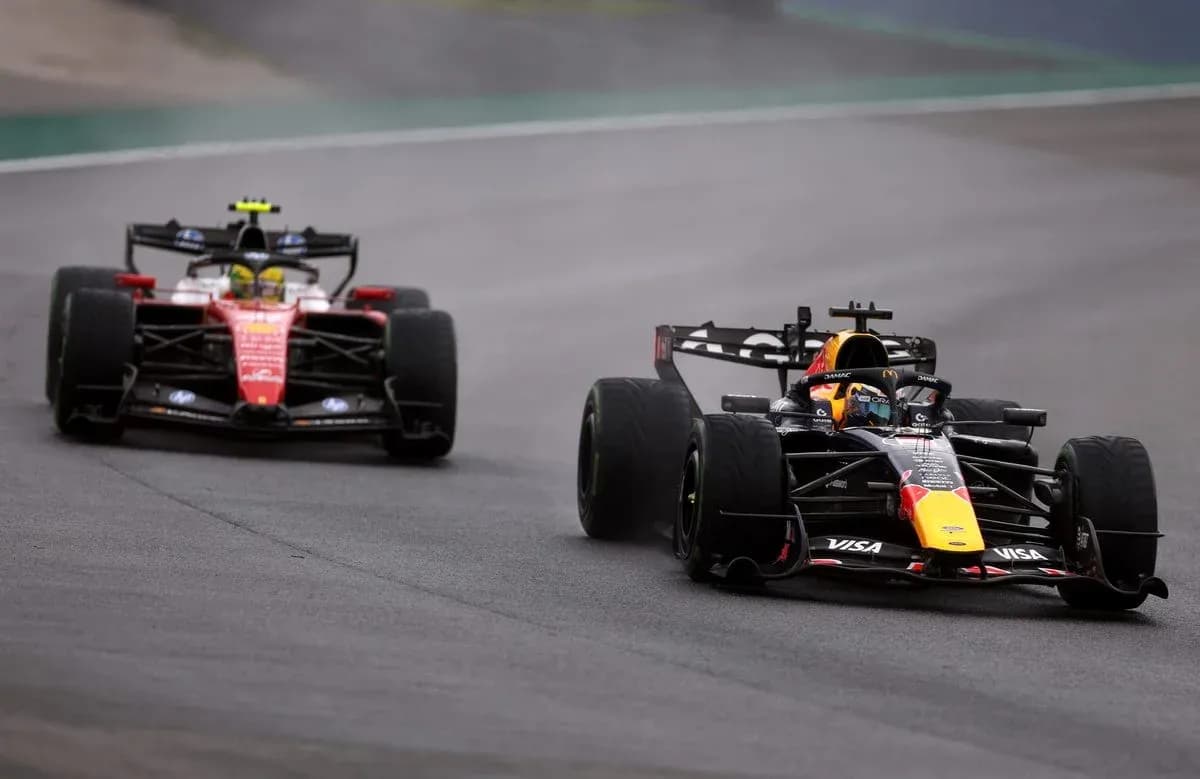
A grid penalty for exceeding his engine allocation dumped the four‑time champion down the order, four spots lower than the position from which he had triumphed in similar conditions at Interlagos two years earlier. Once again, he carved through the field with alarming ease at first.
By the time the pit window for dry tyres approached on lap 15, Verstappen was already up to fifth and less than 15 seconds behind Antonelli. With 56 laps still on the board and more rain looming, it felt ominous.
Then the race turned.
“As soon as I switched to the slicks, I had an extreme amount of oversteer in the car in the high-speed corners, which made it super difficult to drive,” Verstappen said. He suspected some kind of damage or aero loss. Whatever the cause, the effect was clear: the threat to Norris vanished.
“The first stint went really, really well,” he said. “We got very quickly back into the top 10, and the pace wasn’t bad. But… this was not normal.
“I sit here, of course, very happy with second, but at the same time, I know there was more in it if the car had been in good shape.”
Even when heavy rain returned late on, Verstappen could not launch a realistic attack. He wrestled a wounded car to second place and then, with a half‑smile, looked ahead. “Maybe next year I’d love to start a bit further up front instead of starting from the back or the pit lane.”
On another afternoon, that would have been the punchline. Not this time.
Antonelli’s rare mistake, Russell’s missed chance
For a long stretch, Antonelli looked set to pair his Mexico title coronation with a statement win in Brazil. His early pace was devastating. His control, familiar. Then the error came – and it was as surprising as it was costly.
“Very disappointing because we were on for the win up to that point,” he said. He admitted he still did not understand the spin: “I don’t know why I lost the rear so quickly as well, like no warning, nothing.”
The mistake dumped him out of contention for the victory, though he still salvaged fifth.
George Russell’s afternoon followed a different path but ended in similar frustration. The Briton had driven superbly in the early phases to climb from seventh on the grid to third, tucking in behind Norris and looking like the one man capable of matching the McLaren for raw pace.
Then he threw it away.
Exiting the pits, Russell spun, turning a 1.2‑second gap to Norris into a 20‑second chasm. Any hope of a win disappeared in a cloud of tyre smoke.
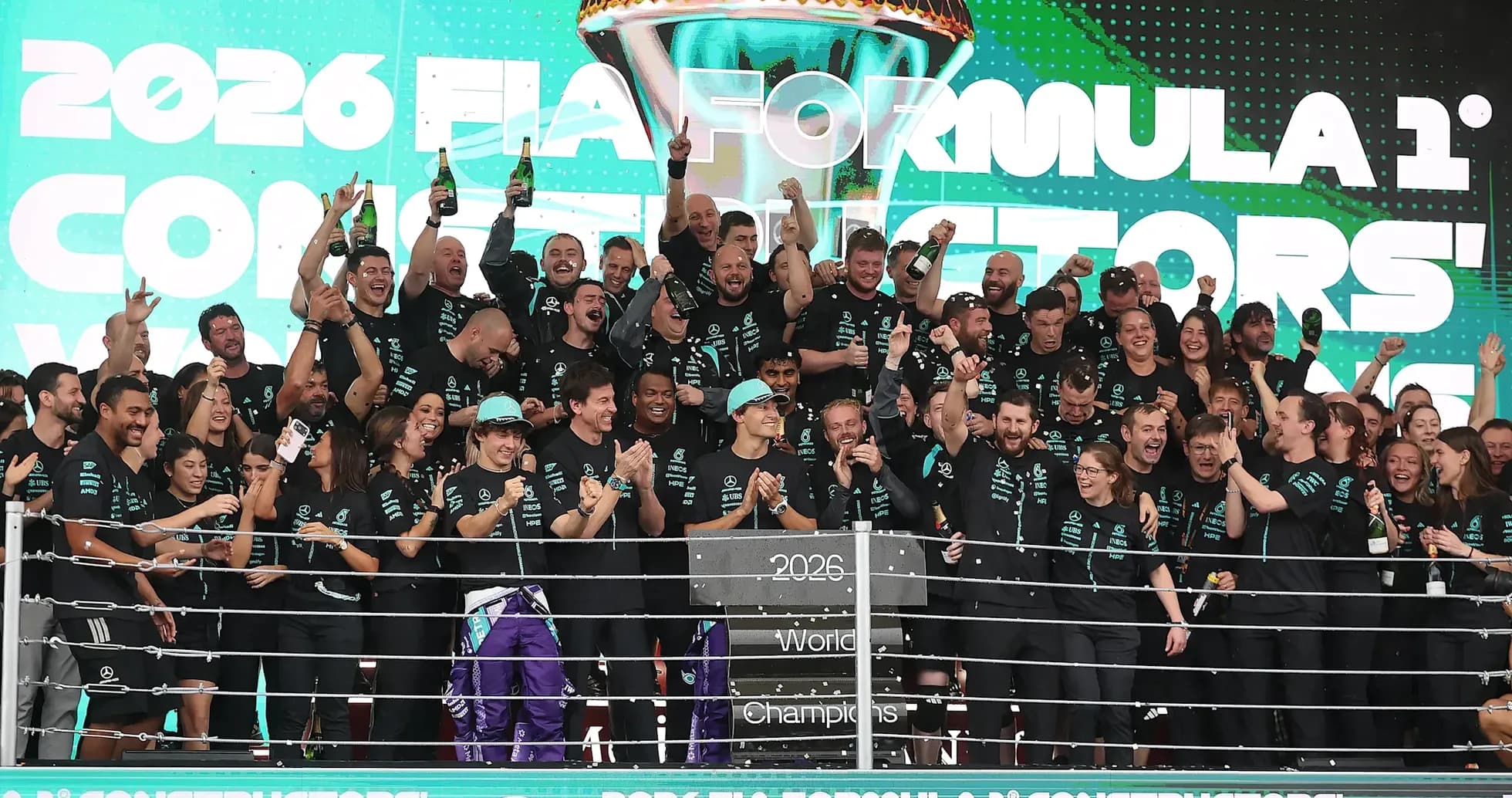
Yet the points still mattered. Fourth for Russell and fifth for Antonelli sealed the constructors’ title for Mercedes – their ninth, and their first since 2021 after a bruising spell in the ground‑effect era.
Antonelli parked his personal disappointment to focus on that bigger picture. “I’m going to put all this aside for now because the team, you know, take the title, we take the title for the team and they all deserve it,” he said. “I’m very proud to be part of this group and this team who has done and still does so much for me and I’m very happy for them.”
Mercedes back on top – but into a different kind of fight
Toto Wolff allowed himself a moment to enjoy the return to the summit, but his gaze was already drifting towards the storm on the horizon.
He knows what the numbers say – two titles sealed, a team dragged out of a four‑year maze of missteps and half‑solutions – yet he also knows the landscape has changed.
“Look at the last few races,” Wolff said. “We haven’t won.” In Sao Paulo, Antonelli “was just storming away” early on and it briefly looked like another Mercedes procession. Then reality bit.
“The competition has been getting tougher between Ferrari, McLaren, Red Bull and ourselves,” he said. “It’s four teams that can win races and will be challenging for a world championship. And I have no doubt that this is going to be very difficult for us next year.”
Wolff does not expect another era like the one built around Lewis Hamilton, those years when Mercedes collected titles almost by routine. The last four seasons, he admitted, were a grind of thinking they had found the answers, then realising they had not.
“It wasn’t that bad at all when you look at the sheer numbers, but it felt not good,” he said. The resilience to hold the operation together through that period is, in his view, what made this double title possible.
Yet he sees a sport transformed. Teams are leaner, smarter, better resourced. “This kind of runaway seasons, I don’t see them any more, whether it’s four in a row or eight in a row,” Wolff said. Upgrades can misfire. Dominance can evaporate in a handful of races. “You fall back and you’re just third on the road.”
He insists that volatility is “great for the sport”, even if he half‑jokes that he wishes it were still the era of Mercedes running away with everything. He does not think that is the reality now.
Norris’ drive in Sao Paulo underlined why. On a day that should have belonged to the newly crowned champion, or to a four‑time title winner charging from the back, it was the McLaren driver – precise, relentless, and utterly at home on the edge of adhesion – who dictated terms.
If this is the shape of the new era, with four teams and a handful of elite drivers trading blows across a season, the real question is simple: who can live at that level every Sunday, in every condition, when the next Interlagos storm rolls in?