Lando Norris Secures Stunning Pole Position in Madrid
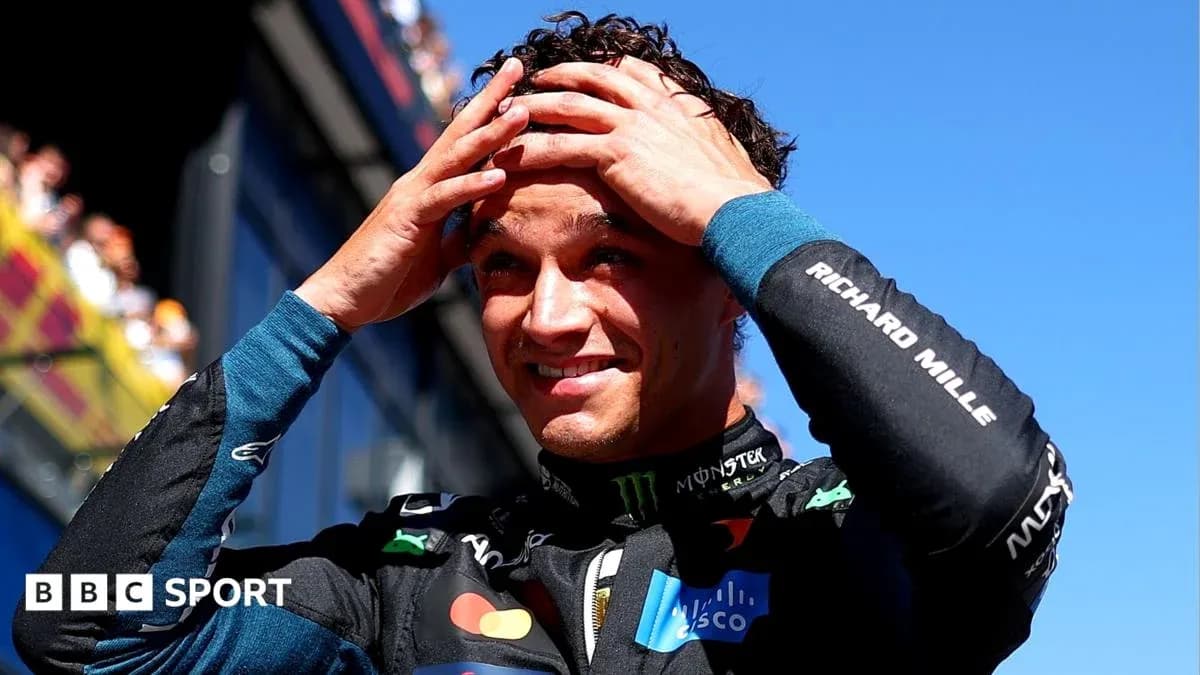
Lando Norris didn’t just steal pole in Madrid. He tore it out of the grip of a dominant championship leader, danced with the walls of a brand-new street circuit, nearly put it in the barriers at the final corner – and still came out 0.011 seconds on top.
On a day when the Madring finally bared its teeth, Norris produced a qualifying lap that left even hardened paddock veterans shaking their heads.
A lap on the edge
Two numbers tell the story.
From his first run in Q3 to his second, Norris found an astonishing 0.701 seconds. In modern F1, on a tight street track with almost no margin for error, that’s not an improvement. That’s a transformation.
And then there’s the sting in the tale: he beat Kimi Antonelli’s Mercedes by those 0.011 seconds despite making a mistake at the final corner that cost him more than three tenths.
McLaren team principal Andrea Stella, who has spent years poring over telemetry from Michael Schumacher and Fernando Alonso, didn’t hold back. He called it “a masterpiece” and “one of the most impressive laps that I witnessed as somebody that watches telemetry in 450 grands prix, because we were not honestly performing to the level of scoring pole position”.
Coming from a man with that CV, it lands.
Norris knew he’d produced something special.
“Most tracks, you know what is perfect, what you really want to achieve in a perfect lap,” he said. “A very good day is when you get pretty close to that.
“Until the last corner, I think I matched that perfection level in pretty much every corner.
“So, yeah, it's a dream to achieve a lap like that. So it was easily one of the best laps I've ever done.”
He talked about timing the kerb hits, the brake points, the throttle application, all of it “so dialled in”. On a day and a track where a tiny misjudgement can put you in the wall, he threaded it.
Then he very nearly threw it away.
‘I thought I was in the wall’
That final corner will sit in slow-motion replay in Norris’ mind for a while.
“I thought I was in the wall and that was just from over-pushing,” he admitted. “I got a bit excited in the car and I just over-pushed the entry.”
Stella’s analysis of the lap only underlined how wild that moment was.
“The most impressive thing is the fact that it's a pole position despite having lost 0.35secs in the last corner, which means that it would have been a pretty convincing pole position without this issue.
The thing that makes the lap unique when you look especially at the telemetry is the precision - the braking, the speed you carry in entry, the striking of the kerbs, the going on power. Everything is executed with a pretty unique level of precision.”
This wasn’t a scruffy, lucky pole. It was a controlled attack, right up until that last, heart-in-mouth slide.
And Norris did it without one of the tools almost every other driver leans on.
He runs without a delta time on his steering wheel display – no live comparison to his previous lap, no green or red numbers telling him where he’s up or down.
“I don't need my delta,” he said. “I can feel when I do what I need to do and when I get a good exit, when I'm on the limit of things.
“When I'm kind of a bit uncomfortable in corners is normally when it's going pretty well. So, I could feel it and I feel like I just made all the right things. My feet were doing what I wanted, and that's normally when things are going well.”
On a new, unforgiving street circuit, he trusted feel over data. The risk paid off.
A brutal new arena
The Madring doesn’t look like a classic. It winds around an exhibition centre near Madrid’s international airport, a functional backdrop more logistics hub than postcard.
As a test of nerve and precision, though, it’s already earned respect.
“Very high risk” and “less margin than Monaco” was George Russell’s verdict. The walls sit close, and the track design angles barriers back towards the racing line on corner exits. A small slide can turn into a big accident very quickly.
Final practice backed up the warnings: two red flags, one after Lewis Hamilton hit trouble, another for Haas driver Oliver Bearman.
Qualifying, against most expectations, ran clean. No stoppages, no wreckage. Just drivers threading the needle.
Whether the race can avoid the chaos everyone anticipated on Saturday is another question entirely.
Pole with a handicap
This is Norris’ third pole of the year. The previous two – in Hungary and the Netherlands – turned into dominant wins. Back then, McLaren had the fastest car on those Sundays.
This one feels different.
“Tomorrow is going to be a very tough day,” Norris said. “It's not going to be as straightforward as in Zandvoort and Budapest. There we were the quickest car. Yes, I'm on pole now, but we're not in the quickest car. It took a perfect lap to get me on pole by 0.011secs today.”
He did it, too, after losing almost all of second practice to a gearbox problem. While rivals logged long runs and built up tyre data, Norris sat in the garage.
That absence will bite on Sunday. FP2 is when teams map out race pace and tyre behaviour. Norris goes into the grand prix with less information than he would like and less than his main rivals.
Strategy on a knife-edge
The new surface at Madring is smooth and high-grip. The pit lane, sliced in half by a building, is the longest of the season – Norris joked it was “6km long”.
On paper, that combination points to a one-stop race. The long pit lane punishes extra stops, so teams will be desperate to avoid a second trip.
Reality might not be so simple. Tyre degradation has been higher than expected. Push too hard, too early, and the rubber falls away.
Antonelli summed up the likely opening phase: “Probably is going to be grandmother driving in the first 10 laps - we saw how steep the degradation can be, especially if you push too early.”
No one will want to be the first to blink, but no one can afford to sit still if their tyres fall off a cliff.
Overtaking? What overtaking?
If Norris needed one more factor in his favour, the track layout delivered it.
Overtaking looks brutally difficult. The straights are short, and several key corners combine braking and turning, which kills late-braking moves.
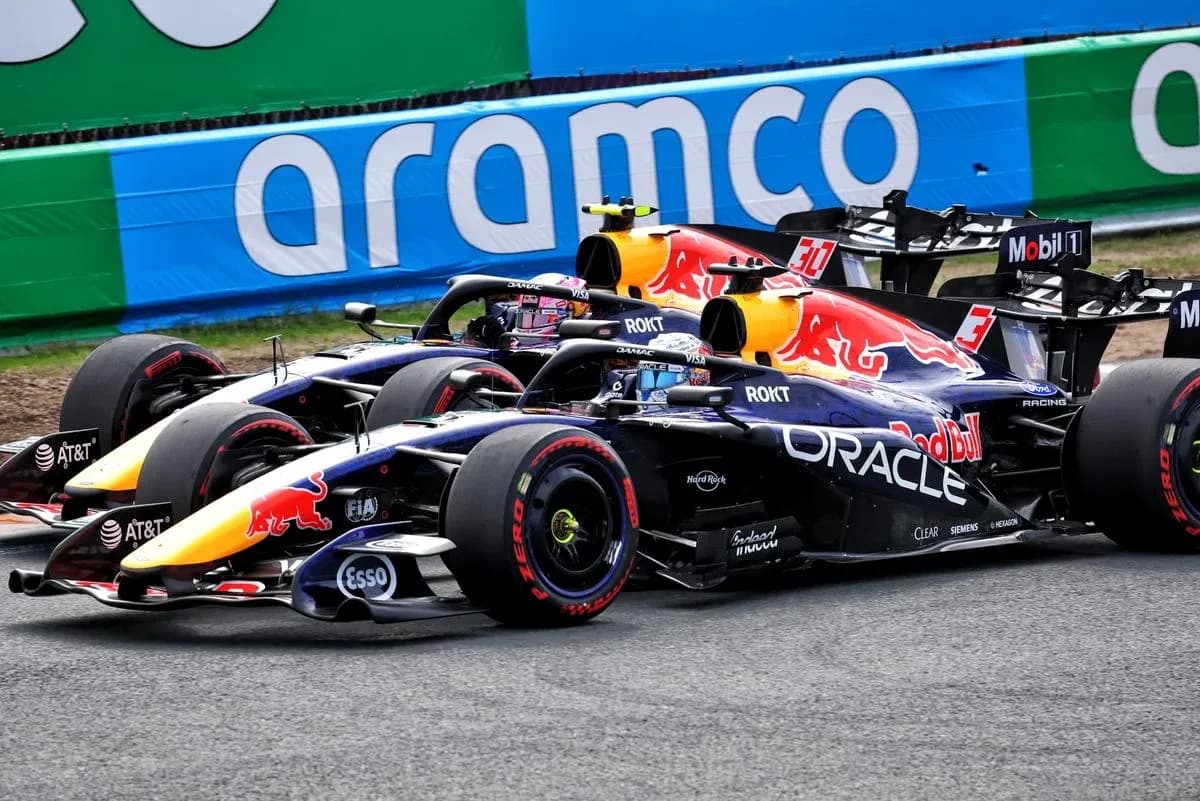
Max Verstappen, who lines up third, was blunt: “There are no corners where you can pass.”
Drivers like the challenge of the place – Norris called it “a little bit of everything” – but they were unanimous about one flaw: the corner entries need reworking if this track is going to produce real racing.
“You can't overtake,” Verstappen said. “So, in some places, the braking zones, like, they need to learn that it should never be that you have to steer, that you have to combine under braking, because it doesn't allow any kind of overtaking.”
Antonelli had already felt the pain.
“It's going to be tight. I spent two laps behind the Williams, trying to painfully get past. But it's just really difficult.
“And when you're behind, it's tough. Yeah, the only thing you can do is try to put pressure on the car in front, trying to make them do mistakes or make them deg a bit more.”
For Norris, that difficulty is golden. If he nails the start and survives the opening laps, track position could be his greatest weapon against a faster Mercedes.
A rare chance at a third win
Pole, on this circuit, is more than a headline. It’s a real shot at a third victory of the season, even without the outright quickest car.
Norris knows the job is only half done.
“It's a long race, it's a new track,” he said. “You've got to know what corners to push, what corners not to push, all of these different things, what the battery's then going to do.
“There's a lot of stuff that I've got to spend my time doing tonight. So, it's probably going to be a late one to try and get ahead of the game in some sorts. But the main part of the job was done today, so that's the bit I'm most happy about.”
The masterpiece is on the board. On Sunday, he has to defend it – on a track that punishes the bold, rewards the precise, and offers almost no way past a car that refuses to crack.