Kimi Antonelli Dominates at Monza
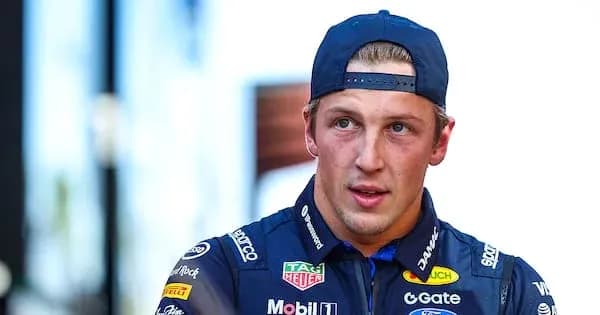
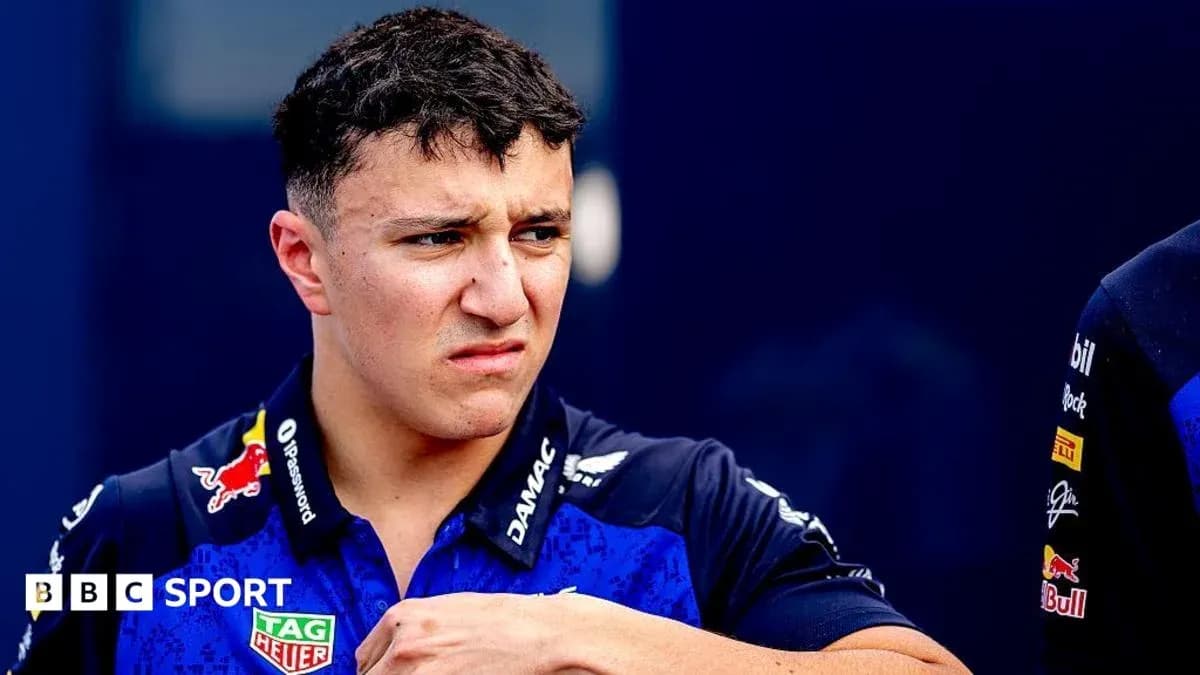
Kimi Antonelli drove through Monza like a déjà vu.
Nineteenth on the grid. First at the flag. For years, that kind of script belonged almost exclusively to Max Verstappen. Start at the back, ignore the maths, win anyway. On Sunday in Italy, it suddenly had a new lead actor.
The resemblance was hard to miss. The calm. The inevitability. The way the Mercedes sliced through the pack as if the others were running a different race. Yes, the red flag and restart helped his cause, but nobody in the paddock walked away thinking Antonelli needed a helping hand to win this Grand Prix. The manner of it suggested he would have found a way regardless.
Russell humbled, Antonelli elevated
For George Russell, this was brutal.
At the end of 2025, Russell spoke like a man ready to fight for a world title. Thirteen races into 2026, that claim looks increasingly hollow. At Monza he was not beaten by a wily veteran or a generational champion in his prime. He was taken apart by his 19‑year‑old teammate.
The scale of the defeat stung. Russell was handled in a way usually associated with clear number-twos—drivers like Sergio Perez or Valtteri Bottas when paired with all-time greats. This is the sort of afternoon you simply never saw inflicted on Lewis Hamilton. You do not see it happen to Verstappen.
That contrast says something about Russell. It says far more about Antonelli.
In only his second season in Formula 1, the Italian is systematically dismantling a teammate who, not long ago, sat in the “future world champion” conversation. The dynamic is starting to resemble Daniel Ricciardo’s final days at Red Bull, when he realised just how high Verstappen’s ceiling really was and chose to leave rather than live in that shadow.
For Russell, there is no exit ramp. Mercedes have nailed their colours to Antonelli’s mast.
Sundays belong to Kimi
The numbers behind the narrative are stark.
Strip out Belgium, where Russell retired early, and look at the other 12 Grands Prix. On race pace, Antonelli has been quicker than Russell in 10 of them. The exceptions? China and Austria, and even there the Brit’s edge was microscopic—less than a tenth of a second on average.
Across those 12 races, Antonelli’s mean advantage over his teammate sits at 0.380 seconds per lap. Over a Grand Prix distance, that is not a gap. It is a chasm.
This is where the Verstappen and Fernando Alonso comparisons start to feel justified. Hamilton and Sebastian Vettel burst into F1 as one-lap assassins, terrifyingly fast over a single qualifying run. Verstappen’s gift, right from his debut, lay elsewhere: his ability to bend the race to his will on Sundays. Antonelli is cut from that cloth. Once the lights go out, he finds time and rhythm others cannot touch.
The weak spot that still mirrors Verstappen
He is not the finished article. Verstappen wasn’t either.
Like the Dutchman in his early Red Bull years alongside Carlos Sainz and Ricciardo, Antonelli’s biggest vulnerability still lives on Saturdays. Over one lap, Russell remains a genuine threat.
The head-to-head in qualifying tells a tighter story than Sundays do: 7–6 in Antonelli’s favour. The Italian holds the edge, but only just. His average advantage in qualifying stands at 0.093 seconds—real, but nowhere near the gulf he opens up over a race distance.
Verstappen needed time before he began crushing teammates both on Saturdays and Sundays from 2018 onwards. Antonelli looks to be on a similar trajectory: already devastating on race day, still chiselling away at the finer details over a single lap.
Where Verstappen still stands alone
There is, however, one area where the comparison breaks down.
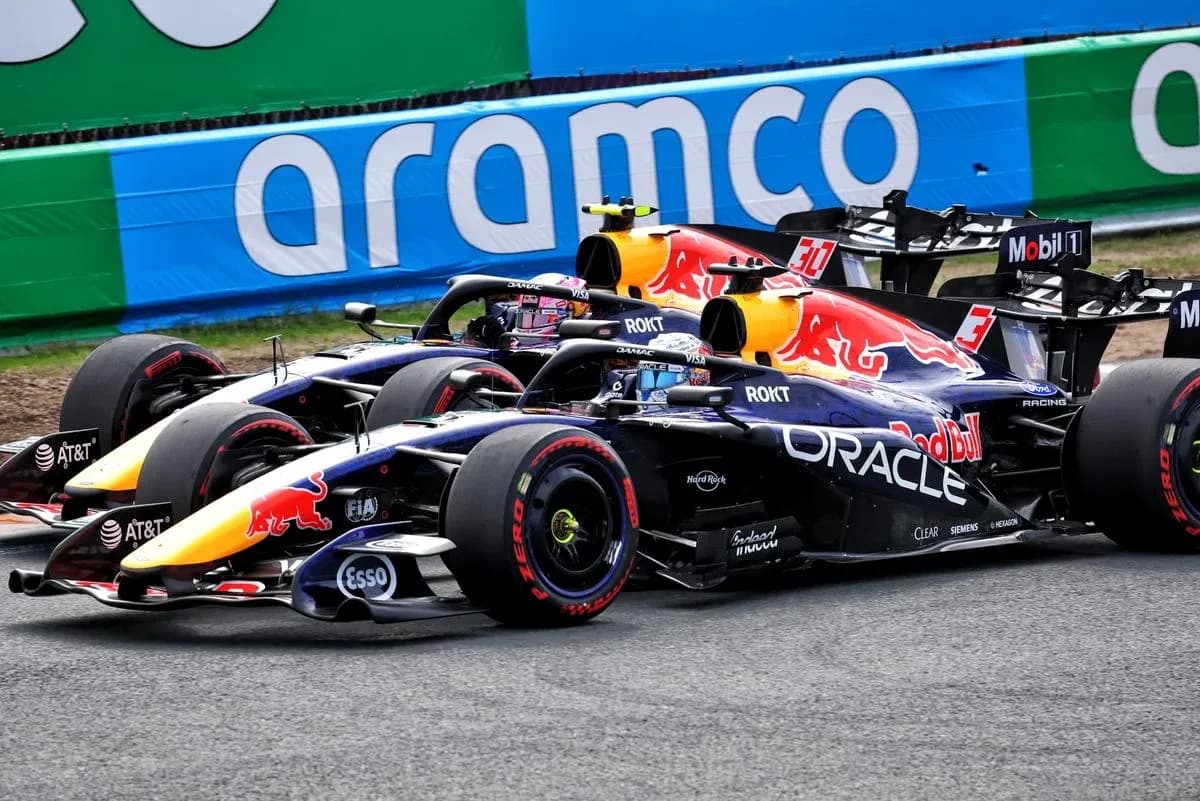
Max Verstappen’s wheel-to-wheel racing remains the gold standard. At Monza, he reminded everyone again why. His attacking lines, his defensive judgement, the way he positions the car at the last possible moment—these are the tools that allow him to create overtaking opportunities where others see only dirty air and closing doors.
Antonelli does not yet live in that space.
His racecraft in clean air is imperious, his pace relentless, but in the tightest combat his edges still show. His duel with Russell at Monza included a moment where he ran off the track—exactly the kind of lapse you rarely, if ever, see from Verstappen these days. Earlier this season, Charles Leclerc publicly criticised Antonelli’s wheel-to-wheel judgement. Those comments did not come from nowhere.
The encouraging part for Mercedes is that the trend is upward. The roughness is being sanded down. The moves are becoming more measured, the judgement more reliable. The mistakes are fewer, even as the stakes rise.
Verstappen’s heir, or something different?
What cannot be denied anymore is the scale of Antonelli’s talent.
He is 19. He is in his second F1 season. He is averaging nearly four tenths a lap faster than a teammate once tipped as a future champion. He is winning from the back of the grid at Monza and making it look like the most natural thing in the world.
There are still obvious gaps between his résumé and Verstappen’s. The Dutchman owns the titles, the wins, the years of sustained dominance. Antonelli has yet to prove he can carry this level across an entire campaign, through the grind of a full season, through the pressure of a title run that goes to the wire.
But the first crown, on current form, feels less like a question and more like a schedule.
For now, Verstappen stands alone as the benchmark. Yet with every ruthless Sunday drive, every race where Russell is left chasing shadows, the same thought keeps creeping into the paddock: if these two ever end up in equal machinery, how long before the master finds the prodigy in his mirrors and realises the future has arrived?