The Future of IPL Media Rights: JioStar's Dominance and BCCI's Challenges
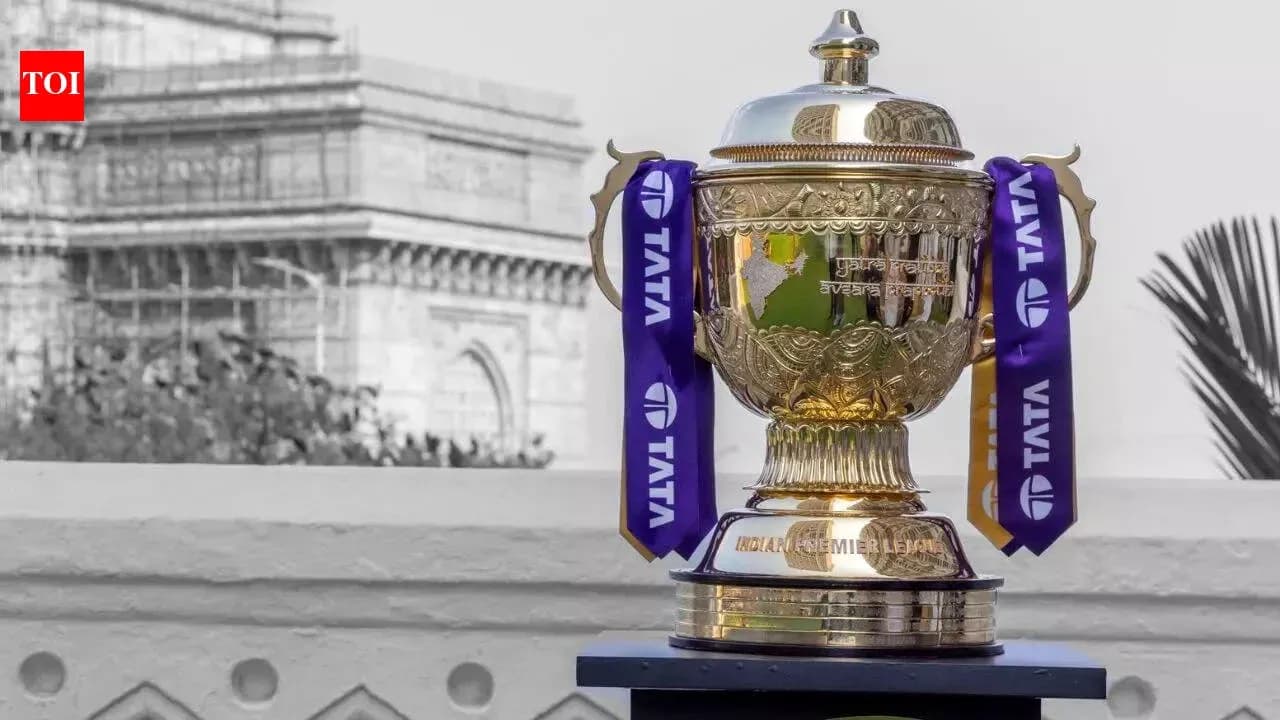
The IPL trophy will glitter again in six months. What it will actually be worth by then is far less clear.
As the final phase of the 2023-27 media rights cycle approaches, a quiet anxiety is spreading through the corridors of Indian cricket and the global sports business. The concern is blunt: with JioStar looming as the only serious bidder for the next round of IPL and home bilateral rights, the market may never discover what this behemoth of a property is truly worth.
For more than a decade, competitive tension has been the engine behind the IPL’s soaring valuations. Rival broadcasters, deep-pocketed networks, ambitious streamers – they all lined up, drove up bids, and helped turn Indian cricket into one of the most valuable media products on the planet. That contest now looks alarmingly like a walkover.
Uday Shankar, the media heavyweight who now serves as vice-chairman of JioStar, did not sugarcoat the situation at the recent ET World Leaders Forum. A decade ago, he said, four or more serious media companies would fight over major sports rights. Now, he admitted, it increasingly feels like JioStar is standing alone. “And that's not healthy,” he warned.
His reasoning cut to the heart of the problem. Rights fees have exploded. Monetisation has not kept pace. The value of sport is still enormous, he argued, but the ecosystem only survives if the rights holder, broadcaster and platform all share that value in a way that can last.
The uncomfortable truth for Indian cricket is that there is no obvious safety net. JioStar will bid, and bid aggressively. Its subscription strategy is built around cricket consumption; the IPL is its crown jewel. That is not in doubt.
What is baffling, and increasingly troubling, is the apparent absence of a broader plan from the BCCI. Where are the other players? Where is the effort to draw them in?
Across the world, technology giants are reshaping how sport is bought and sold. YouTube has shifted from dabbling in rights to building a full-blown aggregation and bundling model. Sport, for YouTube, is no longer a set of isolated acquisitions; it is the anchor of a wider pay-TV and subscription universe.
The NFL Sunday Ticket deal in the United States is the clearest example. A seven-year agreement, reportedly worth around $2 billion a season, gives YouTube exclusive US distribution. It powers YouTube TV subscriptions and also exists as a standalone product sold via YouTube channels. It is sport as both magnet and marketplace.
Of course, the numbers in the West live in a different universe. Average revenue per user there is miles ahead of what the Indian subcontinent can generate. That gap makes it dangerous to assume that sheer volume of users can bridge every financial chasm.
Yet, in this part of the world, Indian cricket still stands alone as the one property big enough, stable enough and compelling enough for a global player like YouTube to even consider testing the waters. If they are going to experiment in South Asia, this is the stage.
Netflix is circling the edges of live sport as well. Co-CEO Ted Sarandos recently told The Economic Times that the company is interested in live events, including cricket, but does not want to morph into a conventional full-season sports broadcaster. That line might sound like a hedge. It is also an opening.
Because a short, intense, story-rich tournament like the IPL fits almost perfectly into that framework. It is India-first, but not India-only. It speaks to a domestic audience in the hundreds of millions, a vast global diaspora, and to territories where cricket is one of India’s most effective cultural exports – a quiet but powerful form of soft power.
The storytelling potential is immense: franchises as brands, cities as characters, stars as serial protagonists. For a platform built on narrative hooks and bingeable drama, the IPL is not a stretch. It is a natural fit.
Shankar’s warning still hangs over all of this. “At some point, the economics have to make sense.” That point is now. And the onus, he suggests, sits squarely with the federation.
The IPL is not just another set of fixtures on a calendar. It is India’s most coveted prime-time asset. But assuming that a media executive sitting several time zones away fully understands the India story – its scale, its passion, its commercial logic – without hearing it directly from those running the show is optimistic at best.
That is why this tender cannot be treated as a routine auction. It demands a genuine marketing strategy from the BCCI. Not just glossy decks and pitch meetings in Mumbai, but a concerted global push that places the IPL in front of every plausible player in media, technology and streaming.
YouTube. Netflix. Established broadcasters in new guises. Hybrid platforms that blur the line between social media, subscription and live sport. The list is not short if someone makes the calls and tells the story.
Right now, JioStar is clearly Plan A. It is strong, it is committed, and it has already reshaped how Indians consume cricket. The real question hanging over the next six months is simpler, and far more consequential: does Indian cricket have a Plan B – or even a Plan C – before the hammer falls on the next rights cycle?