Emma Raducanu's Journey Back to Tennis Stardom
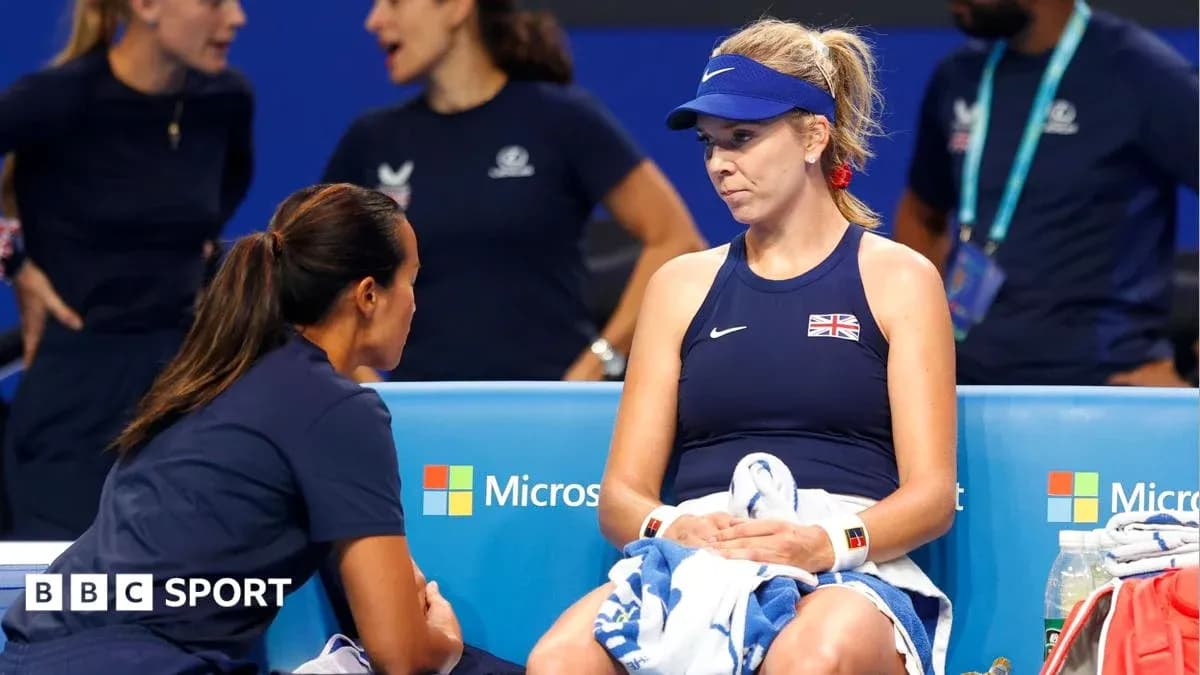
Emma Raducanu’s road back to the top of tennis is running through the pages of someone else’s turmoil.
Not a coach. Not a sports psychologist. A book.
On her way back from injury, the 23-year-old Briton has been drawing on Andre Agassi’s 2009 autobiography, a brutally honest account of a champion who climbed, fell hard, and then learned how to climb again.
A teenage champion looking for a second act
Five years have passed since Raducanu ripped through the US Open draw as an 18-year-old qualifier and rewrote tennis history in New York. No qualifier had ever won a Grand Slam in the Open era. She did it without dropping a set, playing with a freedom that stunned the sport.
The aftermath has been far less straightforward.
She reached a career-high ranking of 10 in July 2022. Today, she sits at 98 in the world, her rise stalled and then dragged backwards by a string of physical setbacks. A stress fracture in her lower right leg kept her out of this year’s US Open. A foot problem disrupted her pre-season. A post-viral illness then forced her off the court for two-and-a-half months.
Yet in June, at Queen’s Club, there was a flicker of the old electricity. Raducanu put together one of her best weeks since New York, charging into her biggest final since that unforgettable fortnight in 2021. It wasn’t a Grand Slam, but it felt like a reminder: the game is still there.
So is the scrutiny. So are the expectations. That is where Agassi’s story comes in.
Finding answers in Agassi’s slump
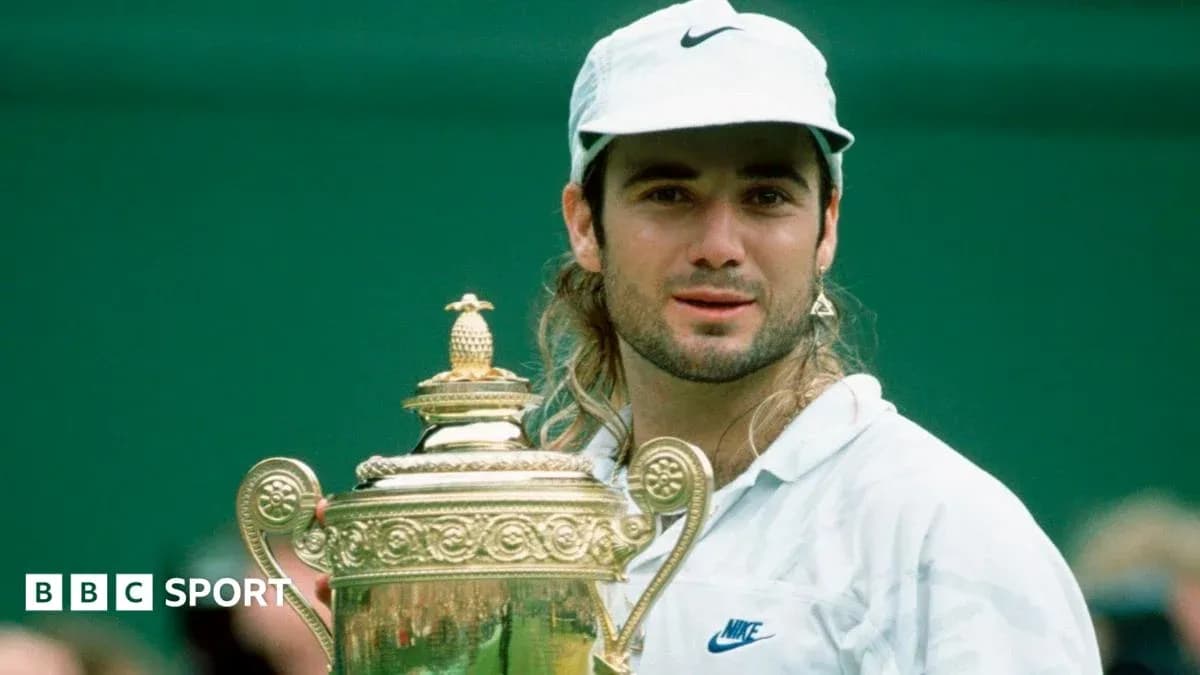
Agassi knows what it is to be hailed as a teenage prodigy and then to feel lost in the middle of it all. He won the first of his eight major singles titles at Wimbledon in 1992 at the age of 22. At his peak, he was the sport’s ultimate showman and one of its most ruthless competitors.
Between those peaks, though, came a deep valley. For four years he did not win a major. His ranking collapsed to 141 in the world. The game that had defined his life suddenly felt like a burden.
Raducanu, speaking to Uniqlo, explained why that period in Agassi’s book stopped her in her tracks.
"I was especially intrigued by the passage where he got out of his slump in the late 1990s by creating his own training regimen and finding his way back to the top," she said. "It speaks in depth about his early successes and the lows he reached, perhaps as a result of them. A lot of it was so relatable."
The parallels are obvious. Early success. The pressure that follows. The injuries, the doubts, the noise.
For Agassi, the purpose of telling that story was always to offer a hand to someone coming behind him.
"It's wonderful to hear that anybody can relate," he told BBC Breakfast. "It was literally the hope that if one person read it and it gave them hope, some tools to understand that they're not alone, they can figure it out and get to a healthier place without having to direct their frustrations at the game of tennis, then it was a success for me.
"So, hearing that 17 years later it can still impact somebody, especially in this game, it does make me feel good."
Advice from a man who’s lived it
Agassi is one of the few players who can speak from the summit of all four Grand Slams and Olympic gold. He completed the career Grand Slam and stood on top of the podium in Atlanta in 1996. He has seen every side of the sport: the glory, the grind, the emptiness that can creep in behind the trophies.
Asked what he would say directly to Raducanu, his answer cut to the core of a young player’s battle with expectation.
"I would encourage her to focus on being the best of herself on a daily basis, but don't judge that by results or thinking that somehow you have to be 100%," he said.
"You have to learn to be 100% of whatever percent you're at [and] be comfortable in your own identity inside of that - not what people say."
That last line lands differently in 2026 than it did in Agassi’s playing days.
"Back in my day, I could just put down the paper and not read it. Now it seems like it's harder for these youngsters to avoid."
Raducanu has lived that reality since New York. Every performance is dissected. Every withdrawal becomes a talking point. Every ranking drop is framed as a verdict. Agassi’s message is simple: detach your identity from the scoreboard.
Playing out of fear, and breaking free
Agassi’s own story began with pressure, not passion. His father introduced him to strangers as a future world number one. The sport was not a choice; it was a destiny imposed.
That weight, he says, made him play with "fear". Fear of failing. Fear of not living up to a script someone else had written for him. Only when he tumbled from world number one down to 141 did he finally step back and reconnect with what he wanted from tennis.
During that period, he founded a charity focused on education for under-served children. That work, away from the tour, helped reframe his relationship with the game.
"I had more success from that point forward than I did playing out of fear," he said.
His reflection now stretches beyond players to the people around them.
"The first thing I would advise a parent to think about is that it's not their life, it's their child.
"You raise a child in their way and they'll never depart from it. You just have to find out what their way is."
For Raducanu, whose career has been lived in the glare from the moment she lifted that trophy in New York, Agassi’s journey offers something rare: a blueprint from someone who has already walked through the fire.
A legend back on court, a contender trying to return
Agassi is not just reminiscing. Later this week he will be back on the front line, captaining Team USA at the Laver Cup at The O2 in London from 25-27 September.
"Tennis is a hamster wheel of sorts - the fact that these guys make room in their schedule to play this incredible event tells you how great this event is," he said.
"We're obviously playing Team Europe, in Europe, so I don't know where the crowd is going to have their heart.
"But I know one thing - they're going to see some spectacular tennis."
The crowd at The O2 will watch today’s stars under Agassi’s guidance. Somewhere else, away from the spotlight, Raducanu will be working through her own daily grind, trying to be "100% of whatever percent" she has.
The teenager who shocked the world in New York is now a 23-year-old trying to build something more durable than a fairy tale. If Agassi’s book is any guide, the real story starts not with the first Grand Slam, but with what comes after the fall.