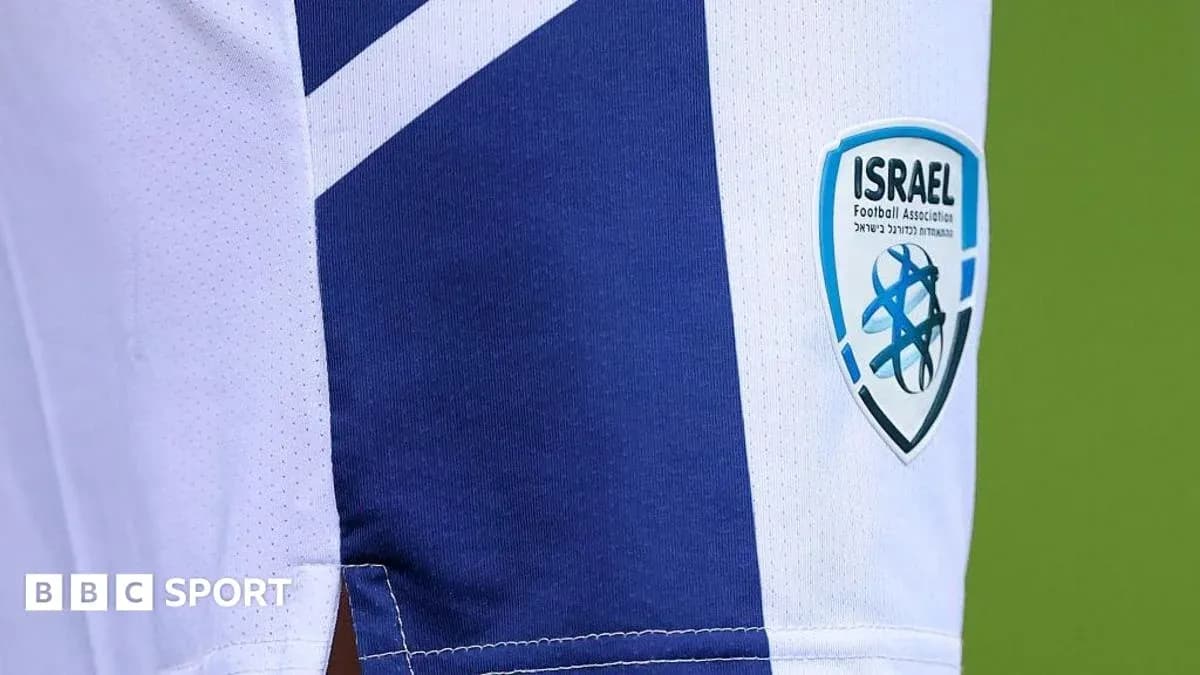
Ireland vs Israel: A Politically Charged Nations League Fixture
On Sunday, an elite European international will be played in front of almost nobody, watched on television by a country that has chosen to look away as much as it possibly can while still meeting its obligations.
No away fans. No Irish crowd at all. No pundits. No studio debate. Just a bare-bones broadcast from Debrecen, Hungary, where the Republic of Ireland will face Israel in a Uefa Nations League tie that has become one of the most politically charged fixtures in modern football.
This is a match that survived a vote on whether it should exist.
A fixture that almost never was
When the Nations League draw in February dropped Ireland into a group with Israel, Austria and Kosovo, the Football Association of Ireland walked straight into a storm.
With Israel’s military offensive in Gaza raging, calls for a boycott came immediately. Supporters’ groups, politicians, campaigners and high-profile voices in Irish public life demanded that Ireland refuse to play.
The FAI did not simply brush it aside. In July, it put the question to its delegates. The numbers tell their own story: 75 in favour of fulfilling the fixtures, 32 for a boycott. A clear majority, yet far from unanimous. A football association split almost a third of the way down the middle on whether its national team should even take the field.
The stakes were laid out bluntly. Refusing to play risked Uefa sanctions, possible suspensions, and the loss of millions of euros. The FAI argued that the long-term damage to Irish football could be severe.
So the games stayed on the calendar. But nothing about them would be normal.
Neutral grounds, empty stands
Debrecen will host Sunday’s “away” match. On 4 October, the “home” game will not be in Dublin, or anywhere on Irish soil, but in Backa Topola, a small town in northern Serbia.
Both fixtures are officially behind closed doors for Irish supporters. No tickets have been made available to Republic of Ireland fans. Only a small allocation has gone to Israeli fans for the first match, consistent with previous Israel home games held in Hungary.
Hungary has become a regular base for Israel’s fixtures, a product of close diplomatic ties and a willingness to provide the policing and security required to stage high-risk international matches. For Uefa, it offers predictability and control.
The FAI, though, took a different route for its “home” game. In the summer, it announced that Ireland’s designated home fixture would also be moved to a neutral venue, citing “operational challenges that could impact on the delivery of the game on home soil”.
Reports suggested deep concern that protests in Dublin might stop the game from going ahead at all. The association has not publicly confirmed that, nor has it explained in detail why Backa Topola was chosen. But the logic is clear enough: a remote town in Serbia, far from Ireland’s protest movement, makes security and crowd management easier and the prospect of mass demonstration far less likely.
Serbia’s relationship with Israel adds another layer. In 2025, foreign minister Marko Duric described Israel as one of Serbia’s “closest friends and strategic partners”. Serbia has bought drones and missiles from Israel in recent years. In geopolitical terms, it is a friendly host.
Neutral venues, though, have done nothing to neutralise anger.
A country divided over its team
Across Irish football, resistance has been loud and visible. Fans of various League of Ireland clubs have staged protests at domestic matches in the build-up, unfurling banners and organising coordinated displays against the fixtures with Israel.
On Monday, more than 160 Irish athletes added their voices. In an open letter organised by Irish Sport for Palestine, they urged a boycott of the games. Among the signatories were boxer Tyrone McKenna and former European champion middle-distance runner Ciara Mageean – names that carry weight beyond the terraces.
Inside the FAI, the discomfort is obvious. Chief executive David Courrell revealed last week that Uefa had rejected a request for Ireland and Israel to be kept apart in future draws. Director of football John Martin called the situation “very uncomfortable for everyone”.
Manager Heimir Hallgrimsson went further. He rejected the idea that playing Israel meant legitimising what he called “genocide”.
“We’re not playing with genocide, we’re playing against genocide,” he said. “We’re playing against Israel, we’re not playing with Israel.”
The response from the Israel Football Association was scathing. It accused Hallgrimsson of “ignorance, hypocrisy and stupidity”, turning what is usually the safe, cautious language of international football into something far more explosive.
A stripped-back broadcast for a charged occasion
Even the television coverage tells a story.
RTE, Ireland’s public broadcaster, will show the matches, but only because it must. It has pledged to “meet its contractual obligations” and nothing more. That means no advertising or sponsorship revenue attached to the games, no studio build-up, no punditry, no half-time analysis.
Just pictures and sound from a neutral stadium, stripped of the usual framing that turns a football match into a shared national event.
For a sport that thrives on spectacle, it is a remarkable act of deliberate understatement.
Football at the faultline of foreign policy
Ireland’s stance on Gaza and Palestine has been among the strongest in Europe.
According to Gaza’s Hamas-run health ministry – whose figures the United Nations regards as reliable – more than 73,000 people have been killed in Israeli attacks since October 2023. Israel insists its actions are self-defence, launched after Hamas’s assault on 7 October 2023, when about 1,200 people were killed and 251 hostages taken.
In May 2024, Ireland, alongside Spain and Norway, officially recognised a Palestinian state. Later that year, it joined South Africa’s genocide case against Israel at the International Court of Justice.
The government has gone further. Ireland has boycotted Eurovision since 2025 over Israel’s continued participation, became the first EU country to ban goods from illegal Israeli settlements in the West Bank, and has imposed travel bans on Israeli government ministers.
On Monday, foreign minister Helen McEntee did not soften her language.
“Ireland’s view is clear – international law is being breached. We are seeing an attempt to erase a population,” she said.
Israel has repeatedly criticised Ireland’s position, portraying it as one-sided and unfair, and insists its campaign in Gaza is a necessary response to Hamas.
This political backdrop is not theoretical for Irish sport. The Republic of Ireland’s women’s basketball team faced Israel in EuroBasket qualifiers last autumn and earlier this year only after what officials described as “extensive deliberations”. Each encounter has carried weight far beyond the scoreline.
A game that cannot be just a game
So Ireland will play on Sunday. It will travel to Hungary, walk out in Debrecen, line up for the anthems and contest a Nations League fixture that, on paper, is just another date in a congested international calendar.
But the stands will be largely empty of Irish voices. The television pictures will arrive at home unadorned by the usual noise. The players will know that every pass, every tackle, every handshake is being watched not only as sport, but as a statement.
This is what happens when football sits directly on the faultline of a country’s foreign policy and moral stance. The FAI chose to play, calculating that the cost of refusal would be too high for the game in Ireland.
The real question now is whether the country will ever see these fixtures as simply football again – or whether this campaign has redrawn the boundaries of what it means to pull on a green shirt in an Irish jersey.