Ferrari's Innovative SF-26 Redefines F1 Design
Ferrari arrived at the 2026 Formula 1 regulations not just with a new car, but with a statement. The SF-26 rolled out in Bahrain looking different, behaving differently, and – crucially – forcing everyone else to look twice.
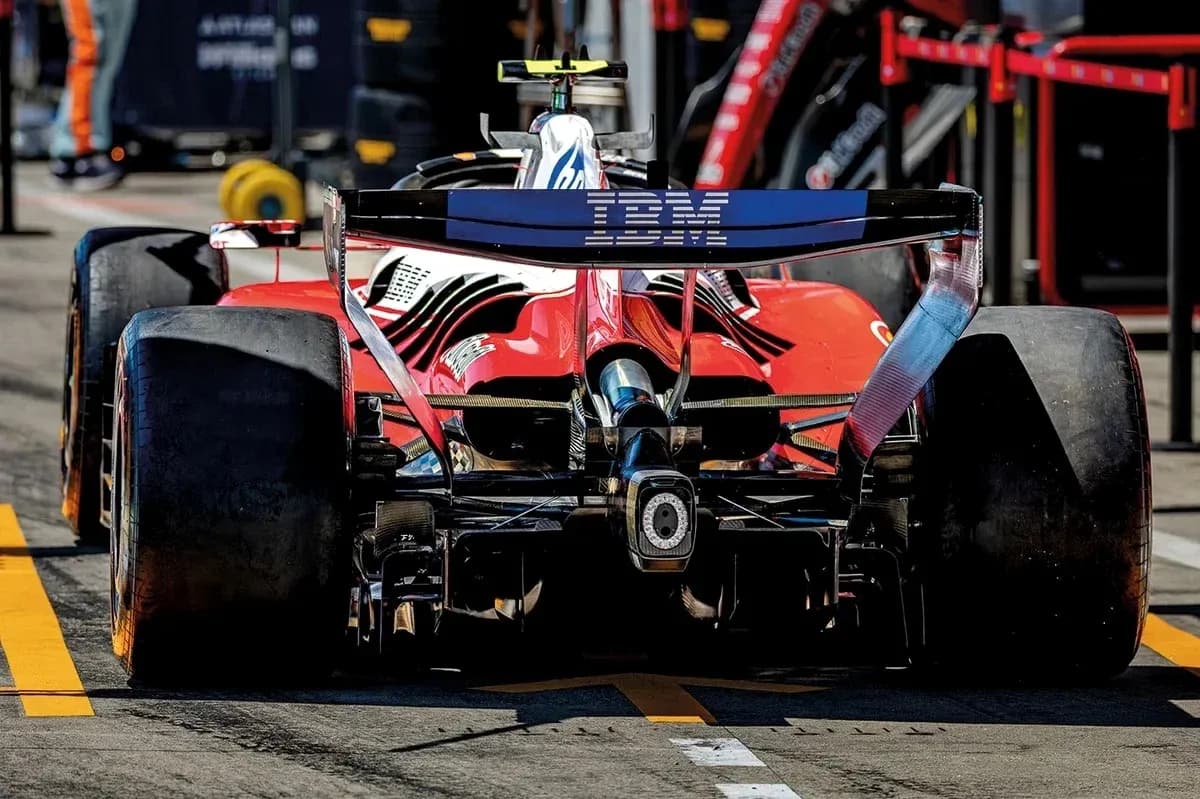
Behind the exhaust sat a curious winglet, a sliver of carbon that instantly drew the paddock’s attention. Inside Ferrari, they called it Flick Tail Mode (FTM). On track, it did exactly what the name hinted at: added precious rear downforce, at the cost of a touch more drag. A small piece, a big idea.
Then came the real eyebrow-raiser. The next day, Ferrari bolted on a rotating rear wing, quickly christened the “Macarena wing” for the way it flipped 180 degrees between cornering mode and straight-line trim. One wing, two attitudes. One concept, multiple rivals suddenly scrambling.
By the time the first race weekend settled, Ferrari’s exhaust wing in particular had become the most studied piece of bodywork in the pitlane. Teams photographed it, modelled it, probed it in CFD. They could see the effect; they couldn’t easily copy the integration. Ferrari had built the rear of the SF-26 around that device, not just added it as an afterthought.
The FIA eventually stepped in. The governing body has already moved to close the loophole in the technical regulations, banning Ferrari-style exhaust wings from 2027 to stop an arms race around that area of the car. The innovation window was brief. The impact was not.
Copycats and compliments
The upside-down, rotating rear wing did not stay unique for long either. Red Bull developed its own interpretation, arriving with a different concept but the same central idea. McLaren, having seen Ferrari’s device in winter testing, began work on its own version and has since trialled it on track.
“We were disappointed not to pick that up as quickly as Ferrari did and then Red Bull,” admitted McLaren technical director Neil Houldey. “As soon as we saw it, we realised there was an opportunity there.” In the development game, that is as close as you get to a tip of the cap.
Inside Maranello, those nods from rivals carry weight, even if the man at the top refuses to indulge in sentiment.
Asked whether seeing others copy Ferrari’s exhaust wing and rear wing felt like a compliment, team principal Fred Vasseur did not hesitate to set the tone.
“I’m not there to have compliments. I’m there because I want to win. The best compliment for me is to go on the podium,” he said in an exclusive interview. Then he allowed a glimpse of what it means to his staff.
“But yes, it’s true that for the guys in the team, to see Red Bull coming with the wing, and I think probably Red Bull started before seeing our wings, but the others starting to copy [it], or even the device on the exhaust, for the guys in the team who had the idea it’s a good reward.”
In other words: the real praise lives in the results column, but the engineers have earned the right to feel proud when the grid starts to look a little more red.
Best chassis in the field?
Ferrari’s power unit deficit has been an open secret. On the straights, the SF-26 does not bully its rivals. Yet the car still wins. That tells its own story.
With a series of upgrades, Charles Leclerc and Lewis Hamilton have both turned the SF-26 into a race-winning weapon. Leclerc triumphed at Silverstone, Hamilton at Barcelona. The points have followed. Ferrari sits second in the standings, and many in the paddock now talk about the SF-26 as the reference chassis in F1.
The car is the first fully shaped under the influence of technical director Loic Serra. Ferrari signed him in 2023, but Mercedes kept him on gardening leave until the end of 2024. Only then could he truly start to sculpt the 2026 machine.
For Vasseur, that long, drawn-out process is the perfect illustration of how hard it is to turn an F1 giant.
“The frustration that you can have sometimes in F1 is that on the technical side the process is mega long, because you have a lot of inertia,” he explained.
He laid out the timeline: “For example, we started to discuss [with Loic] mid ’23 and he joined the team at the end of 2024. Then he’s focused on the car of ’26, and he’s still recruiting people to help him. It means that this process is about years, when on the other hand we want to get results next week.”
That tension – between long-term architecture and short-term pressure – has broken Ferrari more than once in the past decade. This time, Vasseur insists, the structure is right.
“I’m very, very pleased with the choices that we made, with the set-up that we have, and the collaboration that we have in the team. The team is strong. The collaboration is mega strong.”
Risk, reward, and the new Ferrari
Under Vasseur, Ferrari has been pushed to abandon its instinctive conservatism. The SF-26 is the physical proof. Exhaust wings that push the rulebook to its limits. Rotating rear wings that redraw the boundaries of what’s possible under the current regulations. A car that dares the FIA to react.
Rivals have followed. The FIA has reacted. And yet the real measure of this Ferrari revolution is not how many teams copy its ideas, nor how many clauses the rulemakers rewrite. It is whether the red cars can turn that creative edge into a sustained title challenge.
For now, the scoreboard reads: innovative car, copied concepts, race wins, second in the championship. The podiums are coming. The compliments, whether Vasseur wants them or not, are already here.
The next step is the one Ferrari has missed too often in recent years: taking this platform, this momentum, and carrying it all the way to a championship fight that lasts until the final lap of the season.