Ferrari's Monza Misery: A Home Race Disaster
Ferrari leaves Monza bruised, beaten – and staring at itself in the mirror.
A sixth place for Lewis Hamilton, a crashed-out Charles Leclerc after barely two laps, and a rookie in a Mercedes winning from 19th on the grid. On home soil. In front of the Tifosi. That combination has turned what should have been a celebration into a referendum on Ferrari’s leadership.
A Home Race That Fell Apart in Two Laps
The weekend didn’t just go wrong for Ferrari. It unraveled almost instantly.
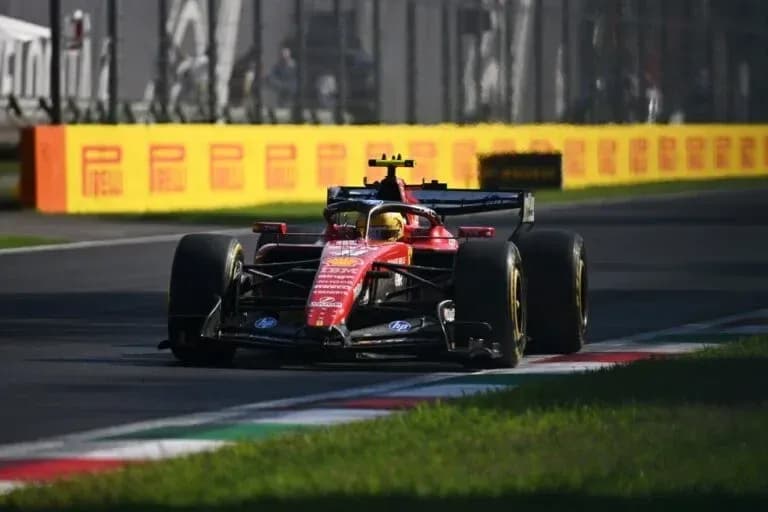
Leclerc and Hamilton lined up third and fourth, a red wall poised to attack. By the first chicane, they were already fighting each other. Side by side into the opening complex, Hamilton ended up in the gravel as the pair clashed for position, tumbling down the order before the race had even settled.
Moments later, it got worse. At Curva Alboreto on lap two, Leclerc’s race ended in the barriers. One car out. The other limping back into the midfield.
Hamilton recovered to sixth over the 53 laps, but the damage – competitive and political – was already done.
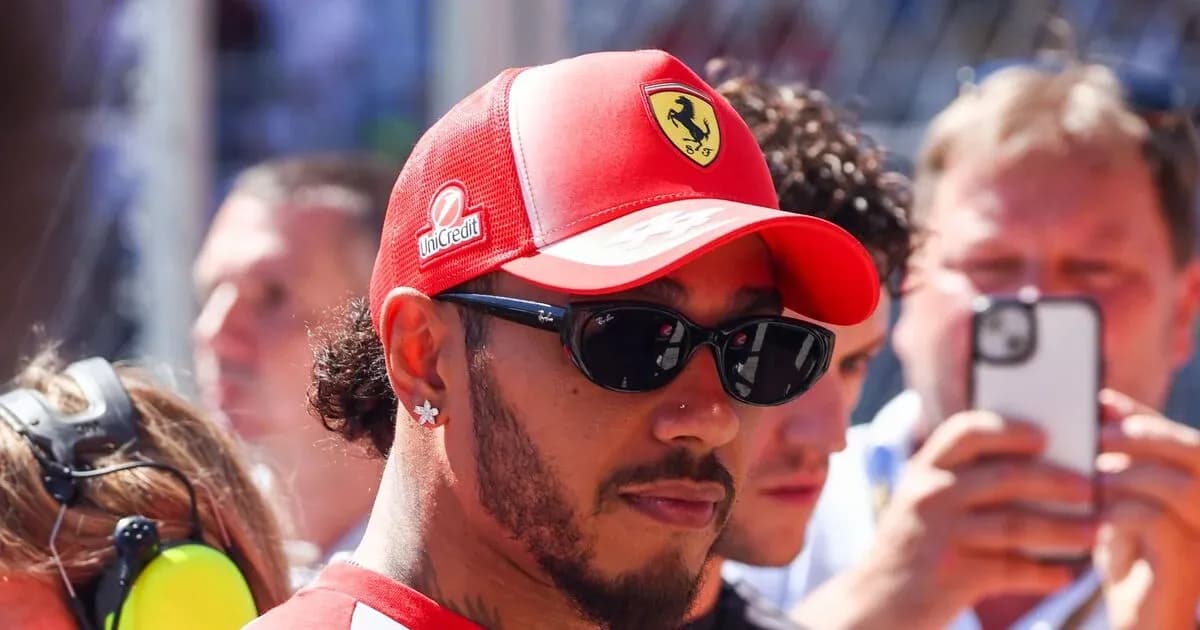
“I was ahead in Turn 2, by the apex I was ahead,” Hamilton said afterwards, pushing back at Leclerc’s suggestion that “we went far ahead” together. “So, there’s no we. It was very bad for the team and put us way back in positions.”
From there, his race turned into damage limitation and quiet frustration.
“I just tried to reset and I was like, OK, try and catch up and then obviously we had to stop and I think we put the wrong tyres on probably,” he said. The debrief, he insisted, would be “offline,” but his broader verdict on Ferrari’s trajectory cut deeper.
“From today we’ve just lost so much ground… It’s far too late for those decisions to come. It’s many, many weeks too late. All I can do is just try and turn up. I’ll get up tomorrow morning and I’ll give it my best.”
Then came the line that will sting in Maranello.
“I feel massively gutted for the Tifosi who show up for us today. The guys back at the factory really, really are giving it everything… Yesterday we didn’t really execute that well. And I did the same today. It’s tough because we give it everything I can and sometimes it’s just not enough because we need all the other stuff to go well.”
The “other stuff” is exactly what’s under fire.
Strategy, Authority, and a Question of Control
Monza has reopened an old wound at Ferrari: who is actually in charge when the lights go out?
The clash between Hamilton and Leclerc at the start, on a day when both cars had the pace to fight for a podium, has sharpened criticism over how clearly – or not – the team manages its drivers in high-pressure moments. According to The Race, Ferrari is looking not only at Monza but also at the Dutch Grand Prix as evidence that internal rulings and race management are not sharp enough.
On a weekend when the team needed calm, authority and a unified push, it instead broadcast confusion. The driver-on-driver fight at Turn 1, the tyre choice Hamilton questioned, and the lack of visible, decisive control from the pit wall all fed a narrative that has haunted Ferrari for years.
And as if that weren’t enough, the car itself offered no escape route.
Power Unit Questions and a Missed Response
Ferrari came to its power-hungry home circuit with a second ADUO upgrade on the power unit, hoping it would drag the SF-24 closer to Mercedes on the straights. It didn’t.
The works Mercedes – led by Kimi Antonelli’s astonishing charge from 19th to victory – simply had more. More top speed, more consistency, more race pace. On a track where Ferrari traditionally leans on sheer power to ignite the Tifosi, the deficit was glaring.
The Race also highlighted the team’s muted reaction to a revised start procedure as another red flag. Where others adapted quickly, Ferrari’s response looked slow and uncertain. On a day when details decided everything, the details went missing.
Put that together with a home defeat at the hands of a teenage Mercedes driver and you have more than a bad Sunday. You have a structural problem.
Vasseur in the Crosshairs
All of this has inevitably dragged team principal Fred Vasseur into the spotlight.
He arrived as the steady hand meant to bring order and long-term direction. He signed a renewed multi-year contract only last year. Yet reports from insiders quoted by The Race suggest Ferrari’s upper management was far from satisfied with what unfolded at Monza, and that Vasseur’s position, while not the subject of a formal decision yet, is now under active internal debate.
In Italy, the tone has hardened.
Corriere della Sera captured the mood in Maranello and Turin: “In Maranello, and especially in Turin, they’re thinking about it. We can’t go on like this. Even Fred Vasseur has understood that, despite a recently renewed contract, his future at the helm of the team is uncertain.”
The paper underlined the pressure coming from the very top of the Ferrari structure, warning that it “could trigger a change. Not right away, we need to prepare for it. But Monza could have revolutionary effects.”
It described the moment as a “major turning point at Ferrari” and added a pointed note: “There is no Plan B beyond the French manager. Vasseur’s Ferrari is under scrutiny. By Elkann’s Ferrari, which can no longer pretend nothing is wrong.”
That last line says it all. This is no longer about a single race.
Familiar Names, Uncertain Future
If Ferrari does decide to move, the shortlist is already circulating – and it is full of familiar figures.
Antonello Coletta, who has led Ferrari’s World Endurance Championship programme, has long been linked with a potential step into Formula 1 leadership. His name has resurfaced again as a possible successor, a sign that the company is at least gaming out scenarios, even if no formal process has begun.
Christian Horner’s name also refuses to disappear from the conversation. As reported by The Race, Ferrari previously approached him, only for Horner to turn down the top job after talks with chairman John Elkann. Yet he remains part of the succession chatter, a symbol of the level of authority and proven success Ferrari craves.
None of this means a change is imminent. But it underlines a truth: after Monza, Vasseur is no longer simply building a project. He is fighting to prove he should be the one allowed to finish it.
A Win for Mercedes, a Warning for Ferrari
Antonelli’s victory from 19th on the grid, in a Mercedes that looked ruthless on a track Ferrari calls home, did more than sting pride. It set a benchmark.
The Tifosi watched a teenage talent in silver slice through the field, while their own cars collided, crashed, and questioned their tyre choices. On a weekend that should have been a statement of resurgence, Ferrari instead offered a case study in why its leadership and structure are under scrutiny.
Monza has often been the stage for Ferrari’s greatest days. This time, it may be remembered as the race that forced the Scuderia to decide what – and who – it really wants to be.