Ferrari's Brake Drama and Leclerc's Strategy in Spain
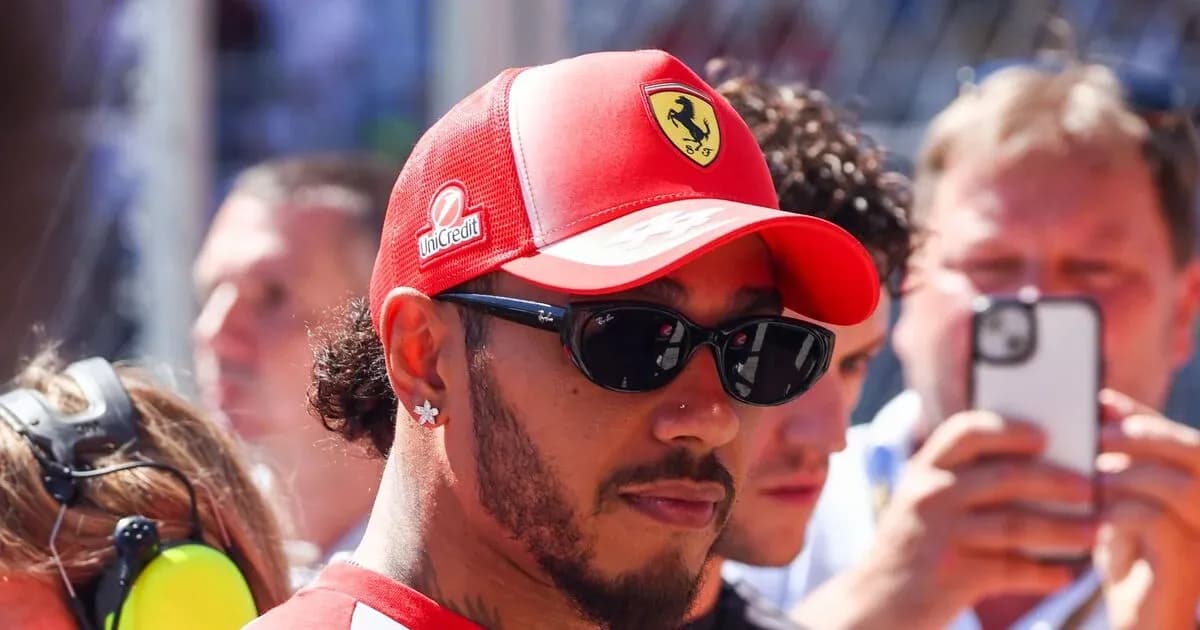
Lewis Hamilton’s first real race day in red barely reached Turn 1 before trouble arrived.
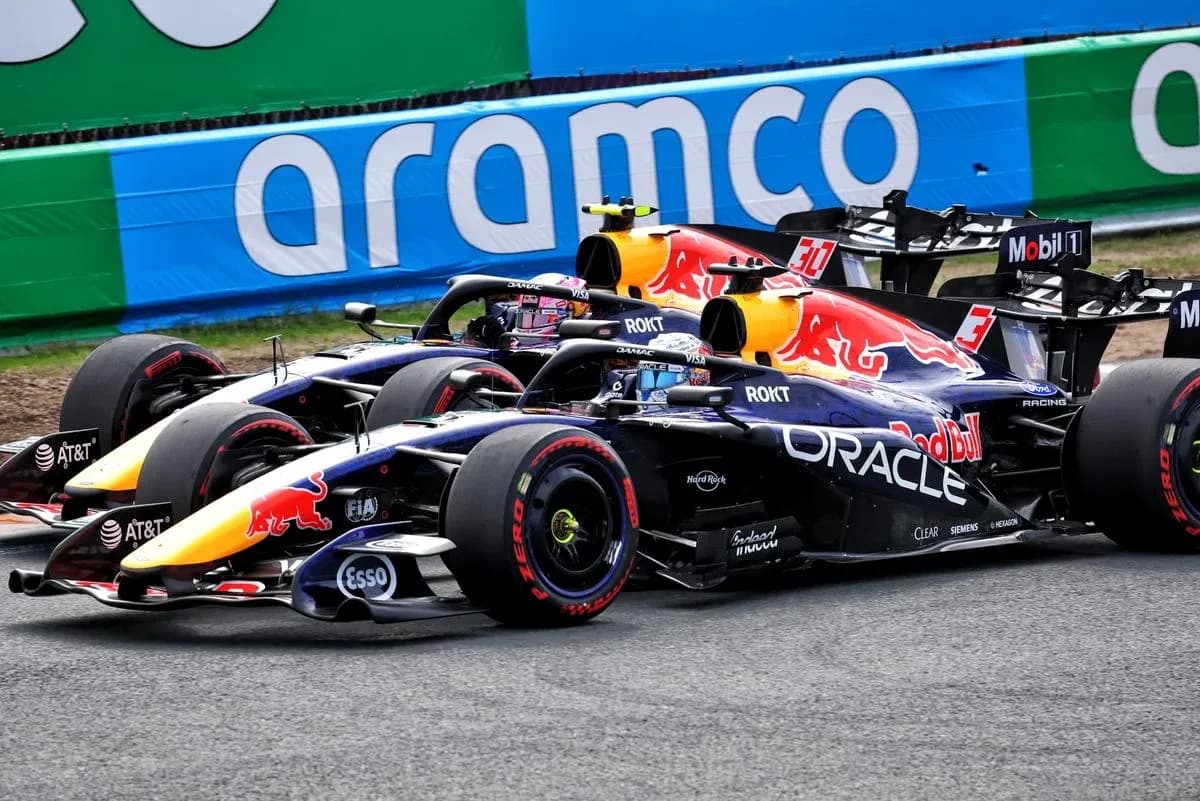
At Madring, the seven-time world champion lunged into the opening complex locked in a three-way argument over track position with Max Verstappen and Andrea Kimi Antonelli. Verstappen cut the corner, Red Bull debated whether to hand the place back, and in the middle of it all Hamilton had a far more basic problem: his brake pedal.
While Verstappen slowed to let Antonelli and Hamilton through, Hamilton’s Ferrari was already betraying him. A long pedal, inconsistent bite – the sort of thing that turns a driver’s stomach on Lap 2 of a 56-lap race.
The Dutchman’s hesitation cost him time, but not for long. As soon as Hamilton’s braking issues surfaced, Verstappen simply drove back past the Ferrari.
From the pit wall, Frederic Vasseur and his engineers went straight into damage-limitation mode.
“We tried to fix it from the pit wall,” the Ferrari team principal said after the race. “Yes, the pedal was long, but we tried to fix it from the pit wall, it came back, and once again.”
For a brief spell, the system seemed to settle. Hamilton continued, the car feeling closer to normal. Then the problem returned. On a fast, high-load circuit, with a full race distance still ahead, Ferrari drew a hard line.
“I think in this kind of track, we also don't want to take any risk, and it was, we are on Lap 1, it was still 56 to go,” Vasseur explained. “The first time that happened was Lap 2, and it was too risky to go to the next lap. It would have made no sense, to take a crazy risk.”
By the time Vasseur left for his media commitments, Ferrari mechanics were already back over Hamilton’s car, searching for answers. The priority, though, was clear: live to fight the next one.
Leclerc plays the long game – and waits for a safety car that never comes
With Hamilton’s drama contained, Ferrari’s afternoon hinged on Charles Leclerc and a strategic gamble shaped by an early Virtual Safety Car.
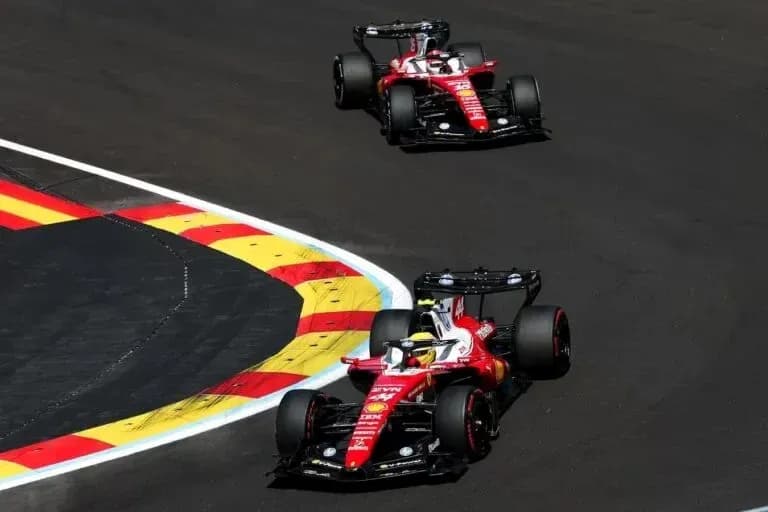
The Monegasque stayed out on the hard compound and stretched the stint to the limit – 49 laps, according to Vasseur – while others split their bets across soft and medium tyres. Ferrari had one car covering the aggressive options, the other anchoring the hard-tyre group and waiting for chaos.
There was hope. A full Safety Car. A red flag. Any twist that would turn Leclerc’s long-run discipline into a shot at victory.
Nothing came.
“The race was more than good, we did a stint of 49 laps with the hard and the pace was still there,” Vasseur said. He pointed out that most of the grid played the same strategic game, just with different cars on different compounds. “He was leading the group of hard, and I think with the second incident, the red flag, it was the win. With a safety car, he would have been P2, P3, nothing like P4, but it's more a strategy than something else.”
The underlying message from Ferrari’s boss was blunt: the race pace is not the problem.
“On his side, the pace was good, it's the only thing that we can do on Sunday,” Vasseur added. “Honestly, if we miss something, it's more qualifying, or perhaps a little bit in Monza, or yesterday. But today, I think we did what we have to do, but we took the risk that we have to take, and the pace is the pace that we need to have.”
The numbers back him up. Leclerc’s long hard-tyre stint held together, his lap times competitive deep into the run. The price he paid came earlier in the weekend, not on Sunday afternoon.
A soft-tyre sting in the tail
Just when Leclerc should have been at his most dangerous, the car went quiet on him.
He switched to fresh softs late on, armed with the softest compound in the range and the theoretical grip to charge. Lando Norris sat ahead, a tempting target. The attack never really came.
“The pace was quite strong on the hard,” Leclerc said. “On the soft at the end I couldn't really push for other reasons, but the hard stint was a good one. Eventually where we are paying the price, it's our qualifying pace, because when you are starting further away then you get to the race and it's very difficult to make up those positions.”
Inside the cockpit, he and race engineer Bryan were almost silent.
“Bryan and I didn't speak too much during the race because on a track like this I just wanted to have as little communication as possible,” Leclerc explained. “At one point I just checked to understand exactly what we were fighting for because I didn't really know inside the car.”
He hinted at a specific issue on the softs, something that stopped him from leaning on the tyre and going after Norris. Asked to reveal what it was, Leclerc shut the door with a smile.
“No, not really, no I can't, but it's fine, I mean it will be fine for the next race.”
The detail stays inside the garage. The impact was visible on track.
Hamilton cleared of blame in Leclerc’s race
With Hamilton’s brake problems unfolding right in front of him on Lap 1, Leclerc could easily have pointed to the Ferrari newcomer as a factor in his own result. He refused to do so.
“No, I mean he did it very, very quickly obviously,” Leclerc said of Hamilton’s early issues and off-track moments. “I wasn't losing so much time because obviously with the brake problems he was kind of cutting the corners, so he didn't hold me up and wouldn't have changed anything in my race.”
No excuses, just the cold reality of track position and qualifying performance.
Ferrari left Spain convinced of two things: the race pace is strong enough to win on the right day, and the real battle is on Saturday. If they unlock that single-lap deficit, the long stints, the tyre bets, and the quiet radio messages might finally start to tell a very different story.