Cricket Australia Invites Private Investment in Big Bash: A Controversial Move
Cricket Australia’s bold move to invite private money into the Big Bash has landed with a thud in Sydney.
Within 24 hours of CA confirming it would seek external investment in its franchise T20 leagues – starting with a sale process for the Melbourne Renegades – Cricket NSW went public with a blunt warning: this could leave Australian cricket “strategically and financially worse off”.
A split at the top
The announcement on Tuesday capped months of speculation over whether CA would follow global trends and open the door to private ownership, with reports already flagging that NSW and Queensland were against any sell-off of up to 49 per cent of BBL clubs.
On Wednesday, that opposition hardened into a formal rebuke.
“Cricket NSW is disappointed by Cricket Australia's decision to proceed with introducing private investment into the Big Bash leagues without alignment across Australian cricket,” the state body said in a statement.
The message was clear. This is not a minor disagreement over detail. It is a fundamental clash over who controls the direction of the domestic game – and who benefits from it.
Custodianship versus capital
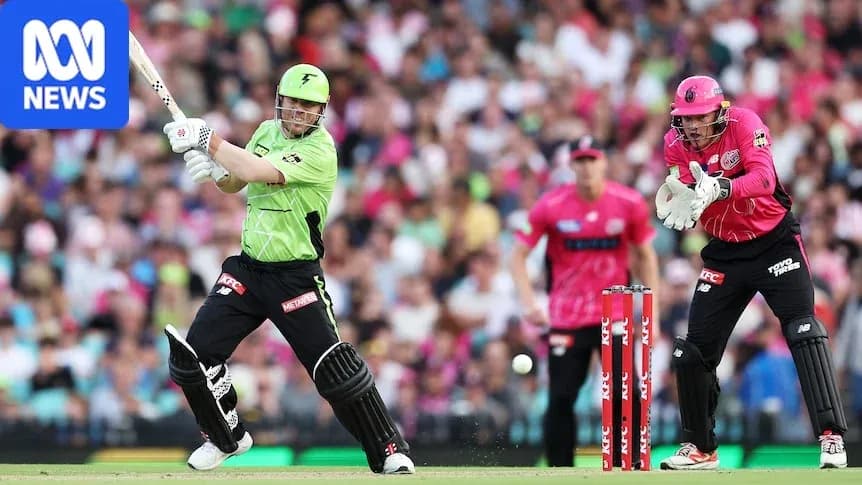
Cricket NSW owns two of the competition’s flagship brands, the Sydney Sixers and Sydney Thunder. Those clubs, the organisation stresses, do more than chase titles and television slots; they bankroll the base of the sport.
“The profits from our successful and healthy Big Bash clubs – the Sydney Sixers and Sydney Thunder – are reinvested into growing participation in cricket,” the statement read.
That reinvestment, in NSW’s eyes, is the heart of its role.
“We see our role at Cricket NSW, alongside Cricket Australia and all states, as custodians of our game. Our purpose is to inspire everyone to play and love cricket. This starts with growing participation in our sport, ultimately producing great players for our W/BBL clubs, NSW and Australia.”
The fear is straightforward. Once private investors enter the room, profits start flowing in a new direction.
“Yesterday’s announcement threatens this system. The redistribution of profits to external investors reduces our ability to invest in community cricket, creating long-term impacts at all levels,” Cricket NSW said.
For a state that leans heavily on its Big Bash brands to fund junior pathways, coaching, and facilities, that is not an abstract concern. It is a direct hit to the grassroots pipeline CA itself often champions.
Fractures in the process
The anger in Sydney is not only about the destination, but the journey.
“The Cricket NSW board is also disappointed by the process leading to this decision,” the statement continued.
NSW insists it did not sit quietly on the sidelines. It says it raised concerns directly with CA, put forward an alternative plan to strengthen the Big Bash without ceding equity, and backed its position with “high-quality external advice” that outlined “significant risks within the proposal”.
CA has pressed on regardless.
For a national body that has pushed unity as a core value, the optics are stark: one of its most powerful states, owner of two of its most marketable T20 sides, openly challenging both the model and the method.
CA’s big bet
From CA’s perspective, this is a necessary leap to keep pace in a rapidly changing cricket economy.
Chair Mike Baird framed the move as a long-term safeguard, not a short-term cash grab.
“By opening the door to private investment in the Big Bash leagues, Cricket Australia is taking a deliberate step to strengthen and secure the long-term future of the game, accelerate growth and ensuring we can keep investing in community cricket and grassroots participation, domestic and international pathways and the elite level,” he said on Tuesday.
He described the decision as the product of “an enormous amount of analysis, discussion and collaboration over many months” and argued it is “the best way to secure cricket's future in this country, strengthen the Big Bash and protect our standing on the global stage”.
CA is already working to a timeline. It wants the Melbourne Renegades to be under new ownership in time for the 2027/28 season, a clear signal that this is not a theoretical exercise but a live commercial project.
A battle for the game’s future
Strip away the corporate language and the clash comes down to a simple question: who should own Australian cricket’s most visible domestic product, and to what end?
On one side, CA is betting that private capital will inject fresh energy, marketing muscle and financial security into a league that competes for attention with global T20 tournaments backed by deep-pocketed owners.
On the other, Cricket NSW fears that once the door opens, the game’s priorities will tilt. Less money for local clubs and kids. More pressure to satisfy external investors. Less control for the states who have built the competition from the ground up.
For now, CA holds the pen. But as the Renegades move towards a sale and the rest of the BBL watches on, the question lingers: will this reshape Australian cricket for the better, or fracture the very system that made the Big Bash worth buying into in the first place?