Cricket Australia Opens Big Bash League to IPL Investors
Cricket Australia dangles a Big Bash carrot in front of Indian Premier League money. The IPL giants are looking. They’re running the numbers. But they’re not exactly sprinting to the table.
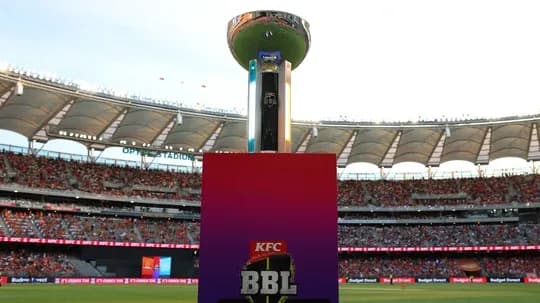
CA has formally opened the door to private investment in selected Big Bash League franchises and has hired US merchant bank Raine Group to shepherd the process. Raine helped deliver the blockbuster sell-off of The Hundred teams in England last year, and CA chief executive Todd Greenberg has not been shy, calling BBL privatisation a “billion-dollar opportunity” for the sport in Australia.
Expressions of interest have already come in from IPL owners and other Indian investors. CA confirmed as much, though without naming names. Around the IPL ecosystem, the usual heavyweight groups are understood to be circling. None has gone on record to say, “We’re in.”
They have their reasons.
A full Renegades buy, but a blank canvas
Right now, only one team is actually on the block for full ownership: Melbourne Renegades. A 100 per cent acquisition, overseen directly by CA rather than Cricket Victoria, is expected to be wrapped up by Christmas.
On paper, that sounds clean. In reality, it’s messy.
Any buyer would be handed a licence but not a living, breathing club in the traditional sense. No inherited fan base. No baked-in identity. No guarantee that the red of the Renegades means anything to anyone once the paperwork changes hands. An IPL group used to walking into ready-made, feverish support in India, South Africa or the UAE would be starting almost from scratch in Melbourne.
Next in line, reportedly, are Hobart Hurricanes and Perth Scorchers. Yet even there, the model tightens. Those future sales are expected to be capped at 49 per cent stakes. No majority, no outright control.
That’s a problem for IPL ownership groups who have built their empires on calling the shots.
Control stays in Australian hands
CA’s stance is clear. Chairman Mike Baird has already drawn the boundary line.
“CA and its members will maintain control over the most significant aspects of Australian Cricket operations,” he said, listing off international scheduling, player availability, Big Bash salary caps, branding proposals, the reserve price for a licence, and investor approvals as non-negotiable areas of authority.
In other words, investors can buy in, but they won’t be running the sport. Not even close.
That runs counter to what IPL teams enjoy elsewhere. In SA20, ILT20, CPL and even Major League Cricket, Indian owners have full franchise ownership. They pick the coaches, shape the squads, build the brand, and in many cases, influence the league’s direction.
The Hundred offers a more nuanced picture. Sun Group, owners of Sunrisers Hyderabad, hold a 100 per cent stake in Sunrisers Leeds. RPSG Group, which owns Lucknow Super Giants, has 70 per cent of Manchester Super Giants. Reliance (Mumbai Indians) and GMR (Delhi Capitals) each own 49 per cent of MI London and Southern Brave, but crucially still wield operational control.
That last point matters. Even where IPL-linked stakes are technically minority holdings, the operational levers sit firmly with them. CA, by contrast, is signalling something far more restrictive.
Old interest, new resistance
The GMR group, co-owners of Delhi Capitals and owners of Hampshire County, have long had Australia on their radar. They explored a potential investment in Sydney and Cricket New South Wales, a move first reported in early 2025. GMR representatives even used the fifth and final BGT Test in Sydney as a backdrop for talks with Cricket NSW about collaboration.
Those conversations now look like a dead end.
Cricket NSW is understood to be opposed to private investment in its set-up and may not even put Baird’s name forward to CA for the chairmanship next time. The philosophical divide is obvious: Baird is pushing a controlled, partial-privatisation model for the BBL; NSW doesn’t want private money in at all.
That internal battle is CA’s to manage. IPL teams are watching a different set of dials.
Stars not guaranteed, windows not cleared
The biggest sporting asset in any T20 league is star power. CA cannot currently guarantee it.
Unlike the ECB, which carved out a clean, international-free window for The Hundred, Australia runs its international calendar alongside the BBL. National duty and Big Bash fixtures collide. Franchises, and by extension investors, are left guessing who they will actually have on the park.
The numbers tell the story. Pat Cummins has played just seven BBL games since 2016. Over the same period, he has turned out in 76 IPL matches. He is hardly alone. Australia’s top names are often absent from their own domestic showpiece.
India runs the opposite model. The BCCI ring-fences the IPL and demands full availability from contracted stars. MS Dhoni (149 games), Virat Kohli (160), Rohit Sharma (153) and Jasprit Bumrah (141) have barely missed a fixture in that same span. For IPL owners, that level of certainty is the standard. Anything less feels like a compromise.
And it’s not just the Australians. There is no clear picture yet on the availability of overseas players for the BBL either. The global calendar is crowded. SA20, ILT20 and the Bangladesh Premier League overlap with the Australian summer. If players can earn similar or better money in countries with lower tax burdens than Australia, the pull of the BBL weakens.
Distance, dollars and a powerful union
Then there is the geography.
A team flying to Perth faces a five-to six-hour journey. That’s a mini long-haul by domestic standards. In South Africa, where IPL owners control all six SA20 franchises, the longest hop between host cities is just over two hours. England, the UAE and the Caribbean all offer tighter travel footprints. Less time in the air means fresher players, smoother logistics, and lower costs.
Taxation in Australia adds another layer. Player earnings are hit harder than in rival leagues based in South Africa, the UAE or Bangladesh. For a top overseas pro weighing up offers, that matters. For a franchise trying to build a world-class squad under a salary cap, it matters even more.
The media rights picture is also locked down. CA is only three years into a seven-year broadcast deal. Any new investor walks into an existing structure, not a fresh rights cycle they can help drive or leverage.
Hovering over all of this is the Australian Cricketers Association. The ACA holds serious sway in the game’s decision-making. For IPL owners used to operating in environments where player unions have less visible influence, that’s another unknown they need to understand before committing serious capital.
Profit now, questions later
There is, however, a bright side that keeps the conversation alive: most BBL teams are believed to be profitable. That is not a small detail. In an era where many leagues lean heavily on long-term projections and central support, the idea of walking into a competition where clubs are already in the black is attractive.
It also explains why there is no unanimous push within CA to bring in private money. If the league is not bleeding cash, the urgency to sell simply isn’t there. Some stakeholders will ask: why share control of a product that already works?
IPL owners will ask a different question: how much upside is left if they can’t shape the product themselves?
For now, they are present in almost every major T20 franchise competition on the planet – SA20, ILT20, CPL, MLC, The Hundred – with two conspicuous gaps: the Pakistan Super League and the BBL.
Closing one of those gaps will not come cheaply. Nor will it come on their terms alone.
One IPL insider cut through the corporate language with a blunt assessment of the negotiations so far: “The ECB was difficult; CA is five times tougher to negotiate with.”
That is the challenge at the heart of this project. CA wants fresh capital without surrendering control. IPL owners want influence to match their investment. Somewhere between those positions lies the answer to a simple question: can the Big Bash really become the billion-dollar opportunity Australia has been promised, if the biggest players in the global franchise game feel they’re buying in with one hand tied behind their back?