Brazilian GP: Norris Triumphs as Mercedes Secures 2026 Constructors' Title
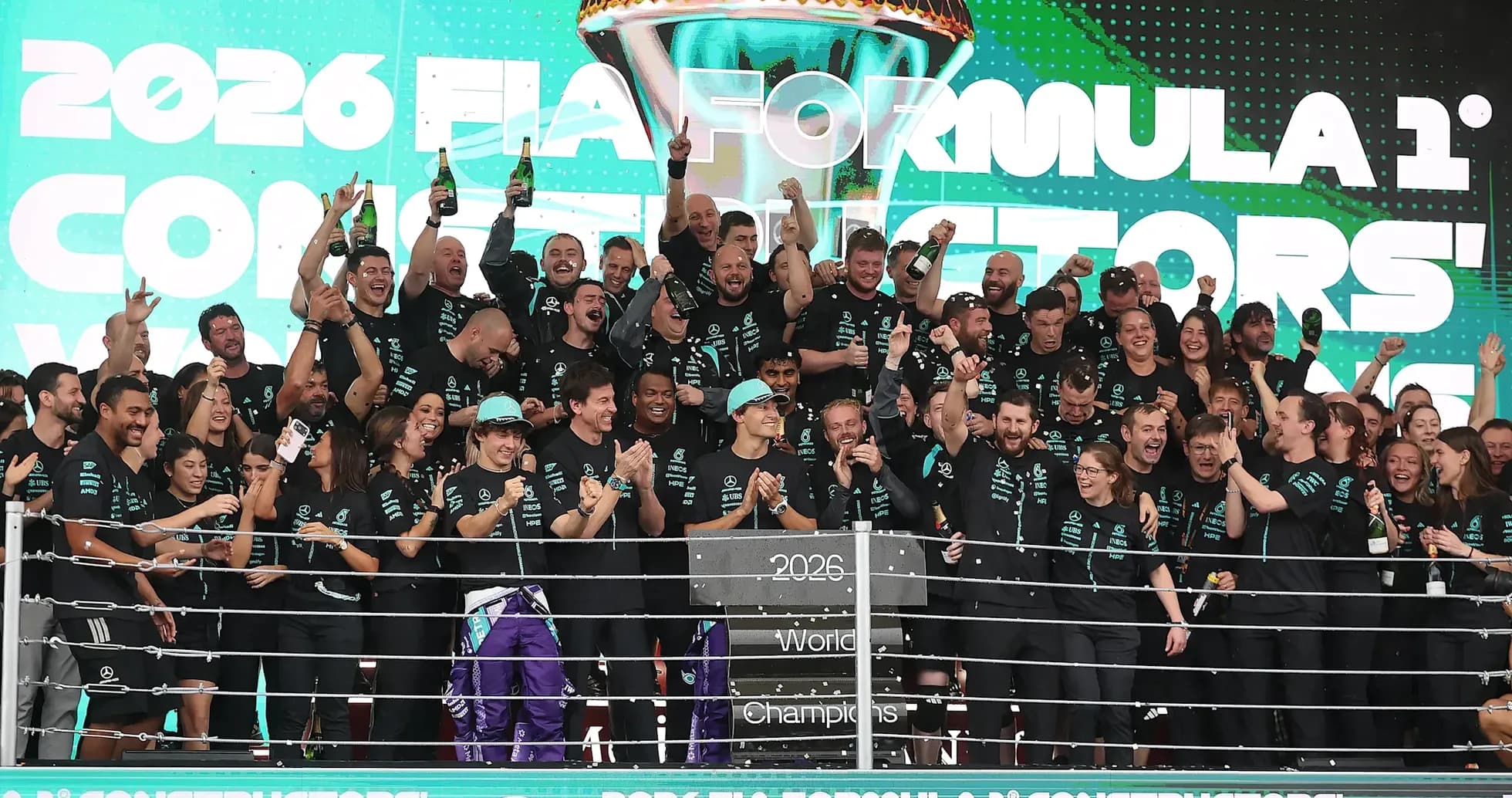
The day Mercedes finally wrapped up the 2026 constructors’ championship, it did so without a single car on the podium and with both drivers spinning. That was the kind of Brazilian Grand Prix this was: messy, gripping, and utterly unforgiving.
Rain showers, a scrambled grid, and tyre gambles ripped up the script. Some thrived in the madness. Others were exposed by it.
Norris masters the storm
Lando Norris called this one of the best wins of his career. He wasn’t exaggerating.
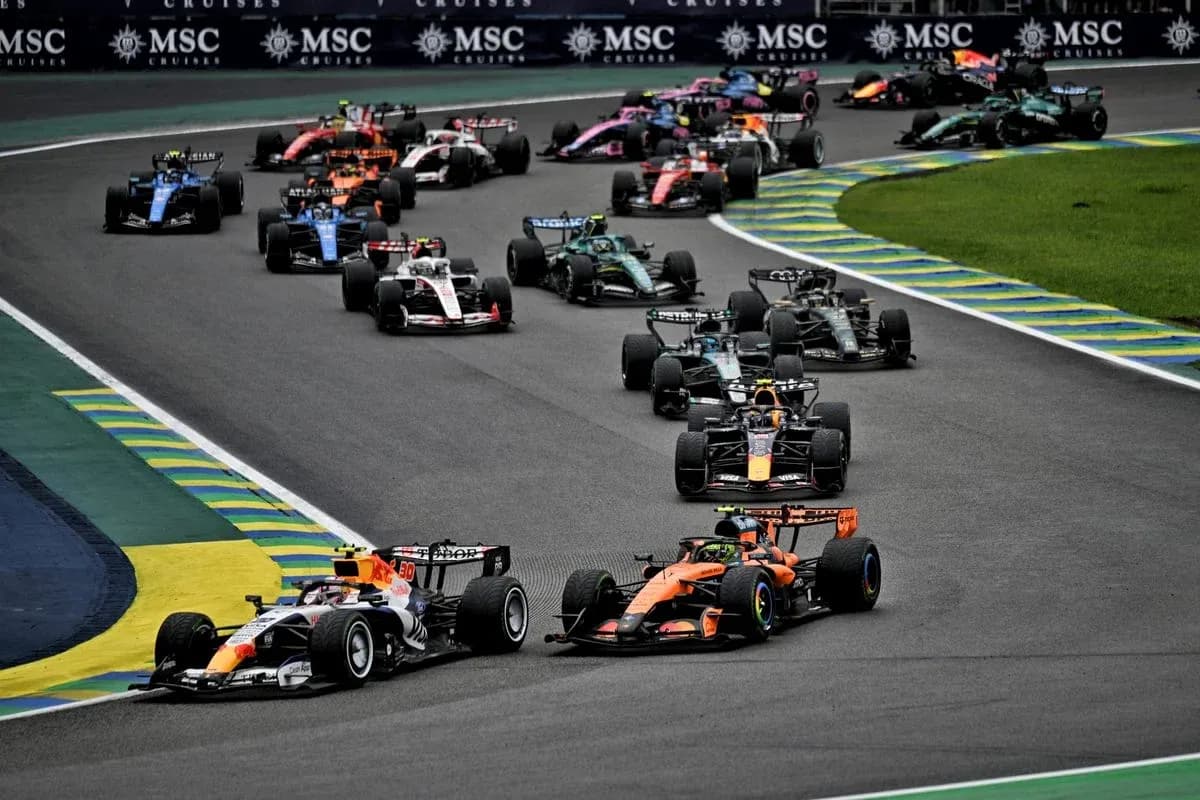
From pole, he was immediately in trouble. Beaten off the line into Turn 1, then shoved down to third by Liam Lawson at Turn 2, Norris looked like he’d been ambushed. By the time he reclaimed second from Lawson at Bico de Pato on lap six, Kimi Antonelli was more than five seconds up the road. Winning from there was possible, but it was going to require nerve and precision.
The race flipped on a single, ruthless decision. McLaren rolled the dice first, bringing Norris in for slicks one lap earlier than Mercedes did with Antonelli. That extra lap on warm tyres was gold dust. Norris hacked chunks out of Antonelli’s lead, closed in, and was ready to strike as soon as the Mercedes driver began to falter.
From then on, he was ice-cold. While others skated off, second-guessed grip and second-guessed themselves, Norris simply didn’t blink. In conditions that made champions look clumsy, he looked exactly like one.
Antonelli: title in the bag, race in the bin
This should have been Kimi Antonelli’s coronation drive. Instead, it was a reminder that even the new world champion can get it badly wrong.
He led comfortably early on, handled the first phase of the race well, and looked in control. Then the problems started. A spin from the lead, a slide down the order to fifth, and a car that never felt quite right from that point on.
Mercedes is still trying to pin down the cause, with Toto Wolff pointing to what he believes was a set-up or tyre pressure misjudgement that snowballed into something far more damaging. An unsafe release in the pits summed up the day: messy, costly, and uncharacteristic of Antonelli’s 2026 standards, even if the penalty didn’t actually drop him a place.
He still ended the afternoon on the podium for the constructors’ celebrations, title secured, champagne flying. But judged purely on the race, this was a rare off-day from F1’s new benchmark.
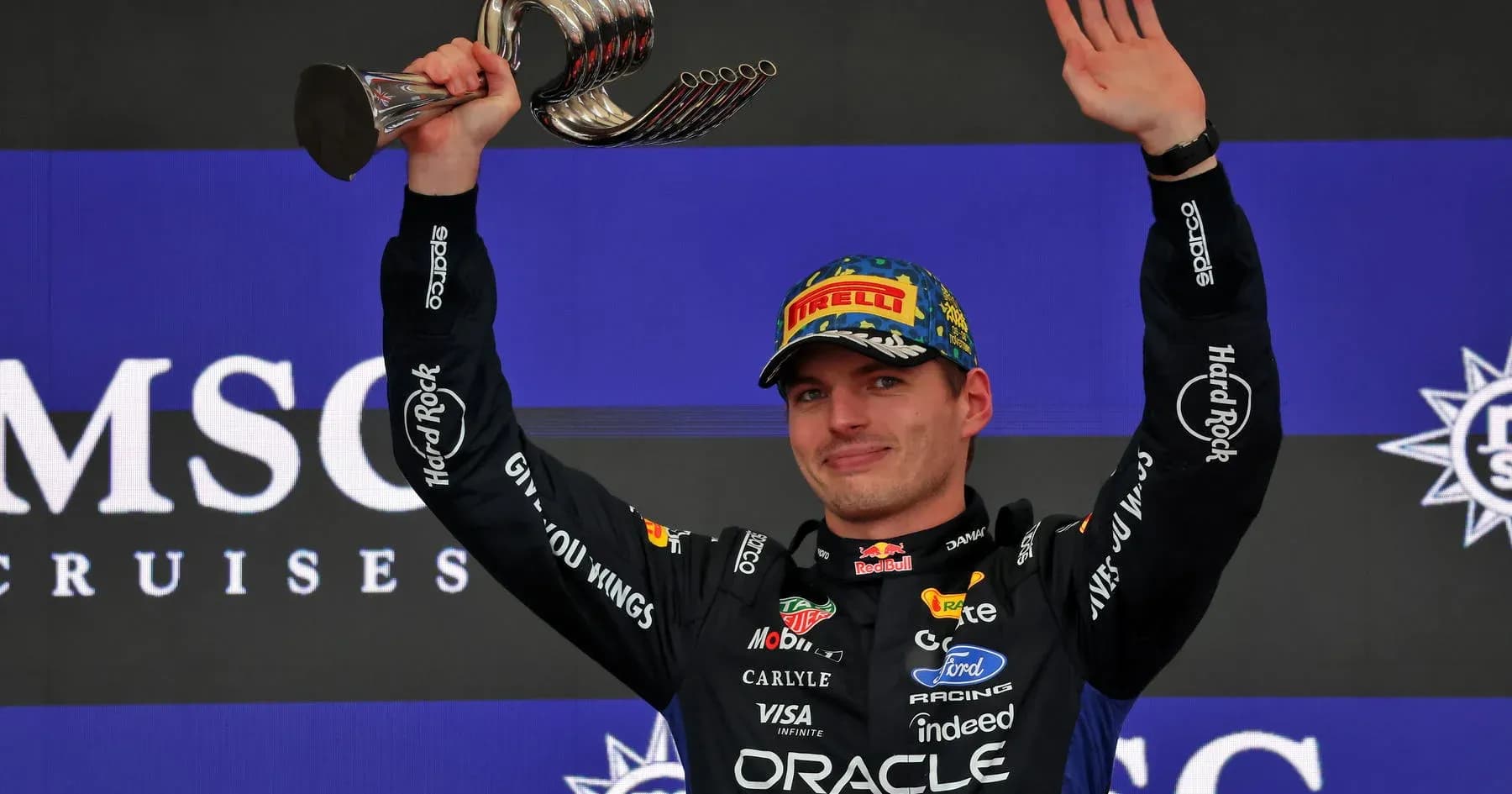
Verstappen drags a wounded car to second
From 21st on the grid to second place is usually the headline in itself. Max Verstappen added a twist: he reckoned he did most of it in a car that wasn’t behaving properly.
The damage started with his own mistake. He mismanaged the clutch at the start, bogged down, and got swallowed in the chaos of the opening corners. There was no instant charge, no early highlight reel of overtakes.
Once he found clear air, the familiar rhythm returned. He carved through the field, then hit the crucial slicks phase with a car that suddenly felt wrong. Verstappen reported severe oversteer in the high-speed corners and suspected some form of aero loss.
When the rain returned and he switched back to intermediates late on, the car came alive again. To Verstappen, that contrast was proof that something had gone awry in the middle stint. Even so, second place from last on the grid, in a race as treacherous as this, was a reminder that even a compromised Verstappen remains a permanent threat.
Russell’s spin overshadows his speed
George Russell left Interlagos talking about positives. On the soft tyre, he felt he had the fastest race pace. Fourth was his best result since his win in Baku five rounds ago. He beat Antonelli for the first time since that same race. He played his part in sealing Mercedes’ first constructors’ crown since 2021.
All true. All valid.
Yet the moment that will linger from his afternoon is the spin at the pit exit. A low-speed, high-embarrassment moment that dumped him down the order and forced him into a nothing-to-lose mindset. From there, he could afford to gamble on tyres and claw his way back to fourth.
On a day when Antonelli fumbled a winning hand, Russell never looked like the man to step in and take the victory for Mercedes. Fast at times, combative at others, but ultimately short of the sharp end when it mattered most.
Lawson keeps proving his point
Every lap Liam Lawson turns in 2026 seems to make the idea of him being without a seat next year look more absurd.
In Brazil, he was again the standout at Racing Bulls. He outpaced team-mate Arvid Lindblad all weekend, launched himself to second on the opening lap, and briefly lived in the rarefied air near the front before the drying track dragged him back towards reality.
Even then, he still found a way to make it count. Once Charles Leclerc’s penalty dropped the Ferrari behind him, Lawson ended up splitting the red cars and taking seventh, winning the midfield fight for the fifth race in a row.
His points tally alone now sits comfortably ahead of Alpine’s total, as Racing Bulls’ nearest rival slumped to a fifth scoreless weekend in six. That surge has dragged Racing Bulls to the brink of a historic fifth place in the constructors’ standings, an ambition that has lingered since the Franz Tost Toro Rosso era.
And yet the man driving that push might still be discarded by Red Bull. On weekends like this, that possibility looks less like a decision and more like a blunder in the making.
Ferrari’s flashes mean little
Ferrari left Brazil with six points, its worst haul of 2026, and a strange sense of what might have been.
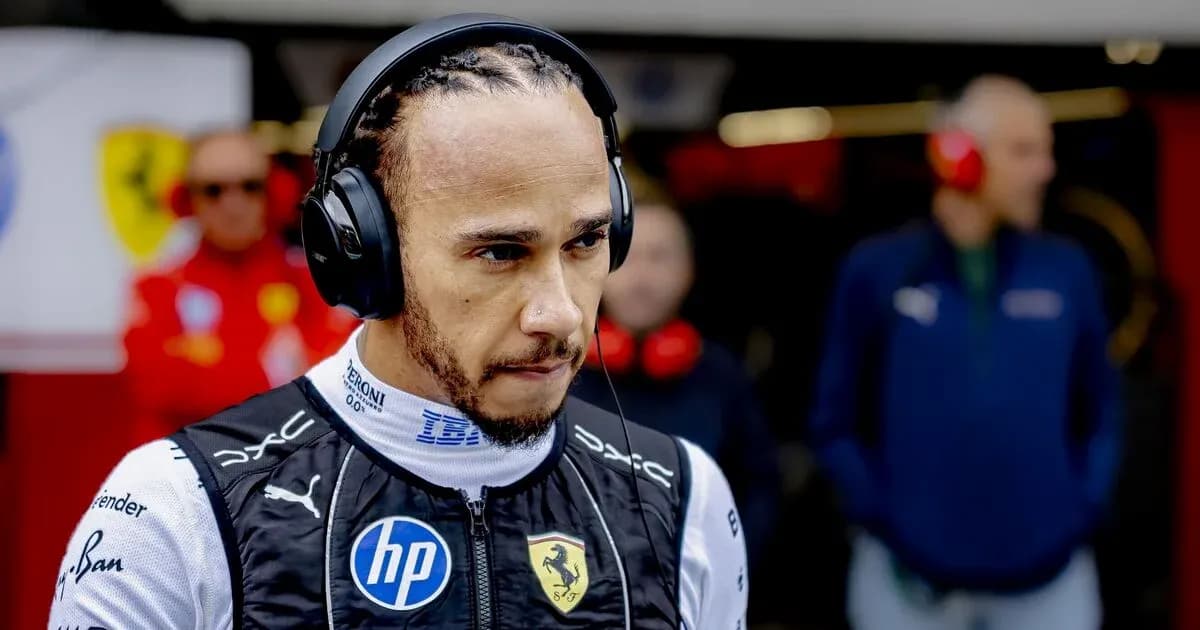
Charles Leclerc and Lewis Hamilton at least worked together effectively on track, coordinating rather than colliding. But their cooperation only nudged the team to eighth and ninth once Leclerc’s penalty dropped him back behind Lawson.
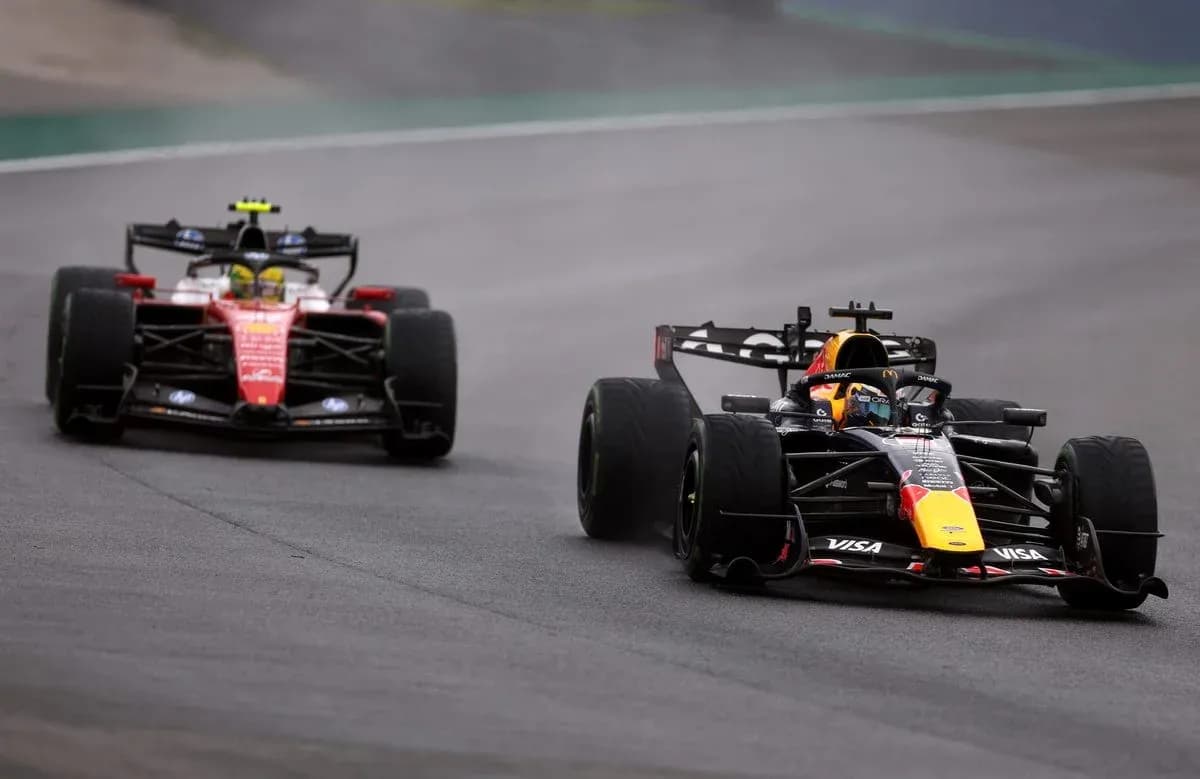
Their grid penalties didn’t tell the whole story. Verstappen started behind both Ferraris and still finished second. Across the race, Leclerc and Hamilton took turns looking lost, then suddenly electric. The problem was the timing: the quick spells came too late or too briefly, and the damage from the slow ones was already done.
Hamilton’s late spin only deepened the frustration, and the stewards stripping Leclerc of seventh after his on-track move on Lawson underlined the sense of a day that never quite clicked. Ferrari had pace, but not the consistency or the composure to turn it into anything meaningful.
Hadjar passes another Red Bull exam
Isack Hadjar’s third podium for Red Bull might be his most impressive yet.
He didn’t have it all his own way. In the middle of the first stint on intermediates he slid backwards, struggling for grip while the field danced on the edge. But he steadied himself, found rhythm on the slicks, and began to attack.
The move that defined his race came against Antonelli. Hadjar set it up smartly, read the Mercedes’ difficulties, and struck decisively to grab a podium place. Finishing so close to Verstappen will always come with the caveat that Verstappen started last, yet this was still a composed, mature drive in brutal conditions.
Every race like this makes his case stronger inside Red Bull’s crowded talent pool.
Camara’s brutal education
Rafael Camara picked one of the hardest possible races for an F1 debut and got exactly the kind of schooling you’d expect.
He finished 20th and last of the classified runners, two laps down. Track limits caught him out repeatedly, earning him a black-and-white flag, with one offence coming immediately after leaving the pits at Turn 4. The conditions were treacherous. Haas as a whole had a miserable afternoon.
It still felt like a step back from the promise he’d shown earlier in the weekend. Friday had been impressive. Qualifying, too, until the Q2 crash that cost him a likely shot at Q3. On Sunday, survival became the ceiling.
Camara himself admitted he made mistakes he hadn’t anticipated, and that “we experienced everything in just one race”. That’s exactly what it looked like: a harsh, compressed education that will either harden him or haunt him.
Hulkenberg clings on for a precious point
From fourth on the grid to 10th at the flag doesn’t usually scream success. Nico Hulkenberg’s Sunday was different.
Where others around him crumbled, he at least kept something on the board. Lawson, starting from the same second row, surged forward and finished ahead of both Ferraris. Hulkenberg went the other way, but he fought hard in the midfield chaos and survived better than most.
Ollie Bearman started only two places behind him in the other Haas and sank to 17th, his race wrecked by a 20-second pitstop that he bluntly described as “game over”. Alex Albon also slid backwards as his Williams chewed through intermediates and then simply lacked pace as the track dried.
Hulkenberg picked up a penalty for cutting the track while scrapping with Franco Colapinto’s uncompromising Alpine, yet the misery around him meant it didn’t change his final position. One point, on paper, looks modest. In Audi’s tight fight with Haas for seventh in the constructors’ standings, it could turn out to be anything but. Bearman’s verdict that Haas is now “giving away” that battle suddenly feels hard to ignore.
Bottas’s non-start sums up the cruelty
Valtteri Bottas didn’t even get to take the start. A cross-threaded wheelnut discovered on the grid jammed a wheel on his car. Frantic efforts to fix it failed. His race ended before it began.
On a day when the brave and the bold could transform their seasons, Bottas was left stranded in the pitlane, watching the madness unfold without a single lap to his name.
In a championship this volatile, how many more chances like this will anyone get?