Bernie Ecclestone Detained Over Shotgun Incident in Portugal
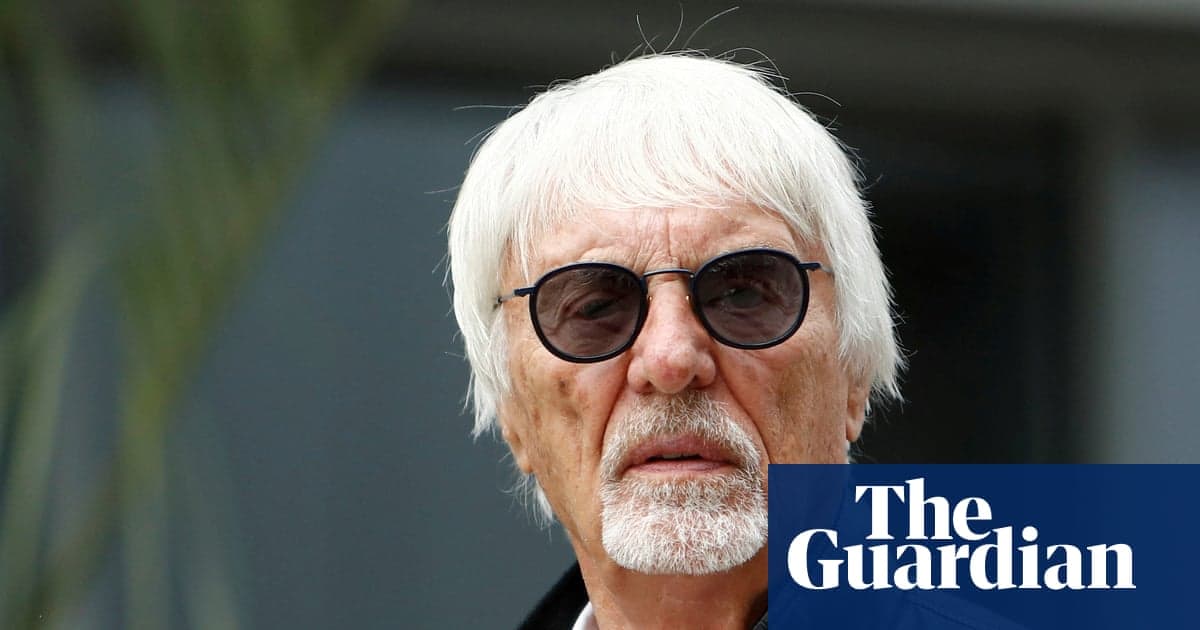
Bernie Ecclestone, the man who once ran Formula One with an iron grip, found himself detained in far more modest surroundings on Monday – a customs post at a small aerodrome outside Lisbon, facing questions over a shotgun.
The 95-year-old was stopped at Tires Aerodrome in Cascais after his private jet touched down and Portuguese officials carried out a routine inspection of the aircraft and its passengers. During that check, authorities discovered a shotgun in his possession that had not been properly documented.
The discovery triggered a familiar chain of events. Under Portuguese procedure, the firearm was seized and Ecclestone was formally made a defendant in criminal proceedings relating to the attempted import of the gun. Multiple authorities involved in the case confirmed the incident. What penalty, if any, will follow remains unclear.
Ecclestone, speaking to PA Media, rejected the suggestion that he had been arrested, insisting the police “were very helpful” and that officers had tried to smooth the process rather than escalate it.
He then laid out, in typically detailed fashion, how the saga began with a spur-of-the-moment sporting detour. Ecclestone said he had been invited to take part in a clay pigeon shooting competition in Portugal after his wife, Fabiana, met a fellow competitor on a flight from Brazil. She urged him to join in. He agreed.
With clay shooting already a hobby in Switzerland, Ecclestone decided to travel with one of his existing guns, which he said had been properly imported there. He flew into Portugal with the shotgun, assuming, as he told it, that this was a straightforward extension of his usual travel.
At customs, he said, officials who “know me very well” asked if he had anything to declare. He replied that he did not, beyond his usual personal items, and walked through. The calm lasted only a few moments.
“As I got out,” Ecclestone recalled, one of his staff told him the police wanted to see him. He went to speak with officers, who asked for information about the gun he had brought in. He said he did not even open the case before explaining it was a shotgun for clay pigeon shooting.
The next question caught him out. Where was the “blue book” – the documentation that acts like a passport for such a weapon? Ecclestone said he had never heard of it. Officers pressed the point. Anyone travelling with such a gun, they told him, must have the book.
They took his passport. He explained that he had bought the gun in England and taken it into Switzerland through what he described as normal channels. The officers again asked for the blue book. Again, he said he did not have it.
With several police officers now involved, Ecclestone said he was told he had tried to import a gun into Portugal. He rejected that characterisation, insisting he had simply come through customs and was now co-operating.
The standoff moved back to the customs area. According to Ecclestone, the police had complained to customs officials, who then set out his options. He would need to surrender the gun in Lisbon. Authorities would then decide whether he wanted to import it, in which case he would have to pay duty and seek a temporary import arrangement. Ecclestone agreed to that course.
It is not the first time a firearm has disrupted his travel plans.
In May 2022, Brazilian police arrested the former F1 chief executive at Viracopos Airport in Campinas after an X-ray scan of his luggage revealed an undeclared LW Seecamp .32-calibre pistol as he prepared to board a private plane to Switzerland. He admitted owning the gun but said he did not realise it was in his bag. He posted bail at the airport facility and was allowed to continue his journey.
Ecclestone’s ties to Portugal have grown in recent years. His wife, Fabiana Flosi, has been linked to a major property purchase about 15 miles west of Lisbon, reported to be the country’s most expensive private house sale at around £35m.
For decades, Ecclestone dictated the commercial and political direction of Formula One, reshaping it from a niche European championship into a global entertainment product. He began in the sport in the 1950s as a driver and businessman, became a team owner and then the central broker of television rights and race contracts.
His formal reign ended in 2017 when Liberty Media took over F1’s commercial rights and moved him aside. His influence has waned since, but his presence has never quite faded.
Even at 95, and even in a customs office in Cascais, Bernie Ecclestone still finds a way to sit at the centre of the story.