BCCI Seeks Title Sponsor for Home Games
The world’s richest cricket board has a vacancy it doesn’t usually entertain for this long: India still don’t have a title sponsor for their home games, more than two weeks after the deadline passed.
The Board of Control for Cricket in India (BCCI) is in direct talks with a select group of heavyweights — Google Gemini, SBI Life, IDFC First Bank and Spinny among them — as it searches for a brand willing to pay top dollar to be attached to the men’s international calendar.
This is not a routine hunt. It’s a carefully ring‑fenced auction.
Tight ring around key categories
In its Invitation to Tender (ITT), the BCCI has drawn an unusually hard line around who can even enter the race. Several categories are simply shut out.
Tyre companies, paint brands and sports apparel manufacturers have been told they cannot bid for the title rights in this cycle. They join the usual barred sectors: tobacco, liquor, fantasy gaming and gambling.
The document leaves no wriggle room. Any bidder “engaged directly or indirectly in the tyres, tubes and flaps industry” is disqualified. That covers manufacturing, marketing, distributing or selling those products — not just for the bidding company but any of its group entities.
The same goes for “athleisure wear, performance wear, and sports merchandise and equipment,” and for “paints, waterproofing and wallpapers.” Any business in those spaces is out before the race even starts.
The message is clear: this tender will not trample on existing contracts.
Protecting the current big spenders
Those exclusions are designed to shield some of BCCI’s biggest current backers.
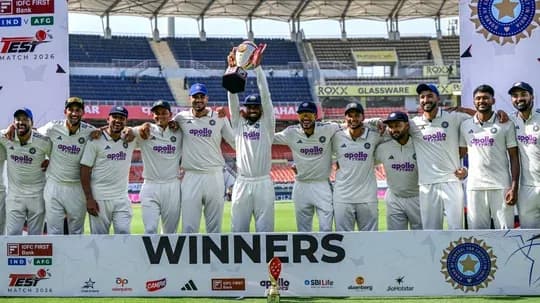
- Apollo Tyres, the Indian team’s lead jersey sponsor.
- Adidas, the kit sponsor.
- Asian Paints, an Associate Partner.
Their categories are effectively protected from new title‑sponsor competition. As a result, names that have long been visible in Indian cricket — MRF, CEAT, Berger Paints, JSW Paints, Nike, Puma, Decathlon — are automatically sidelined from this particular rights package.
There is no indication any of those brands were planning to bid. The BCCI has simply moved first, writing them out of the script to avoid conflicts before they arise.
The size of the prize
So what exactly is on the table?
For “tendering purposes only,” the BCCI expects to host around 35 “Chargeable Matches” during the rights period. That figure is not a promise, but a working estimate, with the final schedule entirely at the board’s discretion.
A Chargeable Match is defined narrowly. It covers international fixtures played by the India Senior Men’s National Team in an international series or event. It does not include:
- Any domestic match in a domestic series or event
- Any match that is part of ACC Events or ICC Events
- Any international match played by the India senior women’s national team
So this is a pure men’s home‑international property, stripped of ICC and ACC clutter, focused on bilateral and BCCI‑run events.
The reserve price is steep. INR 4,85,00,000 per Chargeable Match — 4.85 crore rupees — is the minimum the board is willing to entertain.
Multiply that by the projected 35 matches and you arrive at a notional floor of nearly INR 170 crore for the cycle, before any premium is bid on top.
Only big, clean balance sheets welcome
The BCCI has also made sure this remains a big‑league conversation.
Individuals cannot bid. Unincorporated entities, consortia, joint ventures, joint bidders — all ruled out.
The tender is strictly for single, incorporated entities with serious financial muscle.
To qualify, a bidder must clear at least one of two financial bars, measured over the last three audited years:
- Average Turnover of at least INR 100 crore, or
- Average Net Worth of at least INR 100 crore
Those numbers ensure only established, well‑capitalised companies can step into the room. Start‑ups without a track record, opportunistic consortiums, or loosely structured partnerships won’t even make it to the first handshake.
A premium property still waiting for its name
So the stage is set: a high‑value, tightly controlled sponsorship asset, ring‑fenced categories to protect existing partners, and a shortlist of potential suitors with the financial muscle to play at this level.
The title sponsor’s logo will sit on every home international featuring the India men’s side, across a rights period likely to include some of the most watched bilateral cricket on the planet.
The only missing piece is the name on the deal — and how much they are willing to pay to be the brand that travels with Indian cricket every time the first ball is bowled at home.