Zinedine Zidane Names Kylian Mbappe Captain of France
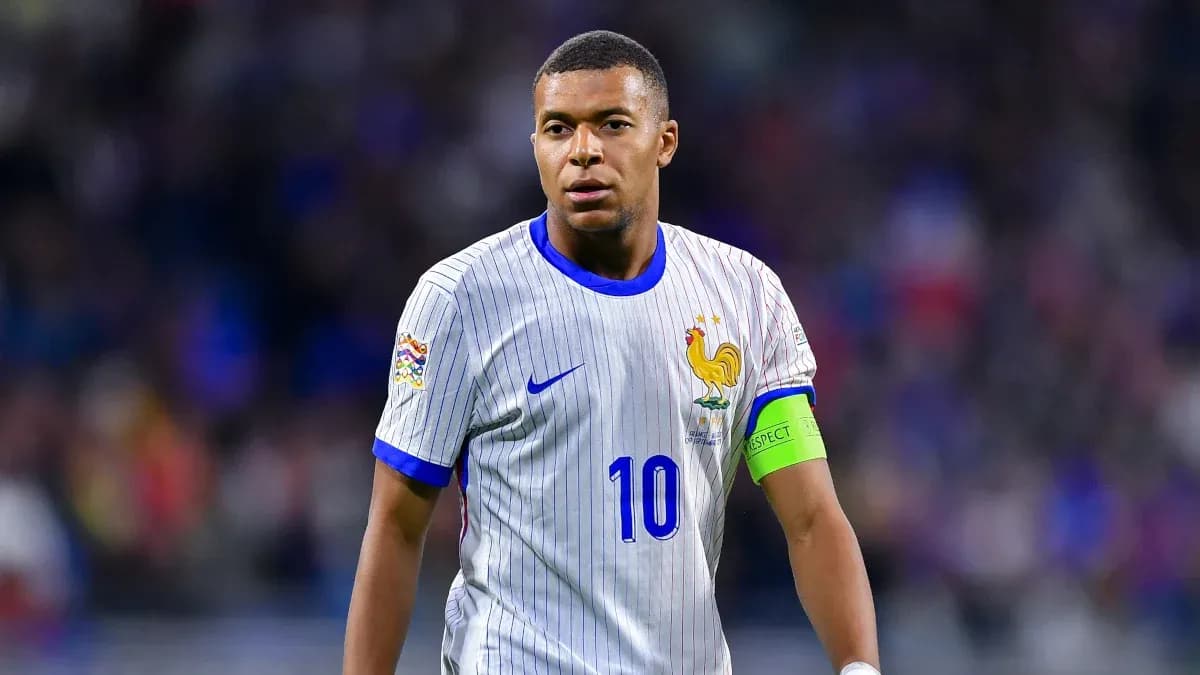
Zinedine Zidane did not wait long to make his first big call. On Friday, as he unveiled his first France squad, the new national coach confirmed what many expected but still wanted to hear from his own mouth: Kylian Mbappe will captain Les Bleus.
The Real Madrid forward wore the armband with authority at the World Cup, dragging France through games and finishing as the tournament’s top scorer with 10 goals. France still fell short, beaten by eventual champions Spain in the semi-finals, but Mbappe’s leadership under the most intense spotlight clearly left its mark on the new man in charge.
For Zidane, it is both a continuation and a rupture. The announcement formally closes the book on Didier Deschamps’ 14-year reign, a spell crowned by the 2018 World Cup win and defined by stability, loyalty and a trusted core. Zidane, Deschamps’ teammate in the 1998 World Cup and Euro 2000 triumphs, now steps out of the shadow of that era with a four-year contract and a squad that looks, in places, distinctly his own.
Zidane era starts on the road
The first steps of this new project will be taken away from home. Zidane’s France open their UEFA Nations League campaign in Turkey next Friday, before heading to Brussels to face Belgium on September 28. Only then will the Stade de France get its first glimpse of the new regime, with Italy visiting on October 2 and Belgium returning to Paris three days later.
The calendar is demanding. So is the message Zidane has sent with his squad list.
At 54, the former Ballon d’Or winner knows what it means to carry a nation’s expectations and to live with the scars of the biggest stage. His own international career ended with that infamous red card for headbutting Marco Materazzi in the 2006 World Cup final, a night that finished with France losing on penalties to Italy. Now he returns to the national team not as an icon on the pitch, but as the man tasked with shaping the next generation.
And he has wasted no time refreshing the cast.
New faces, new tone
Several names in Zidane’s first squad underline a willingness to reward form over reputation. Jeremy Jacquet, the 21-year-old centre-back, earns a first call-up after impressing with Liverpool since his summer move to the Premier League. It is a bold promotion, the kind of selection that signals a clean slate and a genuine pathway for emerging talent.
Up front, Rennes striker Esteban Lepaul is in on merit as well, after finishing last season as Ligue 1’s top scorer. His inclusion adds a different profile to the attacking options around Mbappe and offers another domestic success story a shot at the international stage.
In midfield, Lucas Da Cunha’s rise with Como in Serie A has not gone unnoticed. Zidane has also brought in Andy Diouf, who has been used as both midfielder and wing-back at Inter Milan, giving France tactical flexibility on the flanks and in the middle of the park. Toulouse goalkeeper Guillaume Restes completes the group of newcomers, stepping into a highly competitive goalkeeping department.
These are not cosmetic changes. They reshape the depth chart and send a clear signal: reputation alone no longer guarantees a place.
Big absentees from the World Cup
The flip side of fresh blood is the absence of some established names. Aurelien Tchouameni, a mainstay in midfield and now at Real Madrid, is missing from this squad. So is Inter forward Marcus Thuram. Both featured at the World Cup; neither has made Zidane’s first cut.
Arsenal defender William Saliba is also out, though his case is different, ruled out through injury. Even so, his absence underlines how quickly competition for places is tightening, especially in central defence, where Ibrahima Konate, Dayot Upamecano, Maxence Lacroix and Jacquet now jostle for minutes.
The overall balance of the group still leans on a strong core: Mike Maignan anchors the goalkeeping unit; Konate, Jules Kounde and Upamecano bring high-level experience at the back; Eduardo Camavinga, Adrien Rabiot and Warren Zaire-Emery provide a blend of control and energy in midfield. Up front, Mbappe is flanked by the likes of Ousmane Dembele, Bradley Barcola, Desire Doue, Esteban Lepaul and Michael Olise. It is a squad built to play on the front foot.
Mbappe’s armband, Zidane’s imprint
Handing Mbappe the captaincy formalises what has been evident for some time: this is his team now. He is no longer just the devastating finisher or the global superstar. Under Zidane, he becomes the reference point in every sense, the player the younger faces will look to and the figure who will carry the manager’s message onto the pitch.
Zidane, who once shared a dressing room with Deschamps and lifted trophies alongside him, now charts his own course with a very different generation. The Nations League fixtures against Turkey, Belgium and Italy will not define his tenure, but they will reveal plenty: how quickly this group can absorb his ideas, how Mbappe wears the armband in competitive action, and how the new faces cope when the anthem ends and the noise rises.
The Deschamps years ended with a semi-final exit and a feeling of a cycle closing. Zidane’s begins with a bolder, sharper-looking squad and a superstar captain officially entrusted with the keys to the team.
The question now is simple: can this new France, with Mbappe at the front and Zidane on the touchline, turn promise into the kind of silverware that once defined them both?