Tuchel’s New England: Embracing Chaos for Control
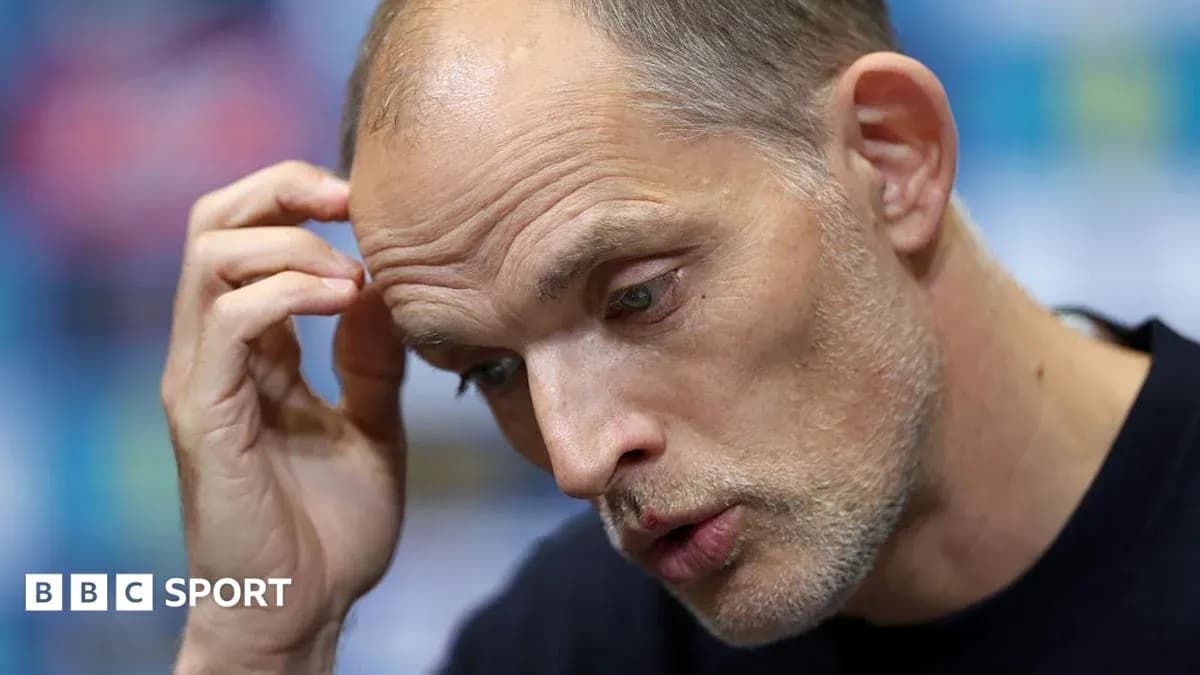
Thomas Tuchel flew out of the United States in July with a familiar itch. Control. More of it. Better versions of it. A World Cup semi-final lost to Argentina still gnawed at him, the collapse after Anthony Gordon’s opener replaying in his mind as a story of a team that let the game slip from its grasp.
Two months on, the language has shifted. The England manager stood at his first squad announcement since that run in the US and talked about something very different.
“Embrace the chaos.”
For a coach hard-wired to organise and regulate, it is a striking phrase. But this is where Tuchel is now: somewhere on the fault line between structure and storm.
England’s third-place finish in the World Cup was their best return since 1966. That matters. Yet the semi-final defeat still frames the conversation. Tuchel’s own post-mortem highlighted England’s failure to manage the game after taking the lead, to slow the tempo, to impose their will when it mattered most.
Now he is openly toying with the idea that control alone might not be enough.
From 6-4 to a new mindset
The 6-4 bronze-medal thriller against France has clearly left its mark. For Tuchel, the coach, it was a tactical migraine. For everyone else, it was chaos in its purest, most intoxicating form.
“Football without any control is sometimes hard to digest for a coach,” he admitted, before acknowledging how supporters spoke of that match as one of their “nicest experiences ever” as spectators.
So he is wrestling with the contradiction. The coach who craves order is being pushed by the evidence in front of him: that this England, this generation, might be at their best when the game breaks open, when they play on the edge of risk.
Maybe, he suggests, he has to compromise. A little less control. A little more chaos. And see what that releases.
Is it mixed messaging? Not really. It sounds more like a manager trying to make his team less predictable, harder to script, more dangerous when the games tilt and wobble in the Nations League and beyond.
The best sides bend their identity without breaking it. They can slow a game down or blow it apart.
A squad that whispers ‘control’
Look down the squad list, though, and the story is more nuanced than Tuchel’s “chaos” line suggests.
The recalls of Trent Alexander-Arnold and Cole Palmer jump off the page. Two of the most technically assured English players of their generation, both capable of dictating rhythm, both natural problem-solvers with the ball. That does not scream chaos. It screams control with imagination.
Alex Scott’s inclusion points in the same direction. The Bournemouth midfielder is comfortable receiving under pressure, turning out of tight spaces, stitching moves together. Lewis Hall, the Newcastle left-back, offers similar composure in possession. These are players who want the ball, who calm teams down rather than speed them up for the sake of it.
Tuchel is not ripping up his playbook. He is trying to redraw its edges.
Balance remains his ideal. He wants England to be able to live in both worlds: the Premier League’s relentless tempo and the international game’s demand for spells of calm, of circulation, of patience.
A wild card on the wing
Where Tuchel does let the door swing open to the unexpected is in attack.
Rio Ngumoha’s first senior call-up adds a jolt of electricity to the group. The 18-year-old Liverpool winger has started the season in thrilling form under Andoni Iraola, popping up on both flanks, beating defenders, taking risks. He plays like a footballer who has not yet learned to be afraid of consequences.
That is precisely the kind of edge Tuchel wants more of in the final third. He even revealed that Fulham forward Josh King is close to a first senior call-up as well, another signal that he is serious about refreshing his forward options before this Nations League cycle hardens into habit.
Yet he is not about to turn England into a pure transition side that simply chases chaos for its own sake. Asked whether his team could mirror a Premier League-style high tempo but with greater control, he framed his wish clearly.
Ten minutes here and there where they look a bit like Spain. Longer stretches where they resemble the best of themselves from the World Cup: the second half against Croatia, the first half against France. Those were the benchmarks in his mind – high intensity, high connection with the fans, but still recognisably English in their energy.
He knows this version of England is not “economical”. They expend a lot to impose themselves. But that, he argued, mirrors the league most of his players come from. In the Premier League, you “max out every single match” or you fall away. He sees something “beautiful” in that.
Ambiguity remains. He admits it. But it is a productive kind of uncertainty, the sort that forces a coach to keep questioning rather than cling to a single idea.
Loyalty to his core
If Tuchel is conflicted about the precise balance between control and chaos, he is far more certain about his core group.
The recalls of Palmer and Alexander-Arnold have prompted suggestions that he misjudged his World Cup squad. He rejects that flatly. In his view, the group that went to the US still forms the spine of his thinking.
He insists that, had injuries not intervened, this squad would look very similar to the one that took England to third place. Reece James, Dan Burn, Dean Henderson, John Stones, Jordan Henderson, Djed Spence – all missing, all players he describes as crucial in building the “brotherhood” and mentality that carried England deep into the tournament.
On that front, he will not compromise. The culture, the spirit, the shared responsibility: non-negotiable.
So this camp, as he sees it, is about others stepping into that void. Not a tactical revolution. Not a new formation for the sake of it. His “mindset at the moment is not to change too much within the formations”.
The tweaks will be in personnel and in attitude, not in tearing up the blueprint.
Spain, Czechs, Croatia: the next examination
The calendar offers no gentle easing-in. England host World Cup winners Spain at Wembley on Saturday, 26 September. That is a test of control as much as courage, a meeting with the side that still sets the standard for possession football.
Then comes a trip to the Czech Republic on Tuesday, 29 September, and another away assignment in Croatia on Saturday, 3 October, before the Czechs visit Wembley on Tuesday, 6 October. Four Nations League games in 11 days. Four different emotional tones. Four chances to see how far Tuchel has come in his internal battle.
Can this England side slow Spain down without losing themselves? Can they ride the storm in Croatia while still daring to open the game up? Can they flick the switch between order and chaos on demand, rather than being dragged into it?
Tuchel has chosen his players. He has laid out his contradictions in public. Now comes the real question of this England cycle: can he turn that ambiguity into an advantage, or will the search for balance define them more than any trophy ever could?