Thomas Tuchel and England's New Era: Lessons from the World Cup
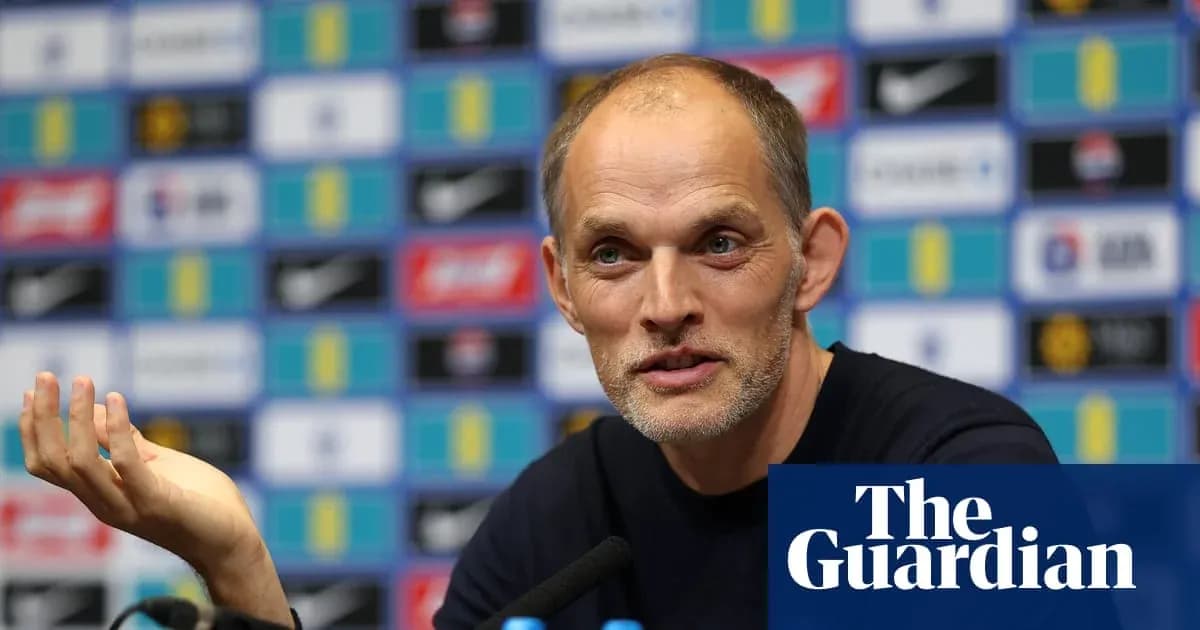
Thomas Tuchel says 99.9% of England fans he meets don’t mention Argentina. They want to talk about Mexico, the Democratic Republic of the Congo, the wild 6-4 over France. The World Cup bronze. The good bits.
He should probably listen harder to the 0.1%.
Outside Tuchel’s bubble, the mood is still raw. England led Argentina in that semi-final in Atlanta and then shrank. The substitutions, the retreat, the 5-4-1, the sense of a team backing away from the moment – that hasn’t gone anywhere. The World Cup is not filed away neatly in the national memory, no matter how many cheerful conversations the head coach recalls.
Tuchel wants to move on. The Nations League is coming, Spain at Wembley next Saturday, then Czechia and Croatia. He sat in front of the cameras at Wembley, joking that his bosses at the FA had given him a gentle slap on the wrist for those defensive changes against Argentina. Then he switched tone. The story, he insisted, should be about beating France 6-4 for bronze three days later, not about the collapse that came before.
Football doesn’t work like that. Not at this level. Not with this team.
World Cup shadows over a new squad
This first post-World Cup squad cannot be separated from what happened in the summer. The omissions tell their own story. Noni Madueke, Ollie Watkins and Ivan Toney are all out from the 26 who went to the tournament. Tuchel’s original plan, he said, was continuity. Injuries forced his hand.
Dean Henderson, Dan Burn, John Stones, Reece James, Djed Spence, Jordan Henderson – all missing. That list has opened the door to a different England, or at least the possibility of one. New faces, new profiles, a hint of renewal.
And then there’s Trent Alexander-Arnold.
Dragged back from international cold storage, the Real Madrid defender is the most intriguing and most puzzling name on the sheet. He has not been picked since June 2025. His form in Spain under José Mourinho has flickered rather than burned. He has never truly convinced an England manager. So why now?
Would Alexander-Arnold be here if Spence, James or even Ben White were fit? Tuchel did not dress it up: he does not plan to use the 27-year-old in midfield. This is not an experiment with an inverted playmaker. This is a straight call at right-back, with all the baggage that comes with it – his passing range, his defensive lapses, his history with England.
For Alexander-Arnold, the challenge is simple. Stay in the picture when November comes. For Tuchel, the message to every newcomer was just as blunt: a call-up is the start, not the achievement. You earn it again in an England shirt.
Style, identity and that Argentina comment
Tuchel insisted he has not lost sleep over his World Cup choices. He wants to bottle the “brotherhood”, the spirit of the camp. Fine. But spirit did not lose that semi-final on its own.
There was a telling moment when a reporter asked whether the selections of Alexander-Arnold, Alex Scott and Cole Palmer were a response to one glaring issue in Qatar and the United States: a lack of forward passers. Tuchel paused. He remembered, as everyone else did, his line after the Argentina defeat about ball possession not being part of England’s DNA.
After taking the job, he spoke about harnessing the pace and power of the Premier League. At the World Cup, that vision appeared only in bursts. The second half of the opening win over Croatia was the one spell when England truly went full throttle, tearing into a good side with pace, aggression and risk.
The rest of the time, they lived in a halfway house. Not enough control to look like Spain. Not enough chaos to look like a Premier League side. Stout defending, yes. Flashes of genius from Harry Kane and Jude Bellingham, of course. But no clear identity once the pressure rose.
Tuchel now talks about “embracing the chaos”, about learning to rest with the ball at times but also to reproduce the fury of that Croatia surge. It sounds bold. It also sounds complicated in a world where the smartest passing teams usually dictate international tournaments.
He admitted England were not the “most economical” side in possession. The Premier League’s relentless tempo drains his players. Yet there is another truth he has to face: he helped create his own problems.
Midfield mistakes and a second chance
Against Argentina, as Declan Rice tired, England needed fresh legs next to Elliot Anderson. They had few convincing options. Jordan Henderson, 36 and nursing a broken wrist, was never a realistic answer at that stage of the game. Kobbie Mainoo, nimble in tight spaces and brave on the ball, was in the squad but never left the bench.
Tuchel now accepts he has a duty to look at Mainoo properly this time. That admission alone underlines the scale of the oversight in Atlanta. There were ways to avoid sinking into that grim 5-4-1, camped on the edge of their own area, waiting for the inevitable.
Myles Lewis-Skelly was in outstanding form for Arsenal at the end of last season. Alex Scott was running midfields for Bournemouth. Neither made it to the World Cup. Both are here now. Adam Wharton, though, remains on the outside looking in. Tuchel is still not convinced.
Selection will always stir arguments. Morgan Gibbs-White and Josh King can both feel harshly treated. Liam Delap has a case over Dominic Calvert-Lewin as Kane’s understudy. These are the debates that follow every England squad announcement.
Strip them away and what remains is a strong group, rich in talent, with just enough youth to give it an edge.
A new wave, a different attack
Rio Ngumoha, Liverpool’s teenage winger, represents that new wave as clearly as anyone. Jarrad Branthwaite arrives looking every inch the new Dan Burn, a left-footed centre-back with presence, having edged out Levi Colwill. Lewis Hall gets a chance to stake a claim at left-back.
Then there is the signal sent in attack. Leaving Madueke at home while bringing in Cole Palmer hints at a shift. At the World Cup, Tuchel often picked like-for-like replacements in every role, as if fearful of disturbing the system. Palmer is a different type. He does not hug the touchline and sprint in straight lines. He drifts, he links, he sees passes others do not.
Chelsea’s No 10 is simply a better all-round footballer than Madueke. England, for all the talk of chaos and power, now have a cluster of technicians: Palmer, Scott, Alexander-Arnold, Bellingham. Players who want the ball and want to do something with it.
The crowd has seen enough of fear. Enough of waiting for Kane or Bellingham to conjure something from nowhere while everyone else hangs back. This squad offers Tuchel the tools to build something braver.
Spain at Wembley will not care about his 99.9%. They will care about the spaces England leave, the passes England dare to play, the courage England show when the game tilts against them.
Next Saturday, more than that tiny 0.1% will be watching to see one thing: has Thomas Tuchel actually learned, or is this just a new squad wrapped around the same old doubts?