Netball’s Indigenous Awakening: The Rise of the Black Swans
For decades, netball has been the game Australian girls grow up with, but not the game that grew with its First Nations talent.
Three. That’s the number of Indigenous women who have pulled on the Diamonds dress: Marcia Ella-Duncan, Sharon Finnan-White and, after a 22-year wait, Donnell Wallam. A sport built on mass participation had somehow managed to keep its First Nations stars on the fringe.
Then came a jolt.
Wallam’s move across the Tasman in 2024, and her blunt parting shot at the Queensland Firebirds, cut through the usual netball niceties. In explaining her decision to join a New Zealand club, she praised their “respect for inclusion and culture” and laid bare her frustration with the environment she was leaving behind. The accusations of a “toxic culture” around the Firebirds forced Netball Australia to look hard at itself.
This wasn’t a minor grievance. It was an indictment.
From crisis to change
Netball Australia did not simply ride out the storm. The governing body launched an investigation and began reworking its foundations, building new structures around one central idea: cultural safety for First Nations athletes.
At the heart of that shift is Ali Tucker-Munro, a former Diamonds squad member now serving as Netball Australia’s General Manager First Nations. Under her watch, the sport has moved from symbolic gestures to tangible pathways.
The most visible symbol? The Black Swans, Australia’s first official First Nations netball team.
Their emergence sits alongside two other pillars of Tucker-Munro’s work: the First Nations Tournament, a national championship now underway in Melbourne, and the Spirit Series, launched in 2026, where the Black Swans went undefeated against Pacific opposition.
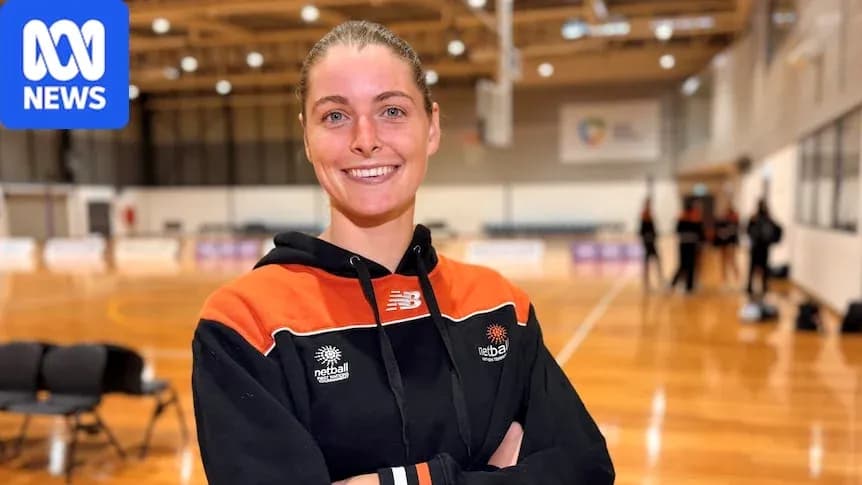
At the State Netball and Hockey Centre, Tucker-Munro stands with two of the faces of this new era, defenders Gabby Coffey and Scarlet Jauncey. Their stories explain why these changes matter – and why they still aren’t enough.
On the cusp, and stuck there
Coffey is 26, representing the Northern Territory. She’s been close enough to touch elite netball, but never quite allowed to grab hold of it.
Four years as a Melbourne Vixens training partner told her one thing clearly: the door wasn’t opening.
“I knew there wasn't much movement in their defensive end, and the same with a lot of defensive ends around Australia,” she told ABC Sport.
So she left. To stay in the game, she headed to England, signing with Birmingham and spending two seasons there before returning home to Alice Springs.
Her experience is not unusual. Talented, committed, but stalled. Not because of a lack of ability, but a lack of opportunity and support.
Coffey hasn’t abandoned the dream of a professional contract. But she also understands her role might be broader now: to hold the ladder steady for the next group of First Nations athletes climbing after her.
Growing up Wiradjuri on Arrente land in Alice Springs, away from her own mob and country, she remembers how the local community wrapped itself around her.
“When you grow up on other Indigenous land and tell people you're Indigenous, they pull you into their culture,” she said. “We were super lucky and blessed to grow up in the centre of Australia where arguably their Indigenous culture is very sacred and traditional.”
Leaving that to chase netball in Melbourne was a shock. The distance wasn’t just measured in kilometres.
“It was really hard being away from home,” Coffey said. “I was really lucky with the team I entered and the support I did have, but it's not the same for everyone. There's a lot of girls who do get those opportunities to move and then don't last because there's just not that support in place.”
Coming from the Northern Territory added another layer of difficulty. Squads train together weekly; Territory athletes often don’t see teammates until tournaments.
“Even with competitions like these, we don't get together until we're here, and we're training away from each other, so it can be quite a challenge.”
‘If you can’t see it, you can’t be it’
Ask Coffey what would make the biggest difference, and she doesn’t hesitate: visibility.
“If you can't see it, you can't be it,” she said, noting there are only two Indigenous players currently in Super Netball.
Her own years as a train-on player underline the point. You can be in the building and still feel locked out.
Super Netball’s influx of international stars has raised the level of the competition and sharpened its global appeal. Coffey recognises that.
“We get a number of internationals, which I think makes the game better and more exciting, and I don't think that should be restricted,” she said.
But the same rosters that welcome overseas talent often leave little room for Indigenous players trying to break through.
Her hope lies in expansion. Netball Australia’s plans to add two new teams should open more list spots. A New Zealand side entering the competition, she believes, could ease the contract squeeze on Australian players and create more space for First Nations athletes to stay in the system long enough to develop.
On the other side of the country, Scarlet Jauncey is living a similar half-in, half-out existence.
The Yaruwu defender from Rubibi/Broome has spent the past year as a training partner with West Coast Fever, lining up against the likes of Jhaniele Fowler-Nembhard at training. It’s a priceless education and a constant reminder of the gap she’s trying to bridge.
Like Coffey, she doesn’t see cutting international talent as the answer.
“We’re happy to be playing against the best in the world, that's what we want,” she said.
She grew up idolising Donnell Wallam. Now, she’s captained the Black Swans, taking her own place in the chain of role models.
“I think it just gives us something to strive towards, knowing that we can be in that space,” she said of watching Wallam’s rise.
Her turn with the armband came in 2025. It changed how she saw herself.
“It was the best tournament I've played in, the best teams I've been with,” she said. The connection with other First Nations athletes at the tournament went beyond tactics and results. It felt like belonging.
Coffey felt it too.
The Black Swans and the First Nations Tournament, she said, gave her “goosebumps”.
“I think it gives not only myself, but a lot of players so much power and push to keep going and play at the highest level.”
Building safety, not just pathways
Those reactions are exactly what Tucker-Munro hoped to hear.
The Black Swans, the First Nations Tournament, the Spirit Series – they aren’t just events on a calendar. They’re designed as beacons.
“These tournaments are aspirational in terms of trying to inspire the next generation of our kids — who we know love sport and netball in particular — to trial for their respective state and territory,” she said.
The aim is clear: the kids watching in Melbourne this week should see a road that runs all the way to Super Netball and, eventually, the Diamonds.
But there’s a catch. It’s not enough to bring First Nations players into elite environments. Those environments have to be ready for them.
“First Nations people come into these spaces with our culture and community on our back, as well as cheering us on, so you want to do them proud,” Tucker-Munro said.
That weight can be inspiring. It can also be heavy, especially for teenagers relocating thousands of kilometres from home.
“It's also a tough journey, especially for the kids who have to relocate, so it's about thinking strategically about how we can support them.”
Since Tucker-Munro’s appointment, Netball Australia has set up a First Nations Cultural Council and completed a cultural safety review in partnership with community. The review didn’t just canvas players; it listened to coaches, umpires and the broader workforce.
The barriers, she admits, are “multi-faceted”: money, distance, access to quality coaching, and the lingering impact of a system that for too long didn’t listen.
“For too long our voice has been very silent,” she said. “We're not a homogenous people, so it's really important that we make sure we're hearing the voices of many.”
Her guiding principle is simple and firm.
“One thing we're really big on in our community is not to do things for us or to us, you've got to do it with us.”
That line cuts to the heart of where netball finds itself now. The sport has intent, goodwill and some significant reforms already in motion. The Black Swans exist. The tournaments are running. The conversations are happening in boardrooms as well as on court.
The question is no longer whether netball will change for First Nations athletes.
It’s how quickly the game can turn symbolic progress into a generation of Indigenous players no longer stuck on the cusp, but right at the centre of Australian netball’s biggest stages.