NBA Punishes Clippers: Five Draft Picks and $30 Million Fine
Adam Silver didn’t flinch. But he didn’t pretend it was easy, either.
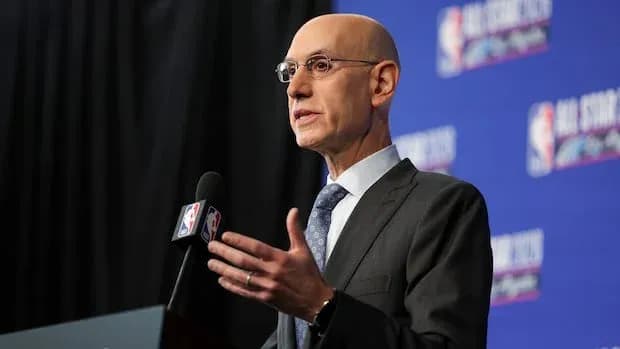
The NBA commissioner, speaking at the close of a two-day Board of Governors meeting on Tuesday, laid out why the league came down so hard on the Los Angeles Clippers for circumventing salary cap rules in connection with Kawhi Leonard — and why the punishment had to hurt.
Five first-round draft picks. A $30 million fine. A one-year suspension for owner Steve Ballmer. And the public label that no franchise wants: rule-breaker.
Silver stressed that this was not uncharted territory. The league, he said, leaned on precedent — specifically the Minnesota Timberwolves case, when they lost five first-rounders for cap circumvention tied to Joe Smith.
“We looked at what had been done before,” Silver said, noting that the Timberwolves penalty served as the benchmark. The Clippers, he concluded, had crossed a similar line.
That’s where the clarity ends and the discomfort begins.
Silver acknowledged the collateral damage. Stripping five first-round picks doesn’t just hit a balance sheet or a front office strategy session. It cuts into a team’s future, into the hope that keeps a fan base invested through injuries, rebuilds, and the long grind of an 82-game season.
“I think that's, in some ways, the most difficult part of adjudicating these disputes,” Silver said. “While there have to be competitive consequences, in our view, if these rules are violated, we still want to be a 30-team league and we recognize that in some ways we're unfortunately punishing the fans of that team as well.”
That’s the tightrope: enforce the rules hard enough that they mean something, without crippling one of your own.
Silver pushed back on the idea that the sanctions would permanently scar the franchise. He said he does not believe the loss of picks will cause “permanent damage” to the Clippers, even as he conceded the scale of the setback. Five first-rounders is not a slap on the wrist. It’s a reshaping of a franchise’s long-term planning.
The ruling capped a yearlong investigation into allegations that the Clippers had circumvented salary cap rules on Leonard’s behalf — allegations the organization vehemently denied throughout the process. The league didn’t buy their version. The penalties, announced earlier this month, were sweeping: Ballmer banned for a year, the team hit with the $30 million fine, the five first-round picks forfeited, and other sanctions layered on top.
While the investigation closed one chapter, another major piece of business finally moved on Monday. The trade sending Leonard back to the Toronto Raptors was completed after receiving the standard league approval required for such deals. One of the most closely watched stars in the sport officially changed teams again, this time against the backdrop of one of the harshest punishments of the salary-cap era.
Ballmer, for his part, has chosen not to fight City Hall. Earlier this week, he said he would accept the penalties. The fine, he added, has already been paid.
Yet the Clippers themselves were conspicuously absent from the Board of Governors gathering where Silver addressed the case. The team, the commissioner said, is still in the process of identifying an interim governor to stand in for Ballmer during his suspension. Until that’s resolved, their seat at the table remains empty.
So the league moves forward with 30 teams on paper, but one of them suddenly stripped of draft capital, its owner barred from the room, its star now officially back in Toronto. The rules have been enforced. The precedent has been honored.
The real question is how long it will take the Clippers — and their fans — to climb out from under the weight of the price they paid.