NBA Punishes Clippers with Draft Penalties and Fines
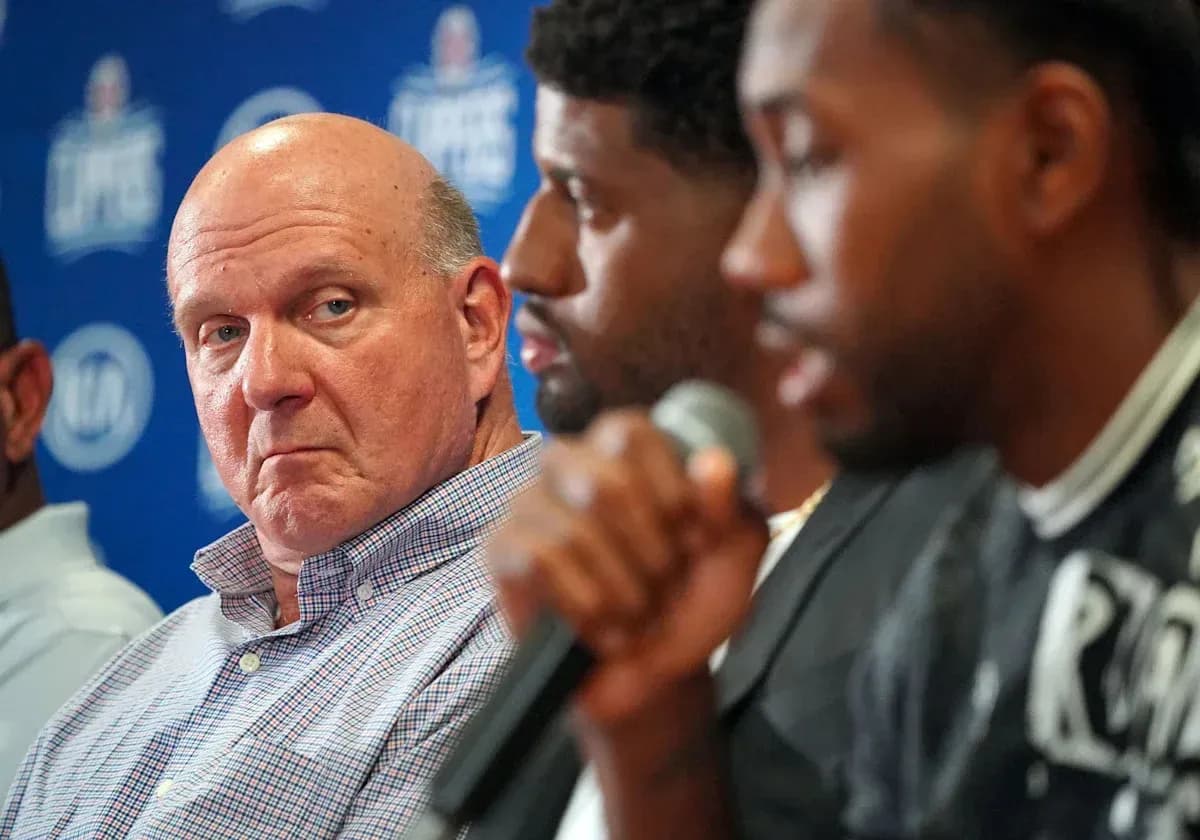
The NBA dropped a hammer on the Los Angeles Clippers on Wednesday, stripping the franchise of five future first-round draft picks and fining owner Steve Ballmer $30 million after finding the team violated the league’s salary-cap circumvention rules in its dealings with Kawhi Leonard.
Leonard himself was hit with a $700,000 fine, a rare personal sanction for a player of his stature and a stark coda to his turbulent Clippers tenure.
The punishment is staggering: the Clippers lose their first-round picks in the 2029, 2030, 2031, 2032 and 2033 NBA Drafts. For a franchise already short on draft capital after years of all‑in moves, the league has effectively taken a decade-long bite out of its future.
In its announcement, the NBA said the investigation “found a pattern of misconduct and multiple significant rules violations by the Clippers organization,” pointedly noting that the club was “a prior offender of the salary cap circumvention rules.”
A star’s statement, a franchise exposed
Leonard, whose trade back to the Toronto Raptors has been frozen for weeks while the league completed its probe, moved quickly to address the ruling. In a statement on social media, he leaned on the themes of integrity and responsibility, while distancing himself from any intent to cheat the system.
“Integrity and respect for this game are fundamental to who I am. I accept full responsibility for lapses in judgment by people within my inner circle and regret the distraction this situation has caused the fans and my family.
“I entered into my contract with the Clippers as well as the agreements in question in good faith, fully committed to fulfilling my obligations and with no knowledge of any intent on anyone’s part to circumvent the salary cap.
“For 15 years, my priority has been giving everything to my family, the game, and those I share the court with. As I return to Toronto, I am focused on what I can control, closing this chapter, and moving forward with a clean slate.”
The chapter the league just closed began months ago with a podcast.
Journalist Pablo Torre first dragged the alleged scheme into the light on his show, “Pablo Torre Finds Out.” He detailed an agreement between Leonard and Aspiration, a now‑bankrupt financial firm in which Ballmer was heavily invested. According to Torre’s reporting, Leonard received $28 million from Aspiration for minimal obligations, a deal critics saw as a backdoor way to supplement his Clippers salary and sidestep the cap.
When that story broke, the Clippers and Ballmer pushed back hard. Their statement called the idea that Ballmer invested in Aspiration to funnel money to Leonard “absurd,” stressing that there was “nothing unusual about team sponsors doing endorsement deals with players on the same team” and insisting the organization had no oversight of Leonard’s independent endorsement contract.
The NBA was unconvinced enough to launch a formal investigation that same day.
A second look at a 2019 recruitment
This wasn’t the first time the league had peered into how Leonard landed in Los Angeles in 2019.
Months after he signed a three-year, $104 million deal with the Clippers, the NBA examined whether his camp — led by his uncle Dennis Robertson — had sought improper perks during free agency. A 2019 report in The Athletic said Robertson asked teams, including the Los Angeles Lakers and the Raptors, for part ownership, a private plane on constant call, a house and guaranteed off‑court endorsement money tied to Leonard’s decision.
Back then, the league said it found no evidence the Clippers granted illegal benefits. The case faded, the partnership continued, and the franchise built its future around Leonard.
This time, the evidence trail looked different.
Torre kept releasing episodes, each one layering on more details about Aspiration, Ballmer’s investment and the timing and structure of payments to Leonard. By September, the NBA had formally reopened the Leonard‑Clippers file, and commissioner Adam Silver addressed the matter at a Board of Governors meeting. He signaled he would need “clear and obvious” proof before punishing the club, saying he would be hesitant to act on “the mere appearance of impropriety.”
Behind the scenes, the probe rolled on while public comments largely dried up.
Ballmer, speaking at a Sports Business Journal event that month, maintained the franchise’s innocence and said he was “quite confident” the Clippers had “abided by the rules,” even welcoming the investigation as a way to “get the facts out there.”
The facts the league eventually accepted have now cost him $30 million and five first‑rounders.
Trade frozen, future shaken
The investigation’s shadow lengthened in June, when the Clippers agreed to send Leonard back to Toronto in a blockbuster deal. The move promised a fresh start for both sides — but immediately ran into the reality of an unresolved case.
Questions surfaced: Could the NBA allow a trade of a player at the center of an active probe? A few weeks later, the answer came in the form of cautious statements from both teams.
The Raptors revealed the league had informed them they would “assume the risk of any potential outcome of the investigation impacting Kawhi.” Toronto balked at that uncertainty and chose to wait. The Clippers, again, proclaimed their innocence and stood pat.
“The league office informed us that, as a result of the ongoing investigation involving the Clippers, we would assume the risk of any potential outcome of the investigation impacting Kawhi. In light of this we will wait until the league’s investigation is complete,” the Raptors said.
Even then, reporting suggested the trade would ultimately go through. ESPN’s Shams Charania said the expectation remained that the deal would be completed, indicating Leonard’s personal punishment was unlikely to derail his move.
Now the investigation is over, the penalties are on the board and Leonard is cleared to head back to Toronto with his “clean slate” — though his record now includes a league fine tied directly to a cap‑circumvention case.
A flawed era reaches its breaking point
On the court, the Clippers’ gamble on star power never fully paid off.
Despite pairing Leonard with James Harden, Los Angeles stumbled out of the gate this past season, opening 5-16 while Leonard missed 10 games with ankle and foot issues. The team went 2-8 in those contests without him, a brutal stretch that framed the entire year.
Once he returned, Leonard reminded everyone why franchises twist themselves into knots to sign players like him. He averaged a career‑high 27.9 points per game and drew MVP votes for the first time in four seasons. He carried the Clippers back above water, pushing them to a 42-40 finish.
It still wasn’t enough. The early skid left too steep a climb, and the Clippers crashed out in the play‑in tournament against the Golden State Warriors.
That loss, Leonard’s contract status and the drumbeat of the investigation combined to force a reckoning. With Leonard entering the final year of his deal, the organization entangled in a high-profile rules case and the roster seemingly stuck in neutral, the Clippers chose to move on from the superstar they once bent their entire operation to accommodate.
Now they do so without five of their future first-round picks, with their owner writing a $30 million check to the league office, and with a fresh reminder that in the NBA’s eyes, there is a hard line between creative cap management and outright circumvention.
The Clippers spent years trying to build a contender around Kawhi Leonard. The question now is how long it will take to rebuild what the league just tore away.