NBA Hits LA Clippers with Severe Penalties for Kawhi Leonard Deal
The NBA didn’t just slap the LA Clippers on the wrist. It swung a hammer.
After a nearly yearlong investigation into how the franchise handled Kawhi Leonard’s 2021 extension, the league has hit the Clippers with one of the most severe punishments of the salary-cap era: a $30 million fine, sweeping suspensions at the top of the organization and the loss of five first-round draft picks stretching into the next decade.
For a franchise that once sold itself as the smart, disruptive alternative to its glitzier neighbors, this is a brutal reckoning.
A Case Built on Emails, Endorsements and Semantics
At the heart of the investigation sits a deceptively simple question: when does “helping” a star player find endorsement money become illegal salary cap circumvention?
The Clippers argued they were merely a conduit — a middleman connecting Leonard to interested corporate partners, something teams around the league routinely do. Investigators saw something very different.
The league-commissioned report zeroed in on how Leonard and four companies arrived at endorsement deals, and on two words in particular: “affirmative” and “responsive.” The Clippers claimed they were only responding to interest and making introductions. The report concludes they were actively engineering deals that funneled value to Leonard in ways the cap rules do not allow.
Emails and interviews with executives from those companies underpin the league’s case. In multiple instances, investigators say the Clippers not only made introductions but helped structure the terms, then tried to cloak those efforts in language designed to look compliant on paper.
The Daktronics deal around the Intuit Dome scoreboard stands out. Investigators allege the Clippers directed a kickback from a massive arena scoreboard contract to Leonard in the form of an endorsement arrangement — and even helped set the terms of that agreement. In other cases, the report cites millions in “consulting” fees paid by the Clippers shortly after Leonard’s endorsement contracts were finalized.
The message from the league office is unmistakable: this wasn’t a gray-area misunderstanding. In their view, it was a pattern.
The Penalty: Money, Power and a Decimated Future
The numbers are staggering.
The NBA levied a $30 million fine, effectively stacking four separate $7.5 million penalties — the maximum allowed for cap circumvention — tied to the four companies it says were used to skirt the rules. That figure dwarfs the previous record fine for similar violations, the $3.5 million David Stern dropped on the Minnesota Timberwolves in 2000 over the Joe Smith scandal.
The human cost inside the organization is just as significant.
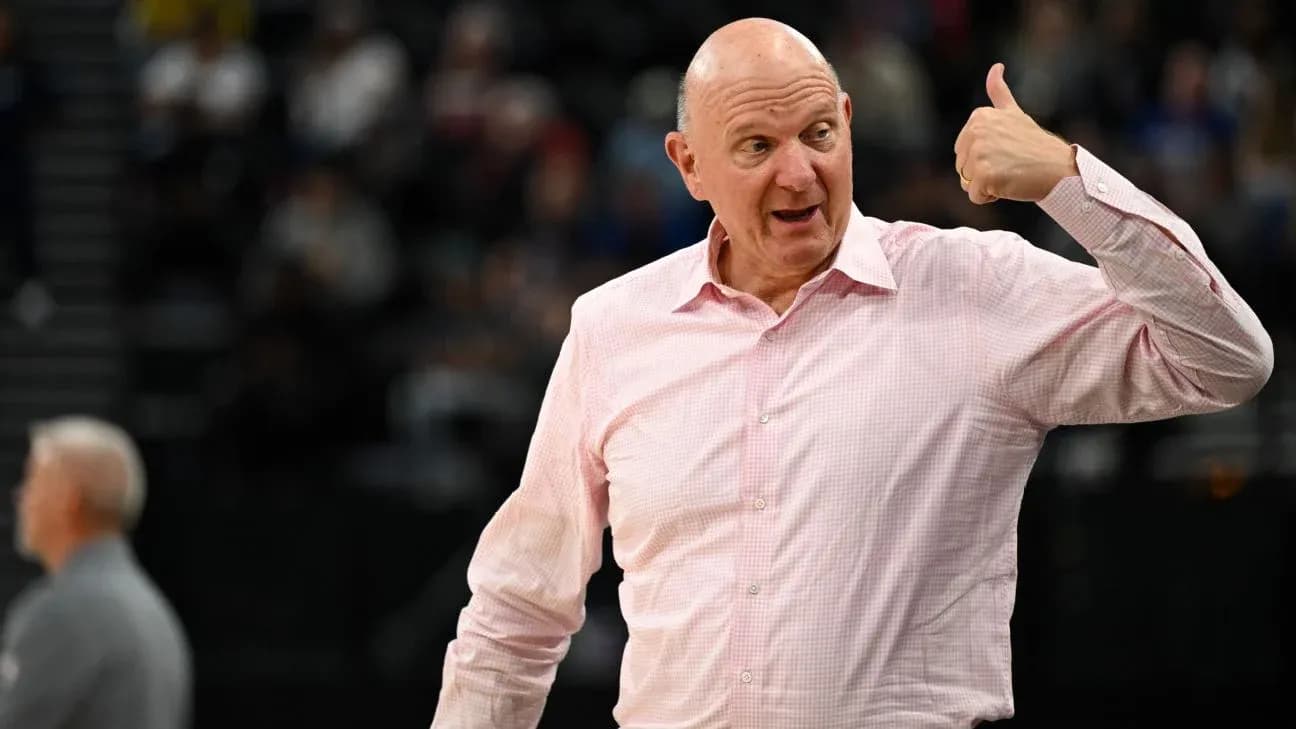
Owner Steve Ballmer has been suspended for one year. Team president of business operations Gillian Zucker is out for a year without pay. President of basketball operations Lawrence Frank has been suspended for six months, also without pay.
And then there are the draft picks, the lifeblood of any long-term plan.
The Clippers must forfeit first-rounders in 2029, 2030, 2031, 2032 and 2033. When you add those to the haul already shipped to Oklahoma City in the 2019 Paul George trade — the price of convincing Leonard to choose the Clippers in free agency — the tally is jaw-dropping: 10 first-round picks sacrificed to acquire and keep Kawhi Leonard.
For a franchise already walking a tightrope with its draft capital, this is a body blow.
Why the League Went This Far
The report from Wachtell Lipton doesn’t present a single smoking gun tying Ballmer personally to a detailed scheme. Instead, it paints a broader picture: an owner who, in the league’s words, failed to “create conditions under which his organization abided by the NBA’s circumvention rules” and who “knowingly sought to help [Kawhi] Leonard obtain off-court income opportunities.”
The case against Ballmer leans heavily on contemporaneous notes from Lawrence Frank and interviews with company executives. According to those notes, Leonard’s uncle and adviser, Dennis Robertson, complained to Ballmer that Zucker was arranging “bulls--- deals” and told him, “I have to get paid.” The same notes say Ballmer responded that Clippers staff were “collective workers to try and help [Leonard] achieve his financial goals.”
Investigators used that context — along with the pattern of deals and money flows — to argue the violations were not isolated or accidental, but deep, repeated and sustained over time.
History played a role too. The Clippers were fined $250,000 in 2015 over improper contact with DeAndre Jordan and were investigated in 2019 over Leonard’s initial signing. They were cleared then but warned and put through a seminar on the rules. To the league, this wasn’t a first offense. It was the culmination.
Even so, it could have been worse. In the Joe Smith case, the NBA voided Smith’s contract and stripped his Bird rights. Leonard keeps his contract, his Bird rights and his availability. His punishment is financial — a $700,000 payment — not competitive.
And crucially, the league will allow the agreed blockbuster trade sending Leonard to the Toronto Raptors to move forward. If it does, the Clippers will receive two first-round picks in 2031 and 2033, a thin line of future hope in an otherwise scorched draft landscape.
Clippers Promise a Fight
The NBA says the penalties are “final and binding” after agreement with the NBPA. The Clippers aren’t treating that as the end of the story.
In a forceful statement, the team vowed to “vigorously challenge these findings and penalties through every avenue available” and said it looks forward to an “ethical and impartial arbitration process.” Ballmer’s attorney, David Kelley, went even further, calling the outcome a “gross injustice” and promising to explore “every legal remedy.”
This is not empty talk. Ballmer has the resources and the resolve to wage a prolonged legal and arbitration battle. The Clippers have consistently denied funneling money to Leonard through Aspiration and other partners and have long signaled they would contest that allegation to the bitter end.
What actual recourse they have remains murky. The league’s collective bargaining framework and governance rules give it broad authority in these matters. Still, the Clippers appear determined to test the limits of that power.
A Franchise’s Future, Stripped of Firsts
On the court and in the front office, the damage is immediate and long-lasting.
Just months ago, the Clippers had begun to slowly rebuild their draft chest. Trading Ivica Zubac to the Indiana Pacers in February yielded two first-round picks, one of which became Keaton Wagler at No. 5 in this year’s draft. It was the start of a painstaking reset after the George and James Harden deals gutted their assets.
Before Wednesday’s penalties, the Clippers held seven first-round picks over the next seven seasons, four of them tradable. They still didn’t control their own first-rounder until 2030 — Oklahoma City owns swap rights in 2027, while Philadelphia owns the 2028 pick and swap rights in 2029 — but there was at least a path to flexibility.
That path has been blown up.
By losing the 2029 pick from Indiana and their own 2030–33 firsts, the Clippers are left with only the less favorable of their own, Oklahoma City’s or Denver’s (if 6–30) in 2027, plus a 2029 pick. None of those can be moved under the Stepien rule, which prohibits teams from trading away first-rounders in a way that leaves them without picks in any two consecutive future years.
If the Leonard-to-Toronto trade is finalized, LA will add unprotected firsts in 2031 and 2033. Those, too, would be locked from being traded because of the same Stepien restrictions. They will exist purely as a chance to draft, not as currency.
For a franchise used to dealing in stars and splashy trades, the future now looks like something else entirely: a long, narrow road with almost no margin for error.
Ballmer on the Sidelines
The suspension of Steve Ballmer is uncharted territory for the modern Clippers but not for the league.
Glen Taylor once sat a full season for his role in the Joe Smith cap circumvention case. Donald Sterling, Mark Stevens and Robert Sarver have all served yearlong or longer bans for various forms of misconduct. The NBA has precedent for sidelining owners.
This is not that kind of exile. Ballmer is not being forced to sell. Unlike the Sterling saga, there is no looming Board of Governors vote to strip him of the franchise. The alternate governor, Dennis Wong, owns 1% of the team and will serve as the formal figurehead in Ballmer’s absence.
What remains unclear is timing. Does Ballmer’s suspension begin immediately? Can he seek a stay from a court or arbitrator while he challenges the ruling? Those questions will shape how visible his absence feels over the next 12 months.
What’s certain is that one of the league’s most energetic and hands-on owners will be barred from the day-to-day operation of the team just as it enters one of the most precarious stretches in its history.
Who Runs Basketball Operations Now?
The front office is in limbo.
Because the Clippers have not accepted the punishment, they have not publicly named an interim head of basketball operations. All signs, though, point to general manager Trent Redden taking the lead.
Redden is a respected veteran executive and has been deeply involved in roster-building decisions. If Frank’s six-month suspension stands, he’ll miss everything up to and including the 2027 trade deadline, then return in time for that year’s draft and a potentially pivotal free agency period in which the Clippers could have up to $50 million in cap space.
In a twist of irony, the first major roster window that Frank is fully back for is also the first one in which the Clippers finally regain a normal first-round pick.
Gillian Zucker Under the Microscope
If the report is harsh on the organization, it is scathing toward Gillian Zucker.
Zucker, who has overseen business operations since Ballmer bought the team, is portrayed as the central figure linking Clippers sponsors to Leonard’s endorsement portfolio. The Wachtell report accuses her of making “misleading and false statements” during interviews and lays out in detail how she allegedly crossed the line from introductions into deal-making.
In one key episode, Aspiration co-founder Joseph Sanberg told Zucker he wanted to explore an endorsement agreement with Leonard. The report says Zucker promised to bring in a specific business agent — one already under a retention agreement with the Clippers — to help structure the deal. The next day, she contacted that agent.
Soon after, that agent emailed colleagues describing a proposed offer: $5 million plus $7 million in stock per year for four years, contingent on Leonard remaining with the Clippers. Investigators concluded Zucker had improperly conveyed those proposed financial terms, and the agent later told them neither he nor his team had devised the structure. Witnesses, including Zucker, acknowledged that Sanberg lacked the expertise to create such a deal on his own.
For the league, it was a vivid example of a team executive doing more than opening doors — she was, in their view, helping write the checks.
The Fall of Dennis Robertson
Dennis Robertson has hovered around Kawhi Leonard’s career for years as a powerful, often controversial presence. On Wednesday, the NBA finally drew a hard line.
The league banned Robertson for five years from “conducting business or otherwise engaging with NBA teams and their affiliates” on behalf of any player or employee. The punishment stems from his role in the Clippers case and a longer history of aggressive, often improper demands.
Back in 2019 free agency, Robertson’s asks became the stuff of league gossip: part ownership of a team, access to a private plane, a house, guaranteed endorsement money. According to multiple reports, he made similar pitches to the Lakers and Raptors, even requesting ownership stakes in outside companies and sponsorship deals that required no actual work from Leonard.
Those requests violated the spirit and letter of the collective bargaining agreement. They also spooked the league office enough to trigger a “rules enforcement initiative” focused on cap circumvention. One of the resulting rules now requires teams to report any solicitation by a player, agent or representative of compensation or benefits not allowed under the CBA — even if the team refuses.
Robertson’s influence has already been fading. In July, Leonard hired Harrison Gaines of SLASH Sports as his new agent and the lead on all business affairs, replacing Mitch Frankel and effectively sidelining Robertson’s informal role.
Leonard’s statement on Wednesday nodded to that shift and the turmoil around it: “Integrity and respect for this game are fundamental to who I am. I accept full responsibility for lapses in judgment by people within my inner circle and regret the distraction this situation has caused the fans and my family.”
The league has now done more than nudge Robertson to the background. It has pushed him out of the frame entirely.
Can the Clippers Get Anything Back?
History offers one faint glimmer.
When the Timberwolves were hammered in 2000, they lost five future first-round picks. Three years later, the NBA quietly restored two of them, giving back their 2003 and 2005 firsts while leaving them without picks in 2001, 2002 and 2004.
Could something similar happen for the Clippers down the line? It’s not on the table now. The league’s stance today is uncompromising. But the precedent exists, and owners around the league will be watching closely.
For the moment, though, the reality is stark. The Clippers are staring at a decade reshaped by one star, one extension and a series of off-court deals that went too far in the eyes of the league.
They built everything — the trades, the arena, the identity — around Kawhi Leonard. Now they have to live with the bill.