NBA Penalizes Los Angeles Clippers: Major Violations Uncovered
The NBA dropped a hammer on the Los Angeles Clippers on Wednesday, and it didn’t miss anyone on the way down.
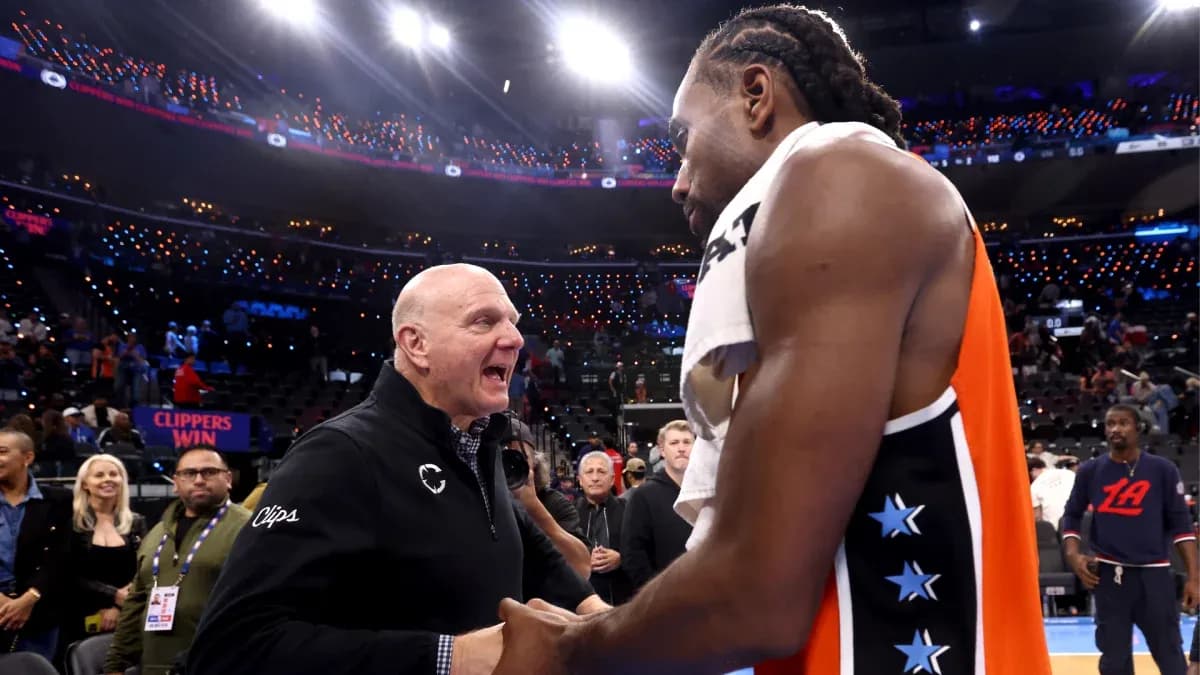
Owner Steve Ballmer. Kawhi Leonard. Top executives. Five future first-round picks. Thirty million dollars. All swept up in what the league labeled “flagrant” and repeated violations of its salary cap circumvention rules after a nearly year-long investigation into Leonard’s off-court income deals.
Leonard keeps his contract. He avoids suspension. But the franchise around him has been rocked — just as he prepares to head back to Toronto.
A franchise hit at every level
The penalties read like the blueprint for dismantling a contender.
- The Clippers must forfeit five first-round picks from 2029 through 2033.
- The organization is fined $30 million.
- Ballmer is suspended from all league and team activities for one year.
- President of business operations Gillian Zucker is suspended without pay for a year.
- President of basketball operations Lawrence Frank is suspended without pay for six months.
- Leonard is ordered to pay the NBA $700,000.
- Dennis Robertson, Leonard’s uncle and former business manager, is banned for five years from doing business with NBA teams or affiliates.
The league didn’t mince words. In a statement, it said the investigation “found a pattern of misconduct and multiple significant rules violations by the Clippers organization, a prior offender of the salary cap circumvention rules.”
Commissioner Adam Silver went even further, calling out “institutional and leadership failures” and insisting the harsh sanctions “reflect the seriousness of the violations.”
The NBA and the Players Association have already signed off. The penalties are final and binding.
How the Clippers crossed the line
The core of the case: the Clippers didn’t just benefit from outside endorsement money. According to the league, they helped create it.
Investigators concluded the franchise “affirmatively initiated off-court income opportunities” and facilitated endorsement deals for Leonard with four companies: Aspiration Partners, Boingo Wireless, Daktronics and Lockton Insurance. Those deals, the league says, came with a hidden cost — the Clippers allegedly induced the companies to pay Leonard by offering them team business in return.
The report also says the team broke rules by paying personal expenses for Leonard and his representatives, and by failing to report improper solicitations for off-court income made on Leonard’s behalf by Robertson.
The NBA’s summary is blunt: Leonard violated the circumvention rules “through the conduct of Mr. Robertson.” In the league’s telling, Robertson pressured the Clippers to help secure off-court money, Leonard obtained those opportunities, and he did not reimburse the team for personal expenses it covered.
Ballmer’s role, according to the league, went beyond ignorance. He was suspended for “knowingly seeking to help Mr. Leonard obtain off-court income opportunities,” approving a business deal tied to Aspiration’s endorsement arrangement with Leonard, and failing to ensure his organization followed the rules.
Zucker was labeled “primarily and directly culpable” for the endorsement setups and for giving “false and misleading statements” to investigators. Frank, the head of basketball operations, was punished for his involvement in those arrangements and for approving impermissible expenses for Leonard and his family.
The Aspiration trail
The scandal’s roots run through a now-bankrupt “sustainability” finance company that once attracted hundreds of millions in investment: Aspiration.
Aspiration co-founder Joe Sanberg was sentenced in June to 14 years in prison for defrauding investors. When the company collapsed, court filings revealed Leonard as a creditor and Ballmer as a major investor, with $60 million sunk into the firm. Dennis Wong, the Clippers’ only minority owner, invested $1.99 million just nine days before a $1.75 million payment went to Leonard. Wong’s daughter worked at Aspiration. At one point, the company even agreed to a jersey patch deal with the Clippers that never materialized.
The NBA’s investigation accelerated when two former Aspiration employees filed an SEC Whistleblower Complaint in 2023, under penalty of perjury, claiming Leonard had been paid “an incentivized bonus to circumvent the NBA’s salary cap, disguised as an organic marketing sponsorship agreement.” A former finance department employee later appeared on Pablo Torre’s podcast and said staff were told not to question Leonard’s deal because “it was to circumvent the salary cap.”
Once the league interviewed Sanberg, it informed Judge Stephen V. Wilson that the disgraced executive had cooperated. Ballmer responded with a victim impact statement attacking Sanberg’s credibility. By then, the damage was already done.
The Aspiration agreement was only part of the picture. The NBA later uncovered a similar endorsement deal between Leonard and Daktronics, a scoreboard manufacturer, and pointed to additional arrangements involving Boingo Wireless and Lockton Insurance — all tied back, in the league’s view, to Clippers-driven efforts to boost Leonard’s off-court income beyond what the cap system allows.
Clippers push back, hard
Publicly, the Clippers, Ballmer and Leonard had denied wrongdoing ever since investigative journalist Pablo Torre first raised allegations last September.
They didn’t soften their stance after the verdict.
In a searing statement, the Clippers said they “vehemently reject” the NBA’s findings and described the Wachtell Lipton-led investigation as “heavily biased,” accusing the league of pursuing “a predetermined narrative rather than facts and evidence.”
The team claimed that what the NBA said privately during the process “differs from what it announced today publicly” and vowed to “vigorously challenge these findings and penalties through every avenue available,” expressing confidence in “an ethical and impartial arbitration process.”
The league, backed by the NBPA agreement, insists the matter is closed. The Clippers clearly do not.
Leonard’s stance: responsibility, but no intent
Leonard, who has often kept his public comments to a minimum throughout his career, responded through his new agent, Harrison Gaines. His statement walks a careful line.
He said “integrity and respect for this game are fundamental” to who he is, and that he accepts “full responsibility for lapses in judgment” by people in his inner circle. He also expressed regret for the distraction caused to fans and his family.
At the same time, Leonard maintained that he entered his Clippers contract and the endorsement agreements “in good faith” and with “no knowledge of any intent on anyone’s part to circumvent the salary cap.”
For 15 years, he said, his priority has been his family, the game, and his teammates. Now, with his long-delayed trade to the Toronto Raptors expected to finally go through, Leonard says he is focused on “closing this chapter” and returning to Toronto with “a clean slate.”
A long trail back to 2019
The seeds of this case were planted years ago.
Back in 2019, when Leonard was one of the most coveted free agents in the league, multiple reports detailed aggressive demands from Robertson to teams courting him. Bruce Arthur of the Toronto Star reported that Robertson asked the Raptors for illegal benefits, including ownership stakes in both the Raptors and Maple Leafs and an extra $10 million per year in sponsorship income.
When Toronto officials reportedly countered that local companies would gladly sign Leonard to endorsement deals, his camp allegedly replied: “We don’t want to do anything.”
The Athletic reported similar requests made to the Los Angeles Lakers: use of a private plane, a home, and a stake in the team. The Lakers refused, and a league investigation at the time cleared the Clippers of wrongdoing.
The story didn’t end there. It simply went underground, waiting for Aspiration, whistleblowers and a deep-dive league probe to drag it back into the light.
A season already on edge, now overturned
On the court, the Clippers just slogged through a disjointed year. Leonard played well, but the team stumbled out of the gate, finished 42–40, and crashed out in the Play-In Tournament against the Warriors. A group built to chase a title instead traded away James Harden and Ivica Zubac at the deadline, signaling a reluctant pivot toward the future.
Now that future has been stripped of five first-round picks, a present-day owner, and key executives. The star at the center of it all is heading back to Toronto, carrying both a fine and a fresh start.
The question hanging over the franchise is no longer whether this version of the Clippers can contend.
It’s whether there’s enough left — in draft capital, in leadership, in trust — to build anything meaningful from the rubble.