Millwall and West Ham: A Century of Rivalry
At The Den on Saturday, a century of shared history walked out of the tunnel with Millwall and West Ham. The 100th competitive meeting between the clubs, the first in 14 years, felt less like a routine league fixture and more like a roll call of London’s past.
Separated now by miles and the river, the two clubs were once neighbours in the same hard, unforgiving world. Millwall began life on the Isle of Dogs; Thames Ironworks, the works team that preceded West Ham, operated around Canning Town. Before Millwall crossed the Thames to New Cross in 1910, both clubs stood north of the river, barely two and a bit miles apart. You could walk it in under an hour. Back then, this was not just about football. It was about work, survival and who got the next shift.
Millwall were the Dockers in those days. West Ham became the Irons, a nickname welded to the Thames Ironworks and Shipbuilding Company. The docks offered no security. Men queued each morning without knowing if they would be picked, fighting for a day’s pay in a world where your body was your only currency. Out of that came a culture both clubs still cling to: toughness, loyalty, graft. The sense that you earn everything, and nothing is given.
With roots that deep, the line between history and legend blurs quickly. One of the most enduring tales places the birth of the rivalry in the General Strike of 1926. The story goes that West Ham dockers backed the strike, while Millwall’s men stayed on the job. It is a neat, bitter origin myth. It is also almost certainly wrong. Historians David Sullivan and Brian Belton have picked it apart, with Belton pointing out that the strike held firm in the Millwall docks and that only a small number of workers broke ranks around Canning Town. The evidence says one thing; the terrace folklore says another. The myth survives because it suits the fixture, feeding the idea of betrayal and difference.
The clubs first crossed paths on the pitch in the 1890s, when Millwall Athletic faced Thames Ironworks. Even there, the neat narrative frays. Belton warns against treating Thames as simply an early version of West Ham. The company team folded before the new club formed in 1900. The “ancient Dockers Derby” many imagine is, in truth, a more recent creation. The real venom took hold later, particularly in the 1970s.
1970s Violence
That decade changed everything. In 1972, Harry Cripps’s testimonial – a game meant to honour a player loved at both clubs – descended into serious disorder. Four years later, a Millwall supporter died after falling from a train; some believed West Ham fans were involved. When the teams met competitively again in 1978 after a long gap, violence shadowed the fixture. The tone was set.
It was no accident this happened as the old world around them was collapsing. London’s docks were closing. Traditional industries were bleeding jobs. Communities that had supplied the labour, the noise and the identity for these clubs were hit by unemployment and decline. To draw a straight line from that to hooliganism would be crude, but the timelines overlap. As the workplaces that defined people’s lives disappeared, football became one of the last stages where territory, masculinity, belonging and local pride could be asserted, loudly and sometimes violently.
Through the 1980s, 90s and into the early 2000s, the rivalry’s reputation hardened. There were not constant battles, but the flashpoints were unforgettable. The ugliest came at Upton Park in 2009, when a League Cup tie was scarred by fighting outside, a stabbing and pitch invasions. The two Championship meetings in 2011-12 passed without anything like that level of trouble. Then the fixture disappeared again from the competitive calendar, another pause in a rivalry that has become as much about memory as meetings.
Both clubs carry reputations that long ago escaped their control. Films such as ID and Green Street turned Millwall and West Ham into shorthand for English football violence, exporting a mythologised version of the Dockers Derby around the world. The reality is more complicated. Before Saturday there was the usual social media noise, the predictable chest-beating and dark jokes, but the prevailing expectation was that the day would pass largely without serious incident. That is what happened.
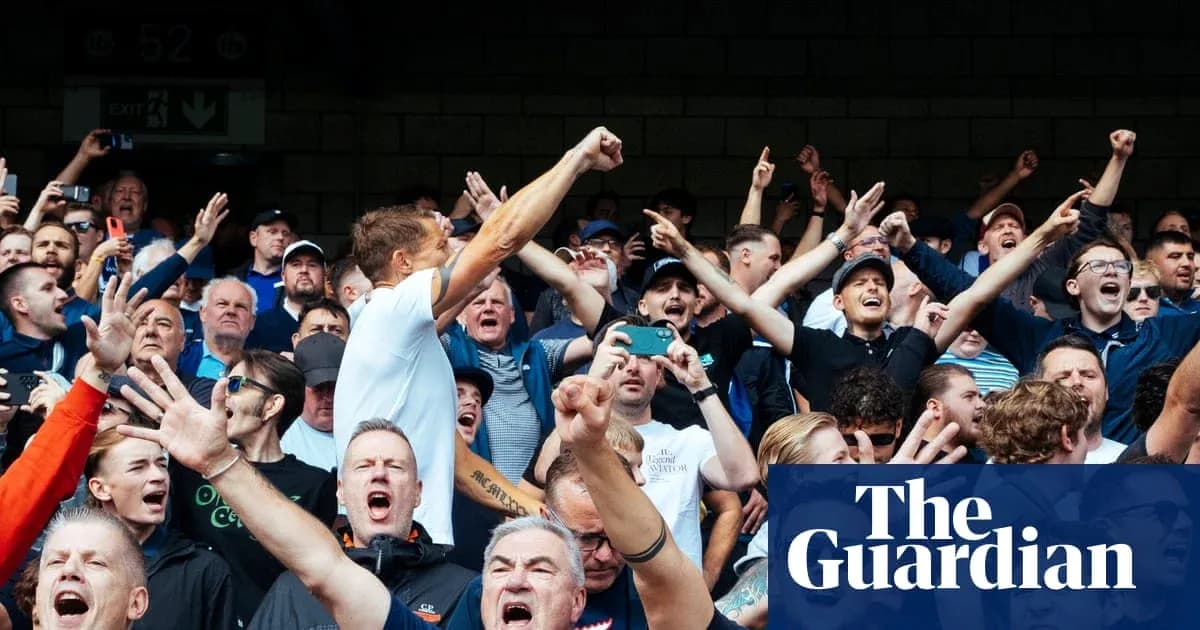
Suspicion of journalists runs deep on both sides. Photographers are watched, questioned, warned. On Saturday, some of that surfaced again. A few insults, a few pointed reminders to be careful. They came from a minority. Far more obvious was the sense of community – families in colours, friends meeting at the same turnstiles they have used for years, strangers talking like they have known each other all their lives.
The game itself had the national stage. ITV showed it live. Kick-off was dragged forward to 12.30pm to cut down drinking time. Around 400 police officers were deployed. West Ham’s allocation was trimmed to 1,774 tickets in a crowd of about 20,000, and most of their fans chose not to wear colours. They were funnelled through London Bridge to South Bermondsey, then escorted as a group to the away end. The choreography of modern risk management, set against an old rivalry.
Match Summary
On the pitch, form pointed one way. West Ham arrived top of the table, fresh from a 6-0 demolition of Wrexham. Millwall, carrying a stack of injuries, were supposed to suffer. They did not. The Lions tore into the first half, snapping into tackles, hunting in packs, feeding off the noise. They dominated long spells and went in at the break two goals up, The Den roaring with the sound of a fanbase that has waited 14 years for this.
West Ham’s response came late but came hard. The leaders settled, found their passes, and began to push Millwall back. The pressure finally told. With 10 minutes left, they forced the equaliser that had been coming, and the stadium detonated. For a few seconds, the rivalry’s darker reputation felt close. Extra police moved in. Stewards tensed. The noise tipped from celebration into something more dangerous, then eased back again.
The drama was not done. In the 89th minute, Kyrell Lisbie broke clear, the game opening in front of him. Mohamadou Kanté hauled him down, a desperate, obvious foul. The red card came out. Millwall were left to wonder if they had been denied a winner. West Ham were left relieved to escape with 10 men and a point. The whistle blew on 2-2, a scoreline that invited mixed emotions on both sides – frustration at what might have been, relief at what had been avoided.
Outside, a few brief scuffles flickered between Millwall supporters and police. They did not last. Within minutes, the scene shifted. Young fans waited patiently for autographs. Groups stood around replaying the key moments, arguing over the red card, the equaliser, the chances missed. The old script of chaos never really arrived.
To anyone looking in from the outside, the similarities between these clubs can feel greater than the differences. Many supporters have family on the other side. Both draw on the same working-class London values: toughness, loyalty, authenticity. Both sell themselves as the voice of a place that no longer exists in the way it once did. Yet when they meet, the animosity is real. Sections of both fanbases still burn to prove something – about who they are, where they come from, and who has the right to claim that heritage.
That may be the core of it now. Millwall and West Ham are not just playing for points when they face each other. They are contesting an idea – of which club best represents a vanished dockland world, which badge carries the truest echo of that identity.
They have met across three centuries. The docks that forged them have almost entirely gone. The clubs have moved further apart, in geography, in league status, in stadium and scale. Competitive meetings are rare. Yet the need to draw a line between the two, to say “we are this and they are that”, endures.
On Saturday, under early kick-off light and heavy history, that argument played out again. The scoreline said 2-2. The rivalry, as ever, refused to settle.