Manchester Derby VAR Blunder: Speed Over Accuracy
“Quick, quick, quick, quick! Go, go, go, go, go!”
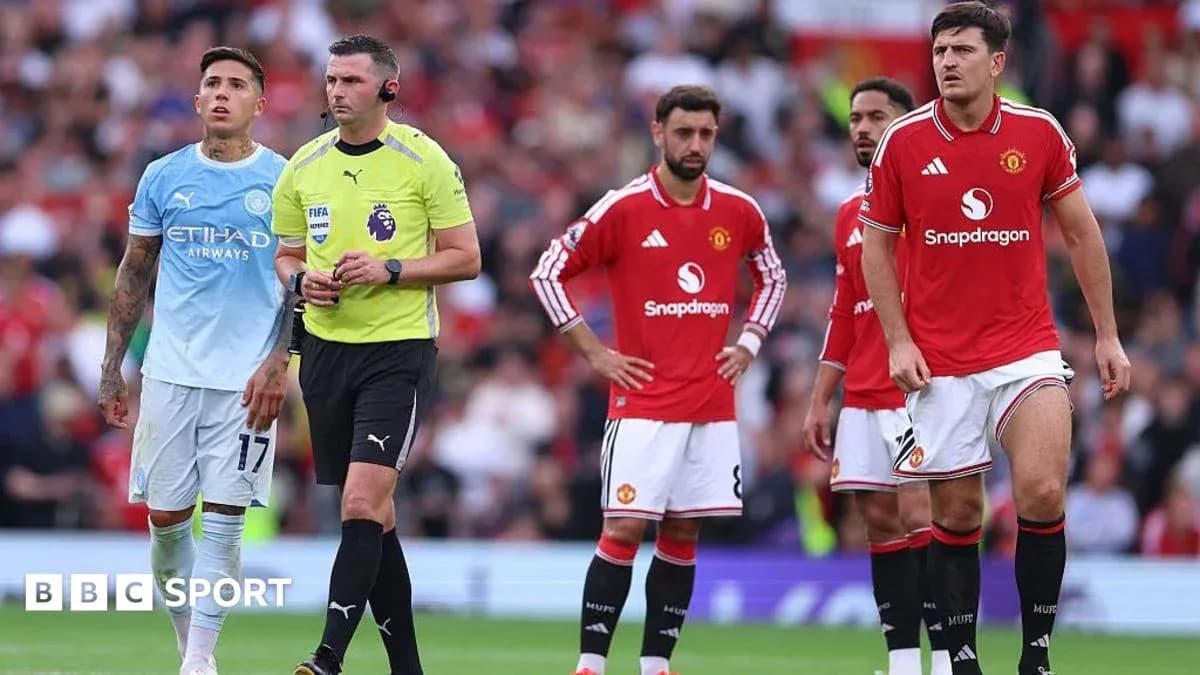
The soundtrack to the Manchester derby’s defining moment was not the roar from the away end or the groan from the home crowd. It was the frantic voice of VAR Matt Donohue, racing through a review that would hand Erling Haaland the winning goal – and leave the Premier League with one of the most damaging VAR blunders it has ever seen.
In the rush, the basics vanished.
Enzo Fernandez stood three yards offside when he went to attack the cross. Somehow, neither Donohue nor his assistant VAR, Blake Antrobus, clocked it. The goal stood. Manchester City 1, Manchester United 0. The title race and the credibility of the system both tilted in those few chaotic seconds.
Speed over sense
Refereeing has always been a goldfish bowl. VAR turned that bowl into a pressure cooker.
The league has made no secret of its desire to trim stoppages. A “more efficient application of VAR to reduce delays” was written into its football principles for this season. Fans complain about long checks. Managers groan about the stop-start rhythm. Surveys of stakeholders – from coaches to supporters – keep spitting out the same message: be quicker.
So the officials hurry. They hear it in the stands, on radio phone-ins, in every column inch dissecting their work. VAR must be faster. Decisions must not drag.
But Sunday at the Etihad showed the cost when haste becomes the priority.
“Let’s go, let’s go, let’s go, let’s go!” Donohue urged as the replay rolled. The exchange with the replay operator sounded panicked, not methodical. Rushed, not forensic. Exactly the opposite of what the video operation is supposed to be.
The pressure is real. It is not a defence.
A process that broke
Strip away the noise and the error is brutally simple.
On the first replay of Josko Gvardiol’s cross, Donohue told the operator to freeze the frame as the defender made contact with the ball. From there, he jumped straight into the semi-automated offside technology.
That single decision – to lock onto that first frame and dive immediately into the tech – broke the process.
The VAR team should have watched the entire sequence: Gvardiol’s cross, Fernandez’s movement, Haaland’s finish. Only then do you understand the full picture inside the area. Only then do you see Fernandez’s offside position and his involvement.
They didn’t. The penalty area became an afterthought until they moved on to the attacking phase. By that point, Donohue and Antrobus were fixated on one question: did Fernandez get a touch that would create a new phase and leave Haaland offside?
The wider, far more obvious offence – Fernandez starting from a clearly offside position as he attacked the ball – simply never entered their field of vision.
The game’s obsession with speed nudged them there. The real damage came when they skipped the fundamental step of actually watching the whole action.
The silent assistant
Most of the spotlight has fallen on Donohue. Yet Antrobus’ role, or more accurately his lack of one, is just as damning.
The AVAR exists to challenge, to spot what the VAR might have missed, to act as the final safety net. In a review that decided a derby, his entire audible contribution boiled down to a single, hesitant “no, yeah” on whether Fernandez touched the ball – spoken one second before Donohue confirmed: “final decision is goal, check complete”.
That is not a second pair of eyes. It is an echo.
The contrast with Antrobus’ previous high-profile involvement is stark. Earlier this season, he was AVAR for the long, much-criticised delay during Brentford v Sunderland, when a Dan Ballard goal was eventually ruled out for a subjective offside against Kevin Danso. That check took over four minutes and drew heavy fire for the time it consumed.
Antrobus, though, helped guide VAR Tim Wood to the correct offside call that day.
Did that backlash sit in the back of his mind on Sunday? Did the memory of being hammered for taking too long nudge him towards silence in a moment that demanded intervention? No-one can say with certainty. The result, however, is there in black and white.
There was also a third line of defence: the support VAR, stationed at Stockley Park alongside the match hub, empowered to step in on matters of protocol. That official saw the review unfolding and stayed out of it.
The error was still retrievable even after Haaland wheeled away. The window between the goal and the restart exists precisely so that catastrophic mistakes can be caught. It was not used.
Numbers that don’t comfort
On paper, the Premier League can point to progress.
Average VAR delays, including the time it takes for the referee to announce the outcome to the crowd, have dropped from 46 seconds per game last season to 36 seconds this year. The data says the operation is leaner, slicker.
It also says there has been just one other clear VAR error this campaign: the failure to award Arsenal a penalty at Aston Villa. That, too, came from an incident cleared too quickly.
The pattern is hard to ignore.
Completing a check in the shortest possible time is not an achievement if key steps are skipped. Donohue and Antrobus did not simply move fast; they cut corners. That is the critical distinction.
Specialists under fire
This is not a story of amateurs thrown into a high-tech booth.
Pro Ref has poured money, time and training into building a pool of VAR specialists. Three seasons ago it invited officials to put themselves forward for a dedicated video role. Those who applied faced aptitude tests. Around 15 reached the final training stages. Ten have now taken charge of Premier League matches as VARs.
Donohue is one of that group. Sunday was his 65th top-flight assignment in the booth. His performances have impressed enough for him to earn a place on the international list and handle Uefa club competition qualifiers over the summer.
He has made mistakes before. Almost every VAR has. Only Nick Hopton and Neil Davies, both products of the same accelerated pathway, have gone the last two seasons without a clear error.
The job is brutally hard. The margin for error is tiny. The scrutiny is relentless. None of that softens the blow when a decision of this scale goes wrong.
Clubs and supporters have called for more full-time, specialist VARs. History offers no guarantees. Lee Mason and Mike Dean, the Premier League’s only full-time VARs appointed post-retirement, were both removed by Howard Webb within months of his arrival after a string of high-profile errors.
Even in Spain, where La Liga and the second tier use officials who operate exclusively as VARs and never take the whistle on the pitch, the controversies rage. At the start of last season, VAR there completely missed that a goalscorer was offside when the ball was played. Different country, same fury.
Specialists help. They do not inoculate the game against human error.
A football problem, not just a VAR problem
Pro Ref will now have to explain how its protocols allowed a VAR to rush through a review in one of the biggest fixtures of the season, with no-one in the chain pulling the handbrake.
It has examples of the system working under pressure. West Ham’s stoppage-time equaliser at Arsenal last season took more than four minutes to disallow, a delay that drew groans inside the stadium. The decision, though, was right. The check was exhaustive. No one could claim corners were cut.
That is the trade-off the sport keeps refusing to face honestly.
The drive for speed, fuelled by the impatience of fans, broadcasters and even some managers, risks undermining the entire project. The technology is not the villain. Nor is one official in a booth, however grave his mistake.
This is the game wrestling with its own contradictions: demanding perfection in seconds, and then recoiling when the seconds win.