Liam Lawson: Future F1 World Champion in the Making
Guenther Steiner has seen enough. From the pit wall, from the paddock, from a decade of bruising seasons at the helm of Haas, he knows what real talent looks like under pressure. And in Liam Lawson, he sees a driver who could go all the way – if the sport, and his career choices, don’t box him in.
Speaking after the Mexico Grand Prix, where Lawson carved his way from the back of the field to finish ninth on track and seventh after penalties, Steiner did not hesitate when the question came.
In the right car, can Lawson be world champion?
“I think in the right car, he can be,” Steiner said, before delivering the caveat that now hangs over the Kiwi’s future.
A world champion in waiting – in someone else’s car?
Lawson’s situation is as intriguing as it is precarious. He is impressing in a Racing Bulls team that has no business regularly hassling the front-runners, yet his long-term path within the Red Bull system looks clogged.
Racing Bulls have yet to confirm whether they will extend his contract through to 2027, a delay that only sharpens the spotlight on every lap he turns. Steiner, who steered Haas through 10 turbulent years in Formula 1, expects the team to keep him. But he doesn’t think the real prize lies there.
“I think his promotion back to the Red Bull team from Racing Bulls, I don’t think that will happen,” Steiner admitted, cutting through the usual junior-team optimism.
For him, Lawson’s ceiling sits somewhere else entirely.
The 24-year-old, Steiner argued, has already shown he can drag a midfield car into places it shouldn’t be. He’s done it often enough now that it no longer feels like a fluke or a hot weekend. It feels like a pattern.
“There are a lot of them with similar talent to him at the moment in Formula 1,” Steiner noted. The difference comes when timing, machinery and opportunity finally align. “When you get in the right team at the right place at the right time, he could achieve it.”
Right now, Racing Bulls are not in that category. “He has shown in this moment he can do a very good job with Racing Bulls, who are not in the top four teams,” Steiner said. The next step is obvious: “He has shown he can do a good job, but now he needs to be in one of the top four teams.”
Brazil turns up the volume on Lawson’s case
If Mexico put Lawson on the radar, Brazil turned up the sound.
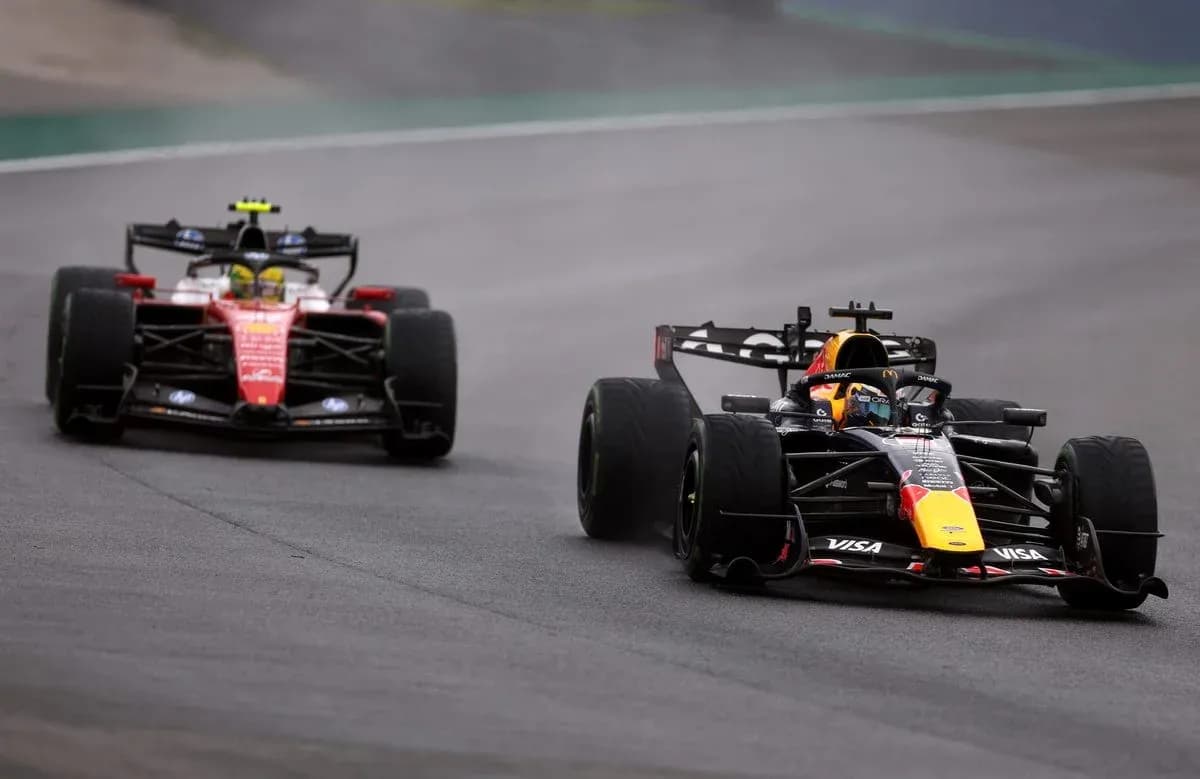
At Interlagos, he didn’t just sneak into the top 10. He stuck the car third on the grid, right in among the heavyweights. When the red lights went out, Lawson launched. He beat McLaren’s Lando Norris off the line, surged into second and set off after world champion Kimi Antonelli.
For a few laps, the Racing Bulls car sat in a place it had no right to be, a blue-and-white outlier in a sea of title contenders. Eventually, the reality of Formula 1’s pecking order bit back. Faster cars came through, strategy and pace reasserted themselves, and Lawson slipped to eighth on the road.
Then came another twist. A penalty for Ferrari’s Charles Leclerc, who had clipped Lawson’s wheel while trying to overtake, bumped the Kiwi up to seventh in the final classification. On paper, it was another solid result. In context, it was far more than that: a qualifying statement, a start that showed no fear, and a race that underlined his composure when the frontrunners closed in.
The pressure should have been suffocating. Instead, Lawson sounded like a driver relishing the fight.
Enjoying the fight at the sharp end
Following the race, Lawson’s verdict was disarmingly simple.
“Good fun,” he called it.
“[I’m] just trying to enjoy driving at the moment, the car is in a great place,” he said, speaking like a man who knows he is in form and wants to stay there as long as possible. What really stood out was how casually he referenced the company he was keeping.
“The fact that we’re fighting the Ferraris, McLarens, and Mercedes at different points in the race today is obviously cool.”
For many drivers in a junior or midfield outfit, sharing track space with those names is a fleeting cameo. Lawson is turning it into a habit. That, more than anything, is what strengthens Steiner’s belief that this is a career on the cusp of something bigger – if the right door opens.
Time to step out of the Red Bull family?
The dilemma is brutal. Red Bull’s system has carried Lawson this far, but it may now be the very thing that blocks his ascent.
Steiner’s view is blunt: Lawson needs to “make his own way out of the Red Bull family.” In other words, if a top-four team comes calling, he has to be ready to move, even if it means leaving the environment that developed him.
It is a familiar crossroads for drivers who flourish in junior squads but find the senior seat locked down by champions and long-term contracts. Stay loyal and risk stagnation, or gamble on a fresh start elsewhere.
Lawson’s recent drives make that question louder with every race.
Next stop: Las Vegas
The next chapter comes under the neon glare of Las Vegas.
Lawson will be back in the car for the first practice session on November 20, another chance to prove that Mexico and Brazil were not isolated peaks but part of a rising curve. Under lights, on a new street circuit built for spectacle, every sector time and every on-board replay will feed the growing debate around his future.
Steiner has nailed his colours to the mast. He sees a potential world champion. The grid, the market, and the teams at the sharp end now have to decide: is Liam Lawson just another promising midfielder, or the one that got away?