Kendry Páez: From Prodigy to Chelsea's Future
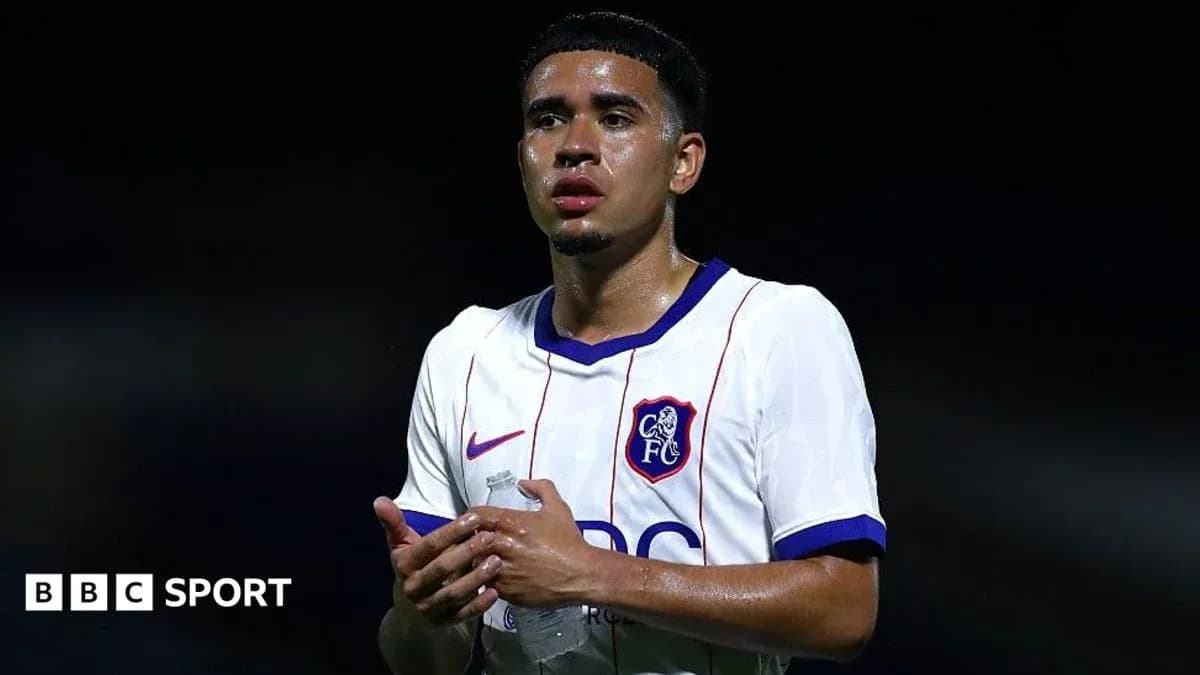
Kendry Páez finally pulled on a Chelsea shirt at the weekend. Not under the Stamford Bridge lights, not in front of a global audience, but as a 12th-minute substitute for Cobham Next Gen in a 4-1 win away at Arsenal’s Under-21s.
Three years after Chelsea agreed a £17.27m deal for the Ecuadorian prodigy, the wonderkid who once felt destined to sprint straight into the elite has instead arrived via the side door, badge on his chest but questions hanging over his head.
From record-breaking prodigy to stalled project
Páez’s story was supposed to be simple. At 15, he became the youngest debutant and goalscorer in Ecuadorian top-flight history with Independiente del Valle. That same season he stepped into the Copa Libertadores, South America’s Champions League, like it was the most natural thing in the world.
By 16 years and 131 days, he was playing in World Cup qualifying. Only Diego Maradona had done it younger as a South American international. A month later, Páez scored in a 2-1 win away to Bolivia and became the youngest South American to find the net in a World Cup qualifier.
No wonder Chelsea moved fast. When they agreed the deal in 2023, he already had 18 caps and two international goals. They weren’t just buying potential; they were buying a headline act in the making.
Chelsea kept him close even before he could officially join, inviting him to train regularly with the first team while he waited to turn 18. When violence erupted in Ecuador in early 2024, the club stepped in again, arranging security for Páez, his family and the family of international team-mate Moisés Caicedo.
Everything pointed in one direction: the fast track to the top.
Then the story veered off course.
Loans, lessons and a harsh spotlight
A few months later, Páez was filmed in a New York strip club while on international duty. The footage did not derail his career on its own, but it fed a narrative that would only grow louder: brilliant talent, complicated choices.
On the pitch, his first European loan at Strasbourg began exactly as Chelsea had hoped. He won Ligue 1’s Young Player of the Month award in September and looked at ease in France’s top flight. The buzz returned.
Then the tone changed.
“We expect more, clearly,” Strasbourg manager Liam Rosenior said later that season. “I’m tired of using the excuse of the player’s youth.”
One goal in 21 appearances told its own story. Despite the shared ownership between the clubs, the loan ended early. Páez left Alsace with his reputation bruised and his trajectory suddenly uncertain.
Chelsea sent him to River Plate next, a two-year loan to one of Argentina’s giants. If Strasbourg was meant to be a launchpad, River was supposed to be a proving ground. Instead, familiar concerns followed him across the Atlantic.
Sources in Argentina questioned his attitude. They pointed to a flat display in the Superclásico, a 1-0 defeat to Boca Juniors at the Monumental in April, as a symbol of his struggle to impose himself on the biggest stage. Soon after, club president Stefano Di Carlo named him among 15 players training away from the first team.
Others inside River felt he had been short-changed, that he deserved more minutes and more patience. Either way, the outcome was the same. One goal, 14 appearances, 461 minutes. Loan terminated by mutual consent.
For a player Ecuador had built up as the country’s next great attacking star, the alarm bells started ringing.
Michel Deller, owner of Independiente del Valle and one of the people who knows Páez best, did not hide his concern.
“He’s like a son to us. We care about him deeply,” Deller told Hincha Amarillo. “He’s a good kid who’s had a tough time and has made decisions that have complicated his life. We are always hopeful he’ll show his exceptional talent once again but right now, it’s up to him to decide what to do with his life.”
Alonso’s verdict and a reset at Cobham
Back in London, the message from Chelsea’s new head coach Xabi Alonso cut through any remaining hype. Páez, he said, was “not in my plans.” On the club website, the teenager appeared as an academy player, not a first-teamer.
Chelsea tried to find him a loan in English football, a move that might have offered both exposure and structure. Fifa rules blocked them. The club had already used all six of their available international loan slots and could not send him abroad again.
So Páez stayed. Not in the limbo of another uncertain loan, but inside Cobham, folded back into a system that could finally watch him every day.
The first glimpse of this new chapter came in the EFL Trophy away to Wycombe Wanderers. Cobham Next Gen lost, and Páez spent most of the night on the fringes, operating as a right-sided No 10 in a shape that mirrored Alonso’s back three. He drifted. The game drifted past him.
Then, right at the end, a flash.
From a short corner, Páez whipped in an outswinging cross that Harrison Bettoni tapped home in added time. Moments later, another cross from the Ecuadorian caused chaos in the Wycombe box as Chelsea chased an equaliser in front of just 778 fans.
It was a tiny sample, a late cameo in a low-profile match, but it was also a reminder. The left foot is still there. The delivery is still there. The ability to change the rhythm of a game in a single action has not disappeared.
At Arsenal’s training ground on Saturday, he took another small step, coming on early in a 4-1 win and finally wearing Chelsea blue in a competitive setting.
Alone, but not finished
At Wycombe, observers noticed how isolated Páez looked before kick-off. Spanish-speaking, new to this particular dressing room, he stood apart from the other academy players for long spells. He joined in the warm-up, then retreated into his own space.
For a teenager who has already played more than 100 senior matches and 70 times for Independiente del Valle, this is a strange kind of restart. He is not the raw 17-year-old just tasting senior football. He is a 19-year-old with 27 Ecuador caps and a World Cup appearance, trying to rebuild from a level he once seemed to have skipped.
Inside Chelsea, the concerns coming from Ecuador and Argentina are not brushed aside. They know the last two years have been messy. They also believe the picture has been exaggerated.
Those close to Páez insist he needs time — time to grow, to settle, to be treated not as a finished product who failed, but as a teenager whose rise came too fast and too bright.
Chelsea like what they have seen since he returned to Cobham. His attitude in training has encouraged staff. Family members were in the stands at Wycombe, offering a layer of stability that has not always surrounded him on his travels.
The club can now monitor him closely. Academy matches at Cobham draw scouts from across the English Football League and beyond. If he strings performances together, doors will open again.
A career at a crossroads, not a dead end
Strip away the noise and the numbers remain striking. Páez is still only 19. He has already played more than 100 senior games. He has already lived the kind of pressure many players do not feel until their mid-20s.
This is not a lost cause. It is a salvageable situation.
Chelsea hope the coming months will offer a clear path: a strong run with Cobham Next Gen, a first loan in English football in January, or perhaps a fresh overseas move if one of the six international loan slots becomes free.
For Ecuador, the question is sharper. Can the player they anointed as their next great attacking talent rediscover the form that made him one of South America’s most coveted youngsters?
For Chelsea, the calculation is colder but no less important. Can they turn a £17.27m bet on a teenage phenomenon into a first-team asset rather than a cautionary tale?
For Kendry Páez, the equation is simplest of all. The talent that once broke records has not vanished. It now meets the hardest test in football: proving you were not just a story of what might have been.