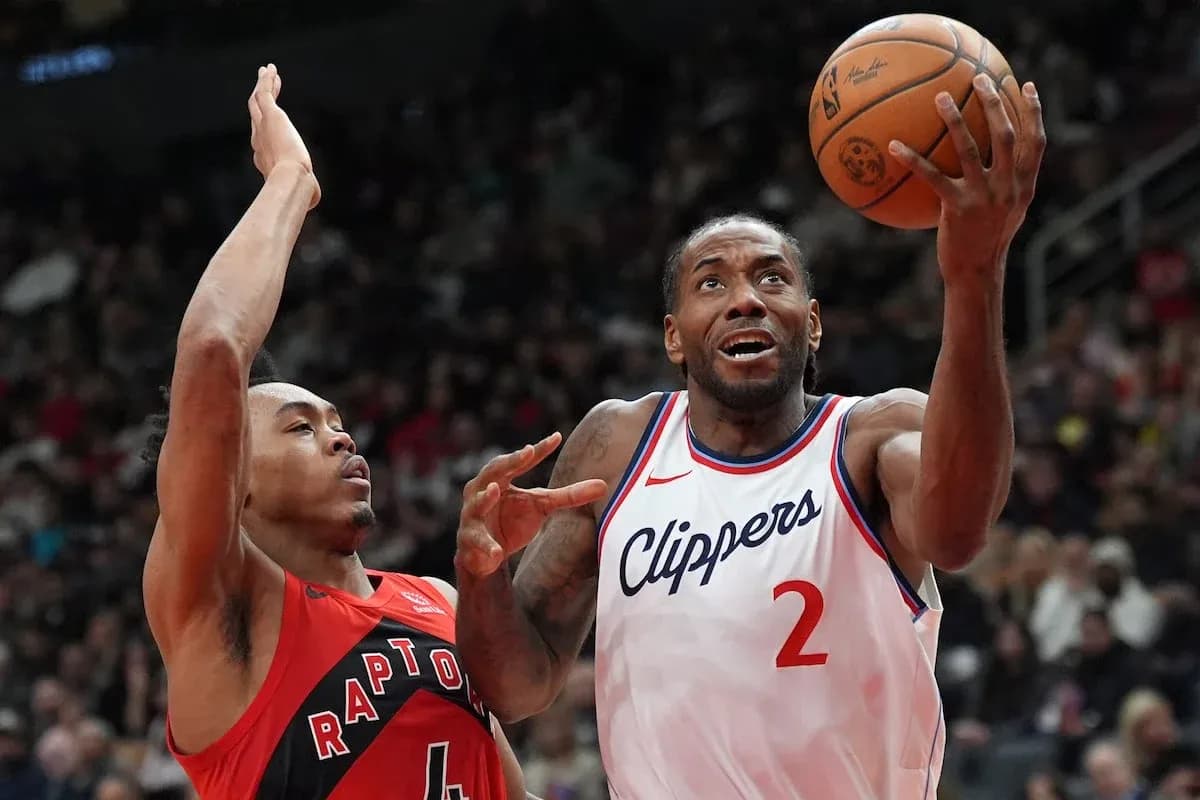
Kawhi Leonard's Return to Toronto: The Impact of Uncle Dennis
Too many elite athletes have an “Uncle Dennis” – the trusted relative who turns a golden opportunity into a slow-moving disaster. In Kawhi Leonard’s case, Uncle Dennis wasn’t a punchline. He was the power broker.
Now he’s the cautionary tale.
Dennis Robertson, Leonard’s uncle, mentor and former business manager, spent years building a reputation in NBA circles as a relentless hustler. On Wednesday, that reputation finally met its reckoning. As part of sweeping sanctions against the L.A. Clippers, the NBA banned Robertson from any dealings with teams, players or league employees for five years, citing his central role in the Clippers’ circumvention of salary-cap rules.
The hammer didn’t exactly fall out of nowhere. Around the league, executives had whispered for years about Robertson’s demands when Leonard hit free agency in 2019 after carrying the Toronto Raptors to a championship and a Finals MVP. Those whispers are now on the record.
Raptors Say No, Clippers Say Yes
When Leonard’s future hung in the balance that summer, three glamour franchises lined up: the Raptors, the L.A. Lakers and the Clippers. According to the report from law firm Wachtell, Lipton, Rosen & Katz, which conducted the league’s year-long investigation, Robertson approached all three with “numerous requests for benefits that were prohibited under the Collective Bargaining Agreement.”
- Equity in teams.
- Housing.
- Access to private transportation.
- Off-court income and endorsement deals engineered through team partners.
The full wish list.
At Maple Leaf Sports & Entertainment, the Raptors’ parent company, those requests went straight to the top. Chair emeritus Larry Tanenbaum and Rogers Communications executive chair Edward Rogers were presented with a choice: bend the rules to keep a transcendent superstar, or walk away from the game Uncle Dennis wanted to play.
They walked.
Toronto was prepared to make Leonard extremely rich within the rules. They refused to go further. That decision, viewed at the time as a hard line that might cost them their best player, now looks like a defining cultural statement.
The Clippers chose the opposite path.
Armed with the deep pockets of owner Steve Ballmer – the former Microsoft CEO and the league’s wealthiest owner – Los Angeles leaned into Robertson’s demands. The league’s findings say Ballmer “knowingly” tried to help Leonard secure off-court income opportunities. Robertson targeted US$10-million in endorsement income on top of Leonard’s on-court deal, which will pay him US$50.3-million next season.
The Clippers helped make it happen.
Leonard ultimately signed lucrative deals with four companies that did business with the franchise. Three of those companies paid him a combined US$18-million for virtually nothing. The report notes that Leonard’s only confirmed work under any of the agreements amounted to a single visit to a military base and signing some memorabilia.
For that, the Clippers now face one of the harshest punishments the NBA has handed down in years.
A Heavy Price in Picks and Prestige
Commissioner Adam Silver’s announcement landed like a thunderclap. The Clippers will forfeit five first-round draft picks – the lifeblood of any NBA team, and the currency that sustains long-term contention. The league also hit the franchise with a US$30-million fine.
Ballmer, a fixture courtside and a visible face of the organization, has been suspended from all league activities for one year. The NBA made clear why: his role in helping Leonard secure those off-court income streams that broke the rules.
For all the attention on Ballmer and the Clippers, the story loops right back to Leonard and the Raptors.
Because while Los Angeles absorbs the punishment, Leonard is on his way back to Toronto.
Kawhi Returns, With Baggage and a Bill
Leonard is entering the final year of a three-year, US$149.5-million contract. This time, though, he returns to the Raptors as a superstar trying to clean up a mess created inside his own inner circle.
The league’s sanctions hit him too, though on a vastly smaller scale. Leonard must pay the NBA US$700,000 to cover travel, tickets and gifts he received and never paid for. It’s a fraction of his earnings, but symbolically, it matters. So do his words.
Through a statement released by his new agent on Wednesday, Leonard said he accepted “full responsibility for lapses in judgment by people within my inner circle and regret the distraction this situation has caused the fans and my family.” He added that, “As I return to Toronto, I am focused on what I can control, closing this chapter, and moving forward with a clean slate.”
For a player who has always preferred silence to spectacle, those are unusually direct lines.
Robertson’s influence on Leonard was never just about business. He stepped into a mentor role after Leonard’s father was murdered when Kawhi was 16, a devastating moment that shaped the player and the man. That history explains the trust. It doesn’t excuse the conduct.
Now, the uncle who once guarded Leonard’s interests is on the outside of the league, banned for half a decade. The nephew, still in his prime, is trying to rebuild trust in a city that once watched him deliver the greatest shot in franchise history.
Toronto’s Culture Test, and a Timely Boost for Rogers
From a basketball perspective, Leonard’s return is a thunderous endorsement of the Raptors’ culture. This is a franchise that has long struggled to lure marquee free agents. Landing an NBA superstar again, in the wake of a scandal that exposed the underbelly of his previous stop, sends a pointed message: in Toronto, the rules matter – and the stars still come.
For Tanenbaum, the timing is rich with personal meaning. After decades spent preaching and practicing the idea of “winning the right way,” Leonard’s decision to return serves as a late-career vindication. Tanenbaum is expected to sell his stake in MLSE to Rogers this fall for roughly $4.35-billion. Leonard’s comeback becomes a parting gift, wrapped in both nostalgia and validation.
For Rogers, the stakes are more transactional but no less significant. The telecom giant is looking to raise money and pay down debt by selling institutional investors a minority slice of its pro sports portfolio, which it values at $25-billion. Having Leonard back in a Raptors uniform supercharges that pitch.
His face, his name, and that iconic, bouncing series-winner against the Philadelphia 76ers will sit at the centre of Rogers’ marketing push to global fund managers. Kawhi isn’t just a star forward. He’s an asset multiplier.
The irony is sharp: the same player whose camp’s off-court dealings helped drag the Clippers into scandal now becomes a symbol of stability and upside in Toronto’s boardrooms.
A Clean Slate, or Just a Pause?
Leonard has already begun to reinsert himself into the Raptors’ public fabric. This summer, he stood beside Tanenbaum, both grinning, at a news conference where former point guard Kyle Lowry returned for a day to retire as a Raptor. It was a reminder of what this franchise once was with Leonard at its peak – and what it might be again.
The league has drawn its line. The Clippers have paid dearly. Uncle Dennis is out in the cold.
Kawhi Leonard, meanwhile, walks back into Toronto with a championship legacy, a tainted chapter, and one more season under contract.
The question now is simple: does this second act in Canada restore the purity of his story, or will the shadow of Uncle Dennis always follow him up the tunnel?