Gianni Infantino Agrees to Governance Review Amid Pressure
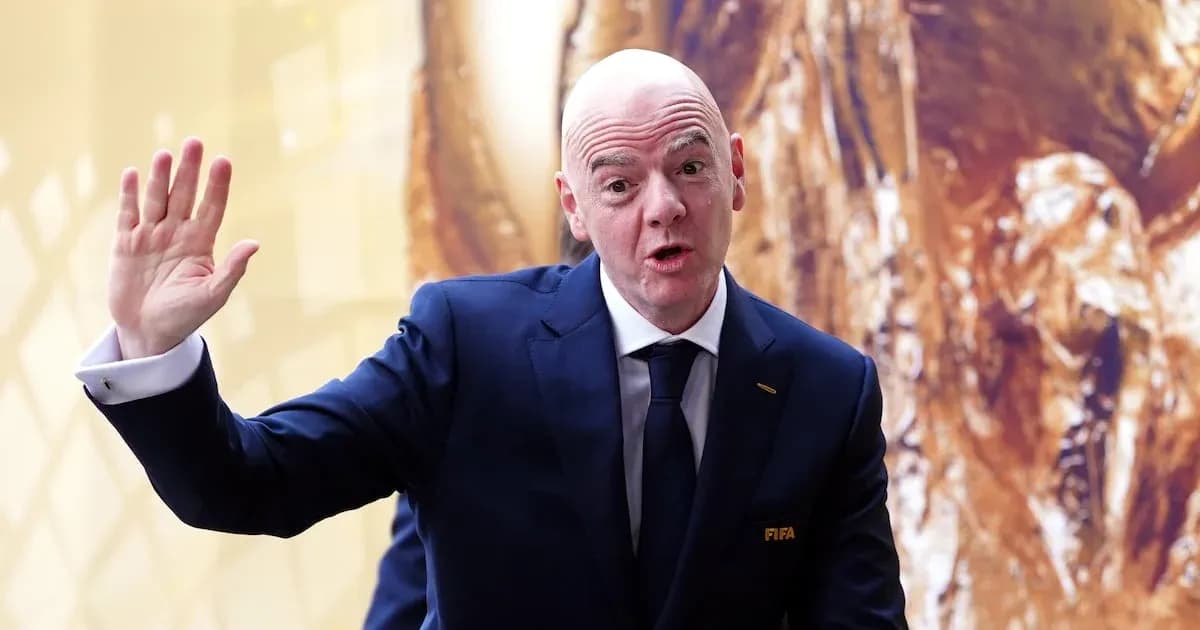
Gianni Infantino has finally blinked.
Under growing pressure from within his own ranks, the Fifa president has agreed to commission an independent governance review, a move that cuts against the grain of his fiercely centralised grip on power at world football’s governing body.
The climbdown follows weeks of unrest triggered by the World Cup sale saga and anger over the proposed Fifa Forward Enterprise (FFE) sell‑off. Several members of the Fifa Council had already been pushing for an external investigation into both that plan and the handling of the Folarin Balogun controversy. The tension sharpened last week when English FA chair Debbie Hewitt wrote directly to Infantino, demanding full disclosure of documents relating to both issues.
Infantino chose not to deal with the dissenters head‑on. No public debate. No open confrontation in the council room. Instead, he went over their heads.
In a letter sent to all 211 member associations, he signalled, for the first time, a willingness to submit Fifa’s governance structure to outside scrutiny. It is a significant symbolic step, even if the fine print remains vague.
In the letter, Infantino said he would ask the Fifa Council at its meeting in Zurich on 15 October to decide whether to commission “an independent external review of Fifa’s current governance framework for major strategic initiatives and recommend potential improvements”.
He also opened the door to a broader rethink of how decisions are made inside Fifa’s corridors of power. He said he would propose “a direct, structured and time‑limited consultation” with confederations, member associations and other stakeholders on ways to strengthen Fifa’s decision‑making.
The consultation, he wrote, would seek specific ideas on earlier institutional involvement and on clarifying the roles of the president, the bureau, the council and the congress, as well as practical ways to bolster transparency, participation and accountability around major strategic projects.
The pressure has clearly told. But not completely.
Crucially, Infantino did not commit in his letter to reviewing FFE or the Balogun case specifically. Those omissions mean he has stopped short of giving Hewitt and other critics exactly what they demanded. The external review may look sweeping on paper, but whether it actually sweeps through the most contentious recent decisions is another matter.
The next move now rests with the Fifa Council. The body, made up of 28 representatives from the six confederations, eight vice‑presidents and Infantino himself, is widely expected to approve the commissioning of an external review. The real battle will be over the terms of reference.
If the remit is tight and carefully framed, the review could amount to little more than a technical exercise, allowing Infantino to claim openness while reinforcing his authority ahead of the presidential election in March next year. If it is broad and probing, it could force Fifa into genuine change, exposing the way power has been concentrated at the top.
Financial Disputes
Governance is not the only front on which Infantino is under fire.
Money is at the heart of the latest dispute. Fifa is sitting on cash reserves of around $6bn (£4.5bn), and some of the most powerful figures in the game want that money to move. Last week, Uefa president Aleksander Ceferin and Concacaf president Victor Montagliani formally requested a payout of at least $10m to every national association.
The call for a major distribution of funds has now spread across continents. On Monday, Asian Football Confederation president Sheikh Salman bin Ibrahim Al Khalifa sent a similar letter, aligning Asia with Europe and North and Central America on the question of funding.
That demand will also land on the table in Zurich next month, alongside the governance review. One argument is about who controls Fifa. The other is about who shares in its wealth. Both cut straight to the core of Infantino’s presidency.
The independent review, once rubber‑stamped, will be sold as proof that Fifa has learned from its past and embraced scrutiny. The real test will be whether it dares to touch the decisions and structures that keep the current president so firmly in place – or whether it becomes just another layer of armour before the votes are cast in March.