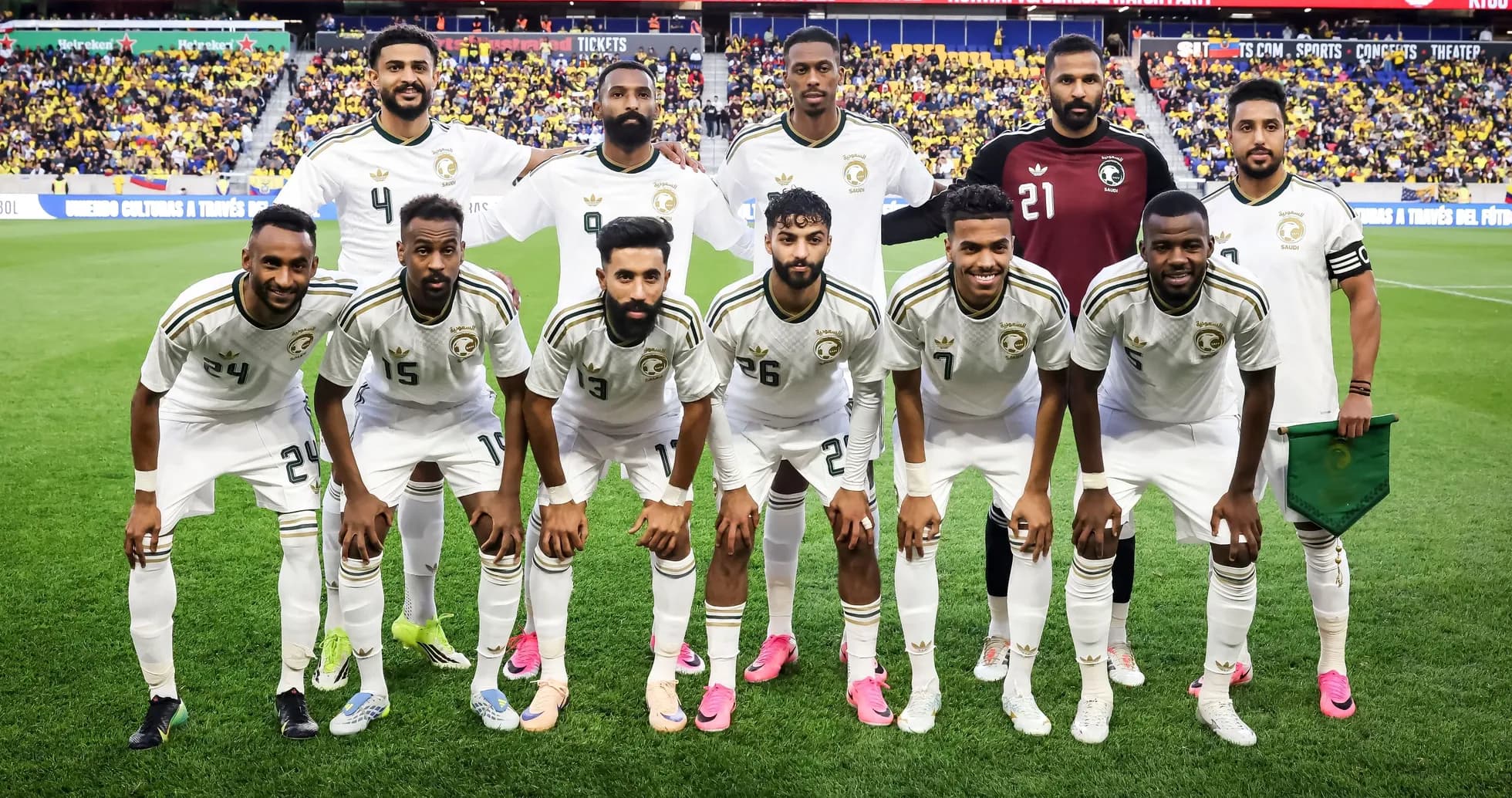
Georgios Donis Announces Bold Gulf 27 Squad Without Salem Al-Dawsari
In Jeddah, where Saudi Arabia hope to turn home advantage into silverware, Georgios Donis has made it clear he is not in the job to protect reputations.
The Greek head coach announced his 26-man squad for Gulf 27, and the headline was brutal in its simplicity: no Salem Al-Dawsari. No Saud Abdulhamid. Two of the most recognisable faces from the recent World Cup in the United States, Canada and Mexico, both watching this regional campaign from home.
Big names out, message loud and clear
Al-Dawsari is not just any omission. He is the captain, the symbol of a generation, and still a reference point for the Green Falcons. Abdulhamid, now with Roma, carried his World Cup form into Europe and looked a near-certainty for any Saudi squad.
Donis thought otherwise.
They were part of a wider cull. Ahmed Al-Kassar, Ali Majrashi, Ali Lajami, Ayman Yahya, Saleh Al-Shehri and Khalid Al-Ghannam have also been cut from the group that went to the World Cup. Eight players out in total. A core ripped away in one swing of the axe.
This is not a gentle evolution. It is a reset.
New faces, new direction
Into that vacuum step eight newcomers, all handed a chance to stake a claim on a major regional stage: Hamed Al-Shanqiti, Mohammed Mahzari, Zakaria Hawsawi, Mohammed Al-Qahtani, Saleh Abu Al-Shamat, Abdullah Al-Salem, Rayan Hamed and Hammam Al-Hammami.
Some are familiar names domestically, but at international level they walk into the spotlight for the first time. Donis is gambling that fresh legs and hungry minds can give Saudi Arabia a different edge in a tournament that has so often been shaped by emotion and momentum.
According to the Saudi national team’s account on X, the final 26-man list reads:
- Goalkeepers: Mohammed Al-Owais, Nawaf Al-Aqidi, Hamed Al-Shanqiti
- Defenders: Abdulelah Al-Amri, Jihad Zikri, Rayan Hamed, Hassan Kadesh, Hassan Tambakti, Nawaf Boushal, Mohammed Mahzari, Mutaib Al-Harbi, Zakaria Hawsawi
- Midfielders: Musab Al-Juwayr, Mohammed Al-Qahtani, Mohammed Kanno, Ziyad Al-Johani, Abdullah Al-Khaibari, Nasser Al-Dawsari, Alaa Haji, Sultan Mandash, Mohammed Abu Al-Shamat, Hammam Al-Hammami, Saleh Abu Al-Shamat
- Forwards: Abdullah Al-Hamdan, Firas Al-Buraikan, Abdullah Al-Salem
It is a blend: established pillars like Mohammed Kanno and Hassan Tambakti alongside players who have barely tasted this level. The spine remains, but the supporting cast has changed dramatically.
Group of demands, not death
The draw has placed Saudi Arabia in Group One with Kuwait, Oman and Iraq. It is not the most glamorous group on paper, but it is unforgiving.
Saudi Arabia open against Kuwait on 23 September at Al-Inma Stadium in King Abdullah Sports City. A home crowd, an opponent with nothing to lose, and a new-look team under scrutiny from the first whistle. Any early nerves will be ruthlessly exposed.
Oman await on 26 September, a side that has built a reputation for discipline and stubborn resistance in Gulf competition. Then comes Iraq on the 29th, a fixture that rarely needs extra fuel; the rivalry usually provides enough on its own.
Group Two brings together Qatar, the UAE, Bahrain and Yemen, leaving Saudi Arabia to fight their way out of a section that will test both their tactical organisation and their mental resilience.
Donis’s gamble
By leaving out his captain and several World Cup veterans, Donis has taken ownership of this campaign in a very public way. If this works, he will be praised for bravery and vision. If it fails, the names left at home will echo around every post-match debate.
Either way, the message is unmistakable: nobody is untouchable, and places in this Saudi side are earned, not inherited.
The stage is set in Jeddah. New faces, high stakes, and a coach unafraid to challenge the old order. Now the question is simple: can this reshaped Saudi Arabia turn bold selection into a Gulf 27 title?