Floyd Samba's Debut Changes Manchester's Football Narrative
At the Etihad on Thursday night, all the noise about Manchester’s next big thing suddenly sounded a little out of date.
For days, the talk in the city had been about JJ Gabriel, the much-hyped 15-year-old forward on the verge of leaving Manchester United. Columns, clips, comment threads – all consumed by a teenager who hasn’t yet kicked a ball in senior football.
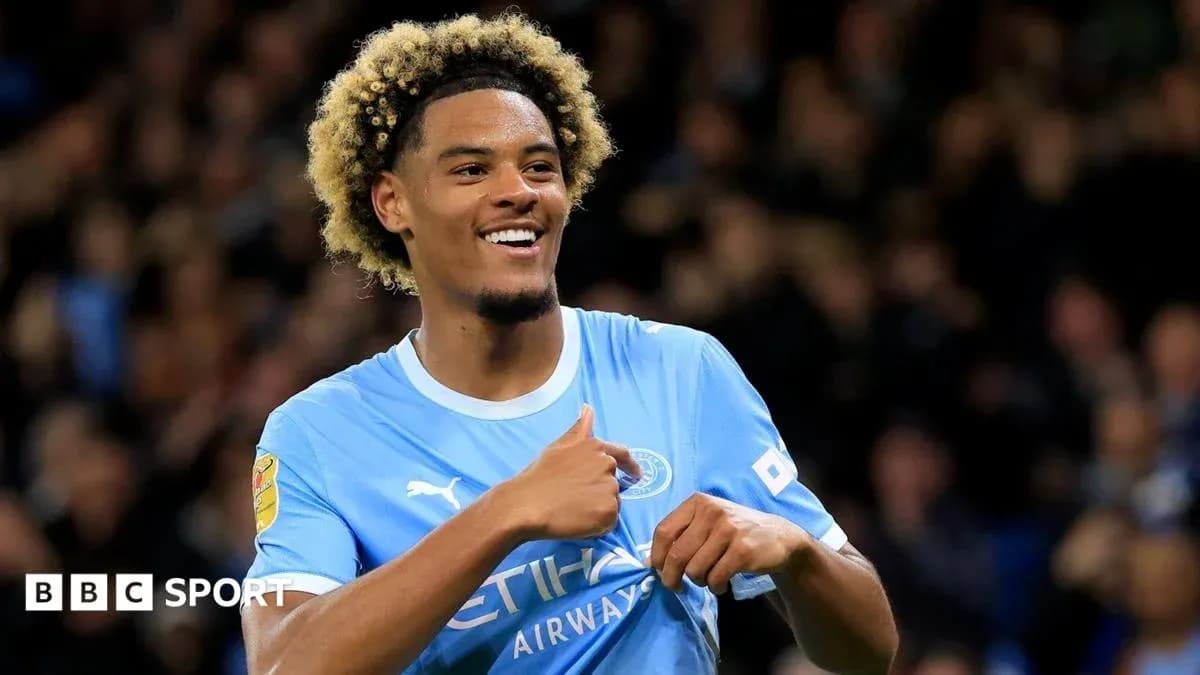
Then Floyd Samba walked out for Manchester City, pulled on a first-team shirt for the first time and tore up the running order.
Seventeen years old. Two goals. A 5-0 Carabao Cup third-round demolition of Norwich City. And a debut that felt like a statement.
A debut that changed the conversation
This wasn’t a polite cameo, the kind managers hand out in stoppage time. Samba played the full 90 minutes and treated it as if he’d been waiting his whole life for it. In truth, he has.
He joined City’s academy at under-nine level. Years of age-group football, training pitches in the rain, bus rides to away grounds that barely register on a map. Last season, it all started to sharpen into focus.
Samba became a menace at under-18 level, scoring 24 goals and supplying 10 assists in his first full campaign with the side. He didn’t just fill the stat sheet; he took centre stage. In May, he bent in a stunning free-kick in the FA Youth Cup final against Manchester United, helping City lift the trophy and adding a little extra sting for the neighbours.
Those numbers, and that temperament on a big occasion, caught the eye of new manager Enzo Maresca. This summer, the Italian pulled the teenager into the first-team set-up. A bold call, given the standards of a squad that has been built to dominate on multiple fronts.
On Thursday, the faith started to pay off.
“I knew there would be an opportunity to get some minutes for the first time with the first team,” Samba told BBC Radio 5 Live. “To get a debut like that is mind-blowing.
“I couldn’t believe it myself – but that is just the beginning, I have got a big career ahead of me. It was a great debut.”
He spoke like someone who understands the scale of the moment, but also its place in a longer journey. The dressing room helped, too.
“I spoke to all of them, they have all been brilliant with me – before the game, giving me advice like ‘play your game, be you’ – those words have given me confidence and helped me score those two goals today.”
Finding a way through
For a while, this looked like one of those awkward cup ties. City had the ball, of course, but Norwich held their shape and survived the early waves.
Then Samba found the crack.
With his side searching for a way through, he slipped into the box and met a cross with a deft flicked header, guiding it beyond the keeper to break the deadlock. No panic, no snatch at the chance. Just a clean, instinctive finish from a teenager who looked entirely at home.
He wheeled away and sent a kiss up towards the stands, where family and friends had watched him climb through the academy and now, finally, onto the main stage. It was the kind of celebration that tells you exactly who this night was for.
The pressure eased, City relaxed, and Samba grew.
His second goal showed another side of his game. Picking up the ball later in the match, he curled a delightful finish into the corner, the sort of composed strike that belongs on a highlight reel and, more importantly, in a manager’s memory when he picks his next squad.
By then, Norwich were beaten and City were cruising towards a 5-0 win. But Samba kept running, kept offering, kept making decisions that looked far older than his years.
When the stadium announcer named him man of the match, the Etihad rose with a generous ovation. It felt less like polite encouragement for a youngster and more like recognition that they might be seeing the start of something serious.
Maresca’s measured excitement
Maresca has seen enough talent come and go to know the dangers of a runaway narrative. His assessment carried both delight and a deliberate note of restraint.
“[I’m] satisfied not just for the goals but for the performance too,” he said.
He then revealed just how new this role was for Samba.
“I asked him in the last three, four days – when I decided to play him as nine – he said he never played there. He is not a nine for sure, but he was good.
“He is young, full of energy, strong, can finish, can set [players up]. He made some good decisions in the first half. I am happy but they are young and we have to go slowly, slowly.
“Hopefully we can give him more chances.”
That line about the No 9 role matters. Samba, by his own admission, isn’t a natural centre-forward. Yet he adapted, found space, linked play and still produced two clinical finishes. For a coach like Maresca, who prizes intelligence and flexibility, that will not go unnoticed.
From academy prospect to genuine option
Every big club has its next big thing. Most never quite make the leap. The gap between youth dominance and senior relevance is brutal.
Samba has taken only one step across that divide, but what a step it was.
He arrives in a first-team squad that doesn’t hand out minutes lightly. To earn more, he will need to back this up in training, in future cup ties, in whatever minutes come his way. The club know that. So does he.
But on a night when the conversation in Manchester was supposed to be about a 15-year-old forward potentially walking away from Old Trafford, a 17-year-old at the Etihad chose a different route. He stayed, he worked, he waited – and when the door opened, he walked straight through it.
The headlines will follow. The real question now is how far, and how fast, Floyd Samba can turn this dazzling first act into a permanent place on one of the most competitive stages in European football.