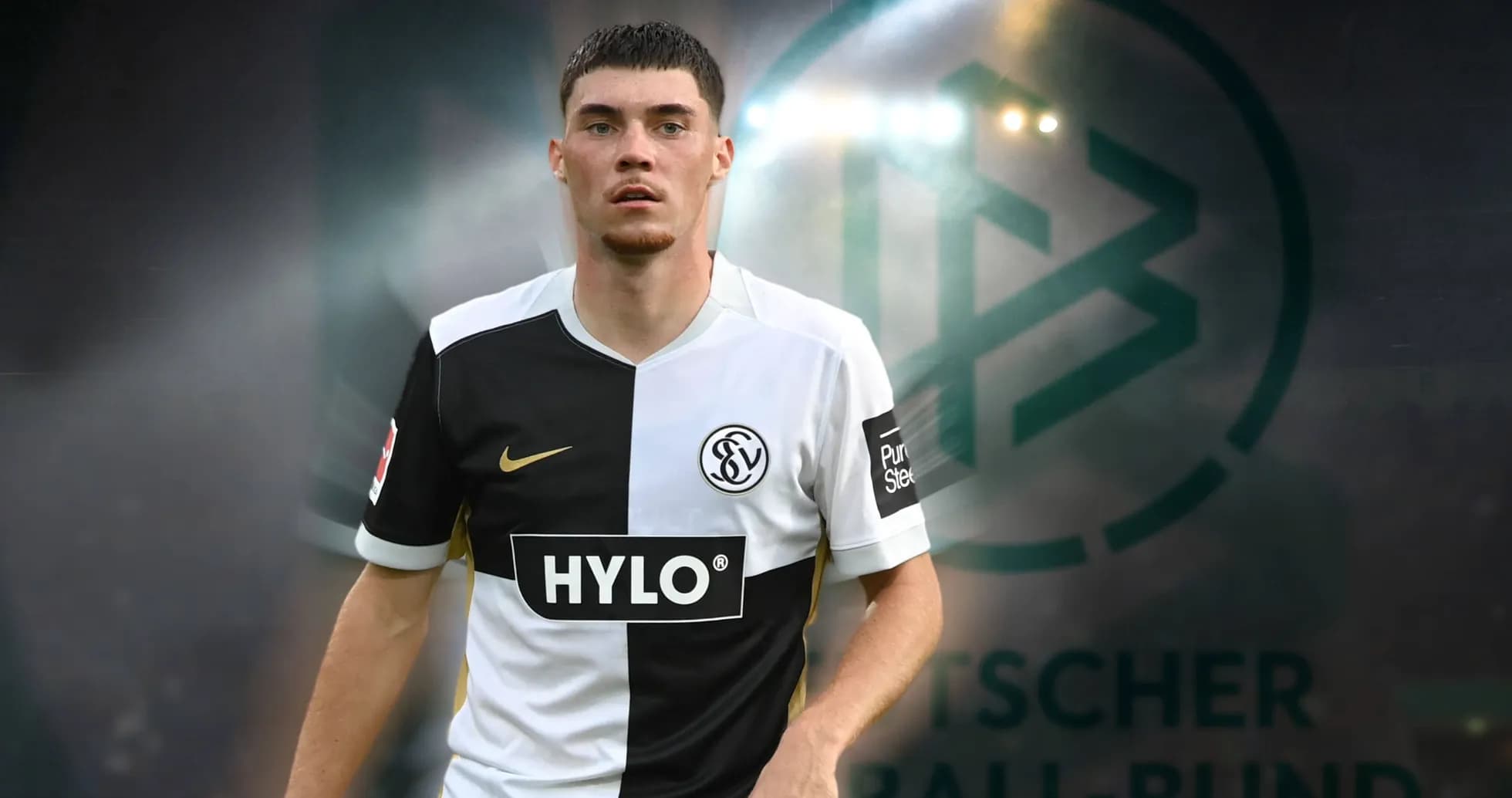
Felix Keidel: Jürgen Klopp's Bold Choice for Germany's National Team
Jürgen Klopp promised a reset. Not a gentle transition, not a respectful nod to the old guard, but a hard cut. Performances, form, work rate – those were the new currencies of the national team. Reputation, he made clear at his first press conference as Germany head coach, no longer guaranteed anything.
Now one of the first beneficiaries of that new order is a name almost nobody expected: Felix Keidel of SV Elversberg.
From Ingolstadt’s academy to the national team radar
When Klopp revealed that 57 players sat on his initial shortlist, he kept the identities to himself. The message was obvious, though. After three failed World Cup campaigns, Germany needed fresh faces, new energy, different profiles. Even so, very few would have pencilled in a 23-year-old with only three Bundesliga appearances.
Late on Tuesday evening, Bild broke the story: Keidel had received an invitation from the new Bundestrainer. A day later, kicker confirmed it with its own information. The reaction around German football was instant and unanimous – surprise.
Keidel’s journey has not been glamorous, but it has been relentless. He joined FC Ingolstadt’s U19s in 2012 and climbed every rung of the club’s youth ladder before reaching the professional squad in the summer of 2022. No shortcuts, no loan carousel, just steady progression in a demanding environment.
Once he made it to the first team, he stayed there. At 20, he established himself as a regular in the 3. Liga, playing 37 matches, scoring once and adding four assists. Those numbers don’t leap off the page, but they tell a story of trust from the coaching staff and consistency across a full campaign.
The leap with Elversberg
In 2025, Keidel took the next step. Elversberg, still stung by narrowly missing out on promotion against 1. FC Heidenheim, moved for him and paid a modest €400,000 to buy him out of his Ingolstadt contract. It was a transfer that barely made a ripple at the time. Inside the club, it quickly looked like a steal.
Keidel needed almost no adaptation period. Under Vincent Wagner, he became a regular again, making 25 league appearances, 13 of them from the start. More importantly, he became part of the core of a side that stunned the country by clinching promotion to the Bundesliga. For a club from Saarland, for a player coming from the third tier just over two years earlier, it was a dizzying rise.
The climb did not stop there. This season, Keidel finally stepped onto the Bundesliga stage. Three league matches – against Leverkusen, Gladbach and, most recently, Bayern – brought his first top-flight goal. In the DFB-Pokal, he added two assists in a single match against MSV Duisburg. On paper, it is a tiny sample size. For Klopp, it was enough to pick up the phone.
A solution to Germany’s problem position?
The obvious question hangs over the call-up: is Keidel already at the level to shape games for Germany? That answer will only come on the pitch. What has clearly attracted Klopp, though, is not just Keidel’s form, but his profile.
Versatility has been his trademark. At Ingolstadt, there was barely a position he didn’t cover at some point. His greatest advocate there, coach Sabrina Wittmann, used him on both flanks at full-back, in central midfield and even higher up as an attacking midfielder. He drifted into half-spaces, stepped into playmaker zones, and still did the dirty work in deeper areas. His natural role remains right-back in a back four, yet his education has been far broader.
At Elversberg, his responsibilities shifted again. During the promotion season he largely locked down the right-back position, offering defensive stability with the energy to support attacks. This season, Wagner has often pushed him inside, using him as a defensive midfielder alongside Lukasz Poreba. Keidel has responded by showing he can read the game centrally, break up play and keep the ball moving under pressure.
For Klopp, that flexibility is gold. But the national team’s needs are specific, and they point firmly towards one area of the pitch.
Germany have been searching for a convincing right-back since Philipp Lahm retired and Joshua Kimmich moved into central midfield. Every coach since has wrestled with the gap. Hansi Flick and Julian Nagelsmann both tried to patch it with different ideas and different profiles, but nothing truly stuck.
Benjamin Henrichs and Ridle Baku from RB Leipzig had their chances. Josha Vagnoman impressed in spells at Stuttgart. Kimmich himself was even dragged back out wide again at the 2026 World Cup in an attempt to restore some order. Each experiment looked temporary. Each was eventually abandoned.
The result is a position that has become symbolic of Germany’s wider uncertainty. In a back four, the team still lack a long-term, high-quality right-back who fits the modern demands of the role: secure defensively, comfortable in tight spaces, aggressive in transition, intelligent in build-up.
Keidel will not solve that debate overnight. He arrives with almost no experience at the very top level and with the weight of a national problem on his shoulders. Yet that is precisely why this call-up feels so stark, so Klopp.
Instead of defaulting to the familiar, the new Germany coach has chosen a player who has fought his way up from the third tier, adapted to multiple roles and imposed himself wherever he has gone. From 3. Liga to the Bundesliga in just over two years. From Ingolstadt’s academy to a place on the national-team radar. From obscurity to opportunity.
Germany have been searching for a right-back for years. Now, of all players, Felix Keidel gets the chance to show whether that search might finally be nearing its end.