England vs Spain: UEFA Nations League Showdown at Wembley
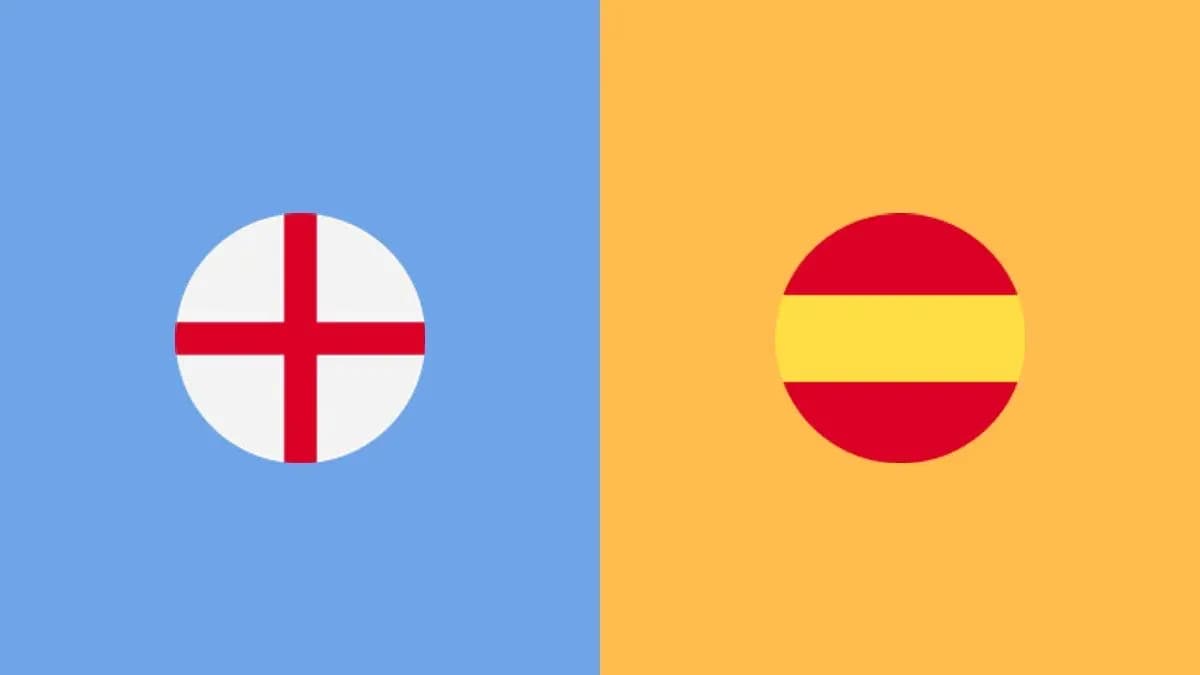
The World Cup is barely in the rear-view mirror, yet England and Spain are already being dragged back into each other’s orbit. On 26 September 2026, under the arch at Wembley, the new UEFA Nations League cycle opens with a fixture that feels far bigger than Matchday 1 in Group A3.
This is a rematch. A reckoning. And a reminder of who sets the standard in Europe right now.
Wembley returns to the centre of the storm
Kick-off is set for 18:45 GMT, and Wembley will feel that familiar mix of anticipation and unease. England come home from North America with a bronze medal and a bruised sense of what might have been. They scored freely, entertained often, and still watched someone else lift the World Cup.
Thomas Tuchel’s side finished third after a wild 6–4 win over France in the play-off, a game that summed up their tournament: thrilling, chaotic, and never dull. Four wins from five, 11 goals scored, six conceded. This is a team that can overwhelm you, but still leaves the door open a crack.
Bukayo Saka, Jude Bellingham, Declan Rice – the core is unmistakable now. They are the heartbeat of Tuchel’s England, the spine around which everything else must bend. Saka’s directness, Bellingham’s authority between the lines, Rice’s control and bite in midfield give the hosts a platform that feels built for big nights like this.
The question is whether that platform is solid enough against the very best. Spain are coming to test it.
Spain arrive as world champions, not visitors
Spain do not travel to London as just another elite side. They arrive as the team everyone else is chasing. Luis de la Fuente’s squad dominated the World Cup in North America with a cold, methodical brilliance: seven goals scored in their last five, only two conceded, not a single defeat.
The final, a 1–0 win over Argentina, was tight on the scoreboard but spoke volumes about their control. Rodri and Pedri dictated the tempo, strangling games in midfield. Out wide, Lamine Yamal and Nico Williams stretched opponents, tormenting full-backs with pace and precision.
That same axis comes to Wembley. Rodri as the metronome. Pedri as the connector. Yamal and Williams as the chaos agents. Spain’s identity is clear: technical superiority, relentless pressing, quick, incisive wing play. They don’t just want the ball – they want to suffocate you with it.
De la Fuente has named a 26-man squad for this Nations League window, with Fermin Lopez and Dean Huijsen returning to the fold. The message is obvious: the World Cup was not an endpoint. It was a launchpad into this new cycle.
Old wounds, fresh stakes
When these two meet, history is never far away. The last time they shared a pitch in a competitive match, Spain edged England 2–1 in the Euro 2024 final, a night that still stings for the Three Lions. Go back a little further and the pattern remains: Spain hold the better recent record, though England’s 3–2 win in Seville in the 2018–19 Nations League proved they can hurt La Roja when the balance is right.
There was also that 2–2 draw in a 2016 friendly, a reminder that even when the stakes are lower, these games rarely drift into the background. The margins are usually thin. The narratives never are.
This time, the stakes are layered. Group A3 is unforgiving, with Croatia and Czechia lurking, and an early slip can shape the entire campaign. For England, this is about proving that their World Cup run was not just a high-scoring spectacle but the start of something more ruthless. For Spain, it is about asserting that being world champions is not a title to be defended from the back foot.
Tuchel’s puzzle at full-back, England’s evolving core
Tuchel has not locked in a starting XI yet, and the edges of his squad are already being tested. Trent Alexander-Arnold and Cole Palmer have been recalled, injecting creativity and technical quality in key areas. Both offer different solutions: Alexander-Arnold with his passing range from deep, Palmer with his composure and intelligence in the final third.
The problem lies behind them. Tino Livramento is expected to withdraw after suffering a fresh injury in Newcastle training, leaving England light at full-back. For a coach who values structure and controlled build-up, that shortage on the flanks is more than a minor inconvenience. It shapes how England can press, how they can defend Spain’s wide threats, and how bravely they can push their own full-backs on.
Still, the core remains intact. Bellingham, Rice, and Phil Foden are likely to form the central unit tasked with disrupting Spain’s rhythm. Bellingham will look to crash into spaces Spain usually own. Rice will try to screen and spoil Rodri’s influence. Foden must find pockets where he can turn and hurt, rather than simply admire the passing patterns around him.
If that trio can tilt the midfield battle even slightly, Wembley will feel it.
Spain’s control vs England’s chaos
This match is a tactical argument played at full speed. Spain will want long spells of possession, turning the game into a technical examination that few teams pass. England will be tempted to raise the tempo, to make it a contest of transitions, emotion, and moments.
The pressure finally told in North America when England opened up and went toe-to-toe with elite opposition. It gave them that 6–4 epic against France, but it also left them vulnerable in the semi-final defeat to Argentina – their only blemish in the last five.
Spain, by contrast, do not often get dragged into shootouts. Their last five games show a side that wins by control, not chaos. Seven scored, two conceded, all five won. They squeeze the air out of matches.
Somewhere between those two identities lies the story of this Nations League opener.
A night that could define the campaign’s tone
This is not a final. There is no trophy on the line at Wembley on Saturday. Yet the tone of an entire international year can be set in games like this.
If England beat the world champions on home soil, the narrative shifts: from plucky, entertaining nearly-men to a side that can handle the heaviest pressure and the sharpest opposition. If Spain walk into Wembley and impose their game again, they underline the gap between being among the best and being the benchmark.
For now, the numbers tell one story: England, four wins from five, goals flowing but gaps still visible; Spain, five wins from five, champions who rarely flinch.
The rest will be written under the lights, with Group A3 watching, and Europe quietly asking the same question: who really runs this era – the world champions, or the challengers who refuse to go away?