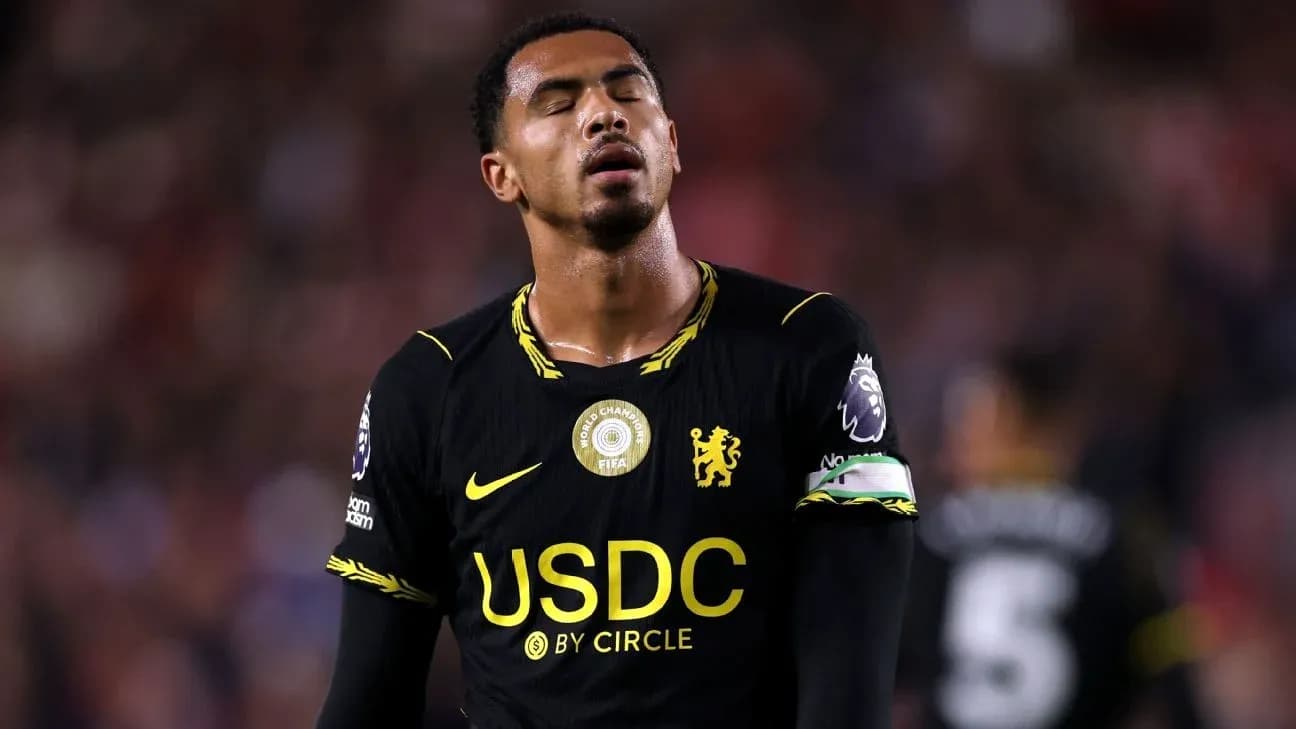
Chelsea's Identity Crisis Continues After Brentford Defeat
LONDON — On one side of west London, a club humming with certainty, joy and sharp edges. On the other, Chelsea, under new, clarified ownership and a celebrated coach, already staring into an all-too-familiar mirror.
Brentford 3, Chelsea 0. A scoreline that flattered nobody in blue.
A new era, same old doubts
This was supposed to be the clean break. Full Clearlake Capital control, Xabi Alonso in the dugout, and a summer built around experience and structure. Jordan Henderson to steady the midfield. Danny Welbeck to lead the line and set the press. A spine, at last.
Instead, this looked alarmingly like last season’s Chelsea: organized in patches, brittle when it mattered, and capable of collapsing in the space of 20 minutes.
For about 70 minutes, Alonso’s side held themselves together. Henderson and Valentín Barco screened the back four with discipline, Chelsea kept their shape, and the game drifted along tight and cautious. Chances were scarce. Brentford probed, Chelsea countered in flashes, but the match felt like it was waiting for someone to impose themselves.
Chelsea’s attack has been one of the brighter stories of their season, but without João Pedro leading the line, the chemistry dulled. The previously slick combination of Morgan Rogers and Cole Palmer never quite found its rhythm with Welbeck. The movements were there, the ideas half-formed, but the edge was missing.
Then the legs went. The changes came. And Brentford, a team that knows exactly who and what it is, stepped in.
Brentford pounce when Chelsea fade
The shift was almost audible. Brentford’s belief grew as Chelsea’s energy drained. Muscle memory took over for the home side: compact at the back, ruthless in transition, and utterly sure of their roles.
Chelsea’s new era will replay all three goals in slow motion and wince.
The first came from a corner. Mikkel Damsgaard swung it in, Jannik Schuster rose at the far post and nodded it back across goal, and there was Jaidon Anthony, completely alone, to head in. A simple routine, executed with conviction, defended with hesitation.
The second was the kind of goal that infuriates coaches. Chelsea committed bodies forward, lost the ball, and suddenly there was green grass and panic. Kevin Schade burst away, his shot saved well, but Igor Thiago reacted quickest, twisting his body to acrobatically bury the rebound. Chelsea’s back line arrived late to the scene, again.
The third felt like a final, merciless underline. A cross to the far post, Fábio Carvalho ghosting in unmarked, and another straightforward finish. Keith Andrews leapt into his assistants’ arms on the touchline, looked to the sky, and the Gtech Community Stadium roared. The red-and-white end chanted that they’d happily play Chelsea every week. On this evidence, who could blame them?
A club that knows itself
Brentford might be one of the happiest operations in English football right now. Unbeaten before kick-off, with a win and three draws, they walked into this fixture with the relaxed swagger of a club that trusts its own work.
Their summer window told the story again. Mamadou Sangare arrived from Lens, another clever midfield addition to a squad that rarely seems to regress. Players come in, players leave, and the level barely drops.
While Alonso spent his pre-match media duties fielding questions about injuries and ownership shifts, Andrews’ press conference sounded like a celebration. Schade and Vitaly Janelt had been called up by Jurgen Klopp to his 44-man Germany squad. Nathan Collins had quietly donated £1,000 to supporters’ group TW8 Casuals to help fund flags and matchday displays.
This is a club that feels joined up, from boardroom to boot room to terraces.
“I love this place. I say to the players all the time that we don't realize how lucky we are,” Andrews said. “We have a sign above the boot room that says exactly that; how lucky are we to be at an amazing place and be part of a special, special group.”
You can see that message in how they play. Since promotion to the Premier League in 2021, Brentford have barely broken stride. Star names have been picked off, but the recruitment keeps delivering: ready-made replacements, smart profiles, and a refusal to panic. No Bryan Mbeumo? No problem. Someone else steps in, the system stays the same.
Even the managerial change has followed that logic. When Thomas Frank left last year, the predictions were grim. Instead of a marquee outsider, Brentford promoted their set piece coach. Andrews walked into the top job and the club didn’t blink. The people running Brentford trusted their own judgment and their own processes. They usually do.
As players nurtured in west London move on to Champions League nights and bigger pay packets, the club simply folds in the next wave, or tempts the likes of Sangare to the Gtech. The machine keeps turning.
Chelsea’s identity gap
While Brentford’s supporters waved new flags and turned this corner of London into a red-and-white storm, they knew what they were going to see: structure, clarity, and a team that looks like itself every week, even when the result goes against them.
Chelsea cannot say the same.
They remain a mystery even to themselves, a club with vast resources and grand plans but a shifting sense of what they actually want to be. Under Alonso, there are clear ideas and a coach with the pedigree to impose them, but the squad still feels like a puzzle assembled from too many different boxes.
There were glimpses of control here, and there will be better days. Alonso’s track record suggests he will eventually bend this group to his will. But nights like this, under new ownership and old anxieties, carry a warning.
Brentford show what happens when a club invests not just in players, but in identity. Chelsea must decide how long they can afford to keep searching for theirs.