Brighton’s Transformation Under Hürzeler: A Tactical Masterclass
Fabian Hürzeler warned them in March.
“There was only one team today that tried to play football,” he snapped after a 1-0 defeat to Arsenal, a game his Brighton side had largely controlled but lost to a single Bukayo Saka moment and a Bart Verbruggen mistake. The numbers backed him. The result mocked him.
Six months on, the same fixture looked nothing like a moral victory. It was a demolition.
From Frustration to Blueprint
Back in early spring, Hürzeler didn’t just bemoan missed chances. He took aim at Mikel Arteta’s idea of football, at the pragmatism of a title-chasing Arsenal who, in his eyes, did “everything to win” without caring how it looked. He even questioned whether anyone in the press room had actually enjoyed the match.
Those comments sounded like the defiant rhetoric of a young coach trying to plant a flag in the Premier League. Now they read like the opening chapter of a manifesto.
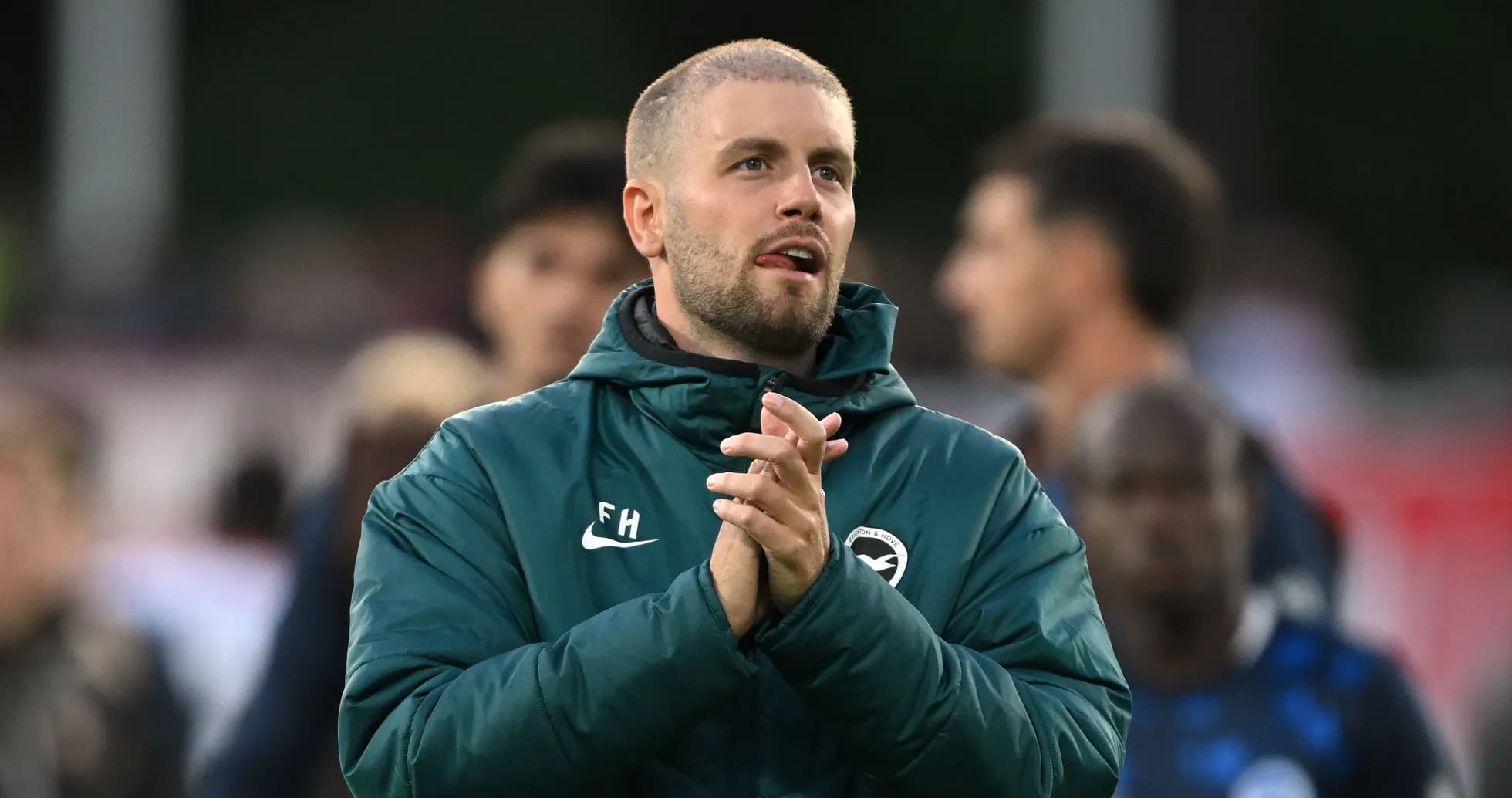
Brighton hired Hürzeler in the summer of 2024 on a five-year deal, a bold commitment to a 33-year-old with clear, uncompromising ideas. The early weeks were brutal at times. A fragile back line, exposed by technically superior opponents, shipped heavy defeats. The structure was bold, the execution raw.
But the longer Brighton lived with Hürzeler’s demands, the more the chaos began to look like calculated risk. The balance between front-foot aggression and defensive stability slowly tilted in his favour.
Against Arsenal last weekend, it snapped fully into place.
Pressing as a Statement
At the Falmer Stadium, Brighton didn’t just beat the previously unbeaten league leaders 3-0. They suffocated them.
From the first whistle, the Seagulls swarmed Arsenal’s back line. The press didn’t start high; it started almost on top of David Raya’s gloves. Brighton’s forwards chased the ball as deep as the visitors’ penalty area, cutting off simple routes, forcing hurried touches, turning every pass into a potential trap.
They blocked central lanes, overloaded the middle, and hunted in packs. Once Arsenal were funneled into the only remaining option – a long ball – Brighton were already set to win it back.
Raya completed only four of his first seven passes. Three went astray in the opening 15 minutes alone, a direct result of the constant pressure and the way Brighton boxed in full-backs Jurrien Timber and Riccardo Calafiori. Wide outlets were marked, central pivots were shadowed, and the “out” ball turned into a gamble.
The numbers told the story. Nine regains in the final third – the most any Arsenal opponent has managed since Liverpool matched that tally in December 2023. Thirty-five high regains already in this Premier League campaign, eight more than second-placed Everton in that category.
This wasn’t just intensity. It was organisation, trust, and repetition made visible.
“What was decisive was that every player, when he went into a duel, always had the feeling that one of his team-mates was behind him,” Hürzeler said afterwards. If one was beaten, another stepped in. If a trap failed, the cover was already in place. He spoke about reliance, trust, clarity at set-pieces, the obligation to be “fully there in every situation and every moment of the game.”
His players delivered exactly that.
Goals Flow, Defence Hardens
The reward is there in black and white. Brighton now own the best attack in the league. Sixteen goals in five matches – a total bettered at this stage of a Premier League season only by Manchester City’s 19 in 2022/23.
The transformation at the other end might impress Hürzeler even more. Five clean sheets in eight competitive games. Last season, Brighton needed twice as many matches to reach that same mark.
“The most important thing is not to concede any goals at the back,” he said, sounding more like a grizzled veteran than a 33-year-old ideologue. His side are starting to look like both: idealistic in structure, ruthless in detail.
Arteta, usually protective of his own game model, didn’t bother to argue.
“From the very first throw-in,” he admitted, he could feel Brighton’s extreme pressing. Arsenal’s technical errors in their own half, their failure to apply their usual principles to escape man-to-man pressure, left them “constantly defending.”
This time, the Spaniard was the one pinned in.
Building a Squad for the Storm
The evolution hasn’t happened by accident. Transfer window by transfer window, Hürzeler has been assembling a squad that fits his football like a tailored suit.
Chema Andres, brought in from VfB Stuttgart shortly before the deadline, is a perfect example. Just under two metres tall, strong in duels, but quick across the turf, he’s built to dominate the second ball after those forced long passes. If the first press doesn’t bite, he provides the safety net – winning aerials, cleaning up knockdowns, and sprinting back to smother counter-attacks.
Luka Vuskovic, signed from Tottenham Hotspur for €55 million in the summer, has wasted no time becoming an undisputed starter. The former Hamburg defender offers the composure and range needed to play in a team that defends on the front foot and lives on the edge of the halfway line.
Yet the most striking renaissance belongs to a player many thought was on the slide.
Pascal Groß, Vintage and Vital
Pascal Groß arrived on the south coast last winter after slipping to the fringes at Borussia Dortmund. At 35, he looked closer to the end than the beginning of anything.
Under Hürzeler, he has become the heartbeat of Brighton’s attack and the face of their resurgence.
Groß currently leads the Premier League scoring charts after five matchdays with three goals and four assists, ahead of headline names like Erling Haaland and Florian Wirtz. Against Arsenal, he opened the scoring on 31 minutes and later set up Chema’s goal for 3-0 on 57 minutes, stamping his authority on the game in both penalty areas.
He has his own explanation for the late-career surge. He talks about feeling “very good, very comfortable,” about a blend of fitness, experience and a coach who uses him in a way that lets his strengths shine. Under Hürzeler, he operates higher up, with more freedom in the final third, encouraged to interpret his role aggressively rather than conservatively.
“We had our pressing and the resulting high regains to thank for some of the goals,” Groß said in an interview with kicker. The team, he added, create “a lot of chances” by following Hürzeler’s instructions almost to the letter.
His coach, in turn, reaches for a familiar metaphor. Groß, he says, is like good wine – better with age. The numbers support it, but Hürzeler insists there are things the data can’t capture: the way Groß knits together a dressing room full of different nationalities, his instinct for the group’s social dynamics, the invisible threads he pulls on the training ground.
On the pitch, he sets the press. Off it, he sets the tone.
Respect Replaces Needle
When these two managers clashed in March, the tension crackled. Hürzeler’s criticism of Arsenal’s style drew a sarcastic response from Arteta, who brushed off the young German’s words and, in doing so, lit a small fuse between the dugouts.
This time, there was no need for fireworks from Brighton’s coach. His team had done enough talking over 90 minutes. Three goals, a clean sheet, and a performance that left Arsenal looking dazed rather than dominant lifted Brighton to third in the table after their third win of the campaign.
Arteta stepped into the press room and chose reconciliation over rivalry.
“What happened is over. That is in the past,” he said, before offering “enormous respect” for Hürzeler and describing Brighton’s work under him as “simply remarkable.”
Six months ago, Hürzeler stood in front of the microphones as the coach who insisted his side played the better football in defeat. Now, with Arsenal picked apart and the league’s most potent attack at his disposal, he no longer needs to ask whether anyone enjoyed the match.
The real question is different now: how far can this relentless, fearless Brighton side push the Premier League’s established order?