Alexander Zverev Survives Epic First Round at US Open
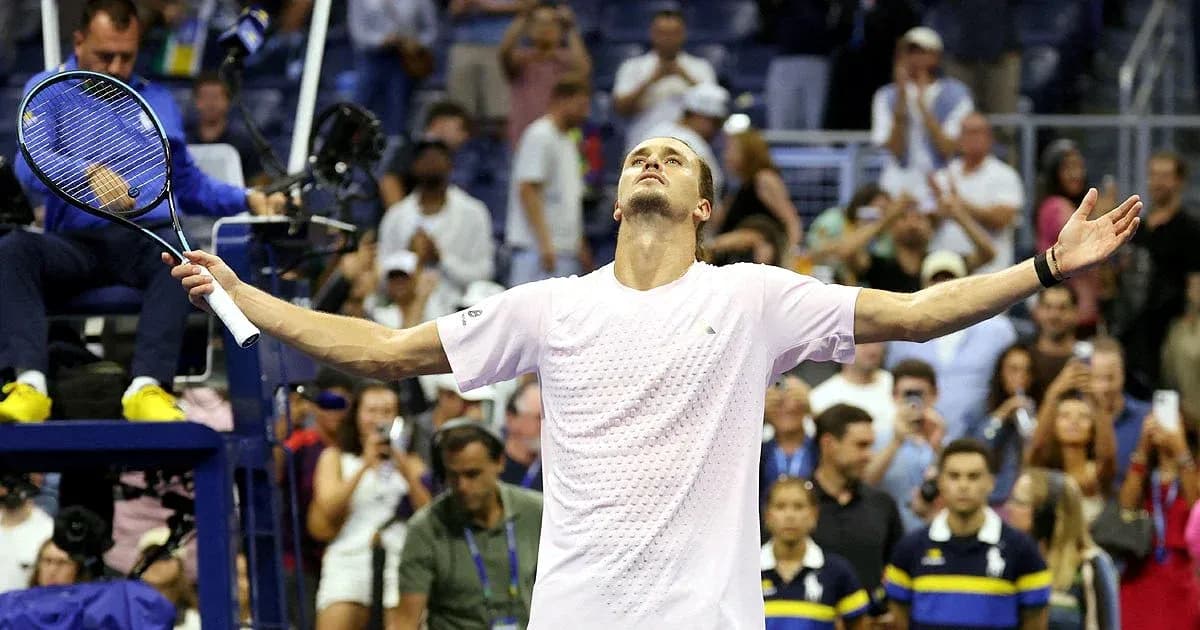
Alexander Zverev walked off Arthur Ashe Stadium just before 1 a.m., not so much relieved as exhausted, having stared down both Lorenzo Sonego and the spectre of a historic upset.
The top seed at the US Open needed every ounce of his new status as a Grand Slam champion to survive, edging past the Italian 6-4, 3-6, 6-7(7), 7-5, 6-4 in a first-round epic that ran close to five hours and felt, at times, like it might never end.
A champion under pressure
This is Zverev’s first major since lifting the French Open trophy in June. He arrived in New York as the man with the target on his back: world number one Jannik Sinner is missing, defending champion Carlos Alcaraz is still working his way back from injury, and the draw has tilted towards the German.
For a long stretch on Tuesday night, that meant nothing.
Zverev did what top seeds are supposed to do in the opening set, controlling the rallies, pushing Sonego back, and earning seven break points. He converted just one. It was enough for 6-4 on the scoreboard, but not enough to put any real distance between himself and an opponent ranked 89 in the world and playing with nothing to lose.
Sonego responded with authority. He broke early in the second set, seized the baseline and never let Zverev settle. The Italian’s serve, so often streaky, locked in. He closed out the set to love, sealing it with an ace that underlined the shift: this was no longer a routine night for the favourite. The match had cracked open.
Sonego seizes the lead
The third set turned into a tug of war. Both men had chances, both men tightened. Rallies grew longer, the crowd louder. Zverev’s forehand, usually a barometer of his confidence, flickered between brilliance and anxiety.
It came down to a tiebreak, and in the defining moment, Zverev blinked. A double fault — the one shot no player wants at that time — handed Sonego the opening. The Italian stepped through it, took the breaker, and with it a 2-1 lead that felt like a genuine threat to the tournament’s entire narrative.
Suddenly, the stakes shifted. Zverev was no longer protecting a smooth path through the draw. He was fighting to avoid becoming the first top seed to lose in the opening round of a Grand Slam since Lleyton Hewitt crashed out of Wimbledon in 2003.
On the brink, then a surge
The fourth set carried the tension of a final. The pair traded breaks, each surge answered, each mistake amplified. Sonego kept swinging freely, his body language buoyant, his timing sharp. Zverev, shoulders tight, had to wrestle not only with the man across the net but with the weight of expectation.
Then came the brink.
Zverev stood just two points from defeat, the match tilting towards a result that would have stunned the tournament. Instead of folding, he dug in. A crucial hold steadied him; the next game, he pounced. He broke Sonego’s serve and suddenly, almost abruptly, the contest had a deciding set.
The pressure had flipped.
Zverev finishes the job
By the fifth, the cost of the night’s effort showed most clearly on Sonego. The Italian’s legs grew heavier, his first serve lost a shade of venom, and the explosive counterpunches came a fraction slower. Zverev, sensing the shift, tightened his patterns and played with the control expected of a major winner.
The German completed the comeback 6-4 in the fifth, closing out a match that was as much about survival as statement. He avoided the unwanted slice of history, kept his campaign alive, and reminded the field that he can absorb a scare and still find a way through.
“I’m just happy I won, that’s it,” Zverev said afterwards. “I think it was an incredible battle, lots of ups and downs, nearly five hours. I think it was my longest first-round match at a Grand Slam. He would have beaten a lot of players but I’m happy to be through.”
The top seed moves on, but New York has already asked him a hard question: how many more nights like this can his body — and his nerve — withstand if he is to lift a second Grand Slam trophy?