Alexander Zverev's Epic First-Round Battle at US Open
Alexander Zverev walked off court exhausted and elated, a French Open champion dragged deep into the New York night by a first-round epic that stretched to nearly five hours. His verdict was simple, and delivered with the blunt honesty of a man who has lived enough of these battles.
“I’m just happy I won,” he told the ATP Tour. “Incredible battle. A lot of ups and downs. Nearly five hours for a first round. I think this is the longest first-round match I’ve ever played in my life.”
It felt like a statement as much as a reflection. Zverev has been here before, on the edge of something bigger in New York. In 2020 he stood one set away from his first US Open title, only to watch Dominic Thiem wrestle it away in a five-set final that still lingers in his mind.
“I still feel like I should have won in 2020, that doesn’t change,” he said last week, revisiting the scar tissue rather than hiding from it. He knows the narrative, knows the questions. Can he finally finish the job at Flushing Meadows? His answer came with a wry twist.
“I feel like I’m one of the 128 players that are favourites in the draw,” he added.
It was a line that mixed defiance with perspective. Zverev has climbed back from injury, reached the Wimbledon final in July, and now grinds through marathons in the opening round of the US Open. The margins are brutal. The ambition is unchanged.
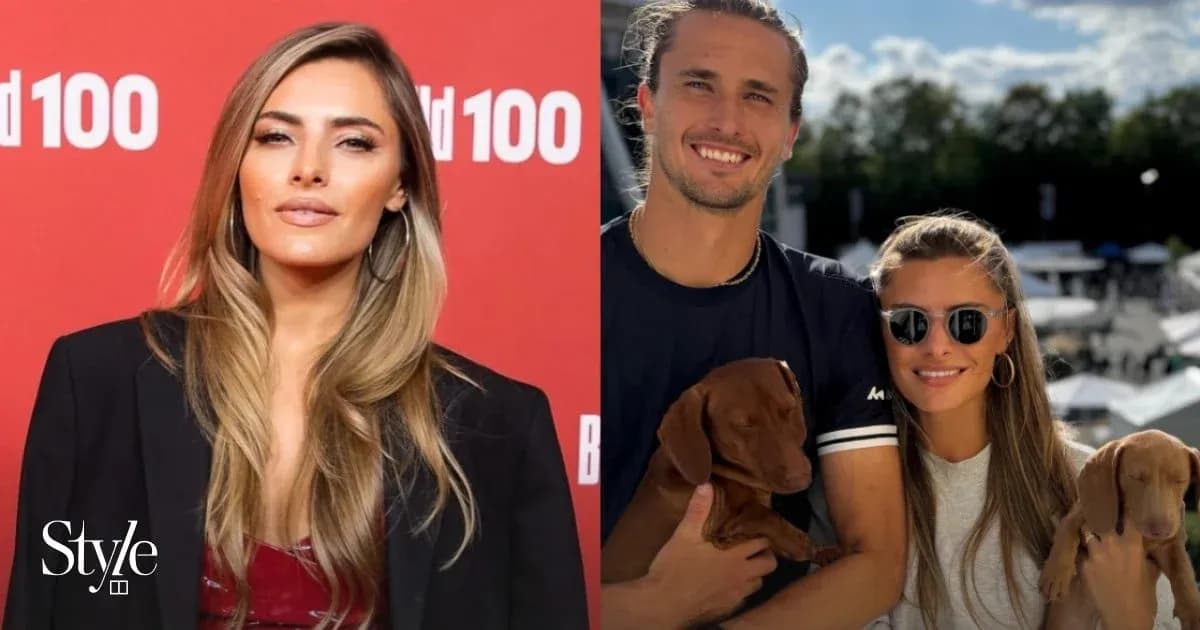
Through all of it, one constant sits just above the baseline, watching every serve, every clenched fist, every missed chance: Sophia Thomalla.
She has been a fixture in his player’s box for more than five years, a familiar presence amid the churn of coaches, trainers and opponents. When Zverev looks up in the tight moments, he sees the same face, the same calm, the same investment in every point he plays.
The woman in the box
Thomalla’s own story started far from the roaring courts of New York and Paris. She was born in East Berlin on October 6, 1989, into a family that already understood the spotlight. Her parents, Simone Thomalla and André Vetters, both built careers as actors, and their separation in 1995 meant Sophia’s childhood quickly became a tale of movement and adaptation.
She spent her early years in Berlin before moving with her mother to Cologne and Kleinmachnow, growing up in a world where cameras and sets were normal, but so were upheaval and change. That mix of visibility and resilience now follows her into the tennis arenas of the world.
Thomalla has long projected a strong, unmistakable image. Her tattoos have become part of her signature look, bold pieces of body art that arrived early in her life and never felt tentative. One of the most striking designs carries the name and birth date of actor Sven Martinek, who dated her mother in the late 1990s, a personal tribute inked permanently into her skin and often picked over by German tabloids such as Klatsch-Tratsch.
It is this blend of steel, individuality and show-business background that now intersects with Zverev’s pursuit of tennis history. While he chases majors, she brings her own seasoned understanding of public life to the travelling circus of the ATP Tour.
On nights like this one in New York, when a first-round match stretches towards five hours and threatens to slip away, the camera inevitably cuts to the box. To the tension. To the reactions. To Thomalla, living every point with him.
Zverev still carries the weight of 2020. He still talks about the final he believes he should have won. But he now does it with a French Open title to his name, a Wimbledon final fresh in the memory, and a partner in the stands who has seen the full arc of his rise, fall and resurgence.
The next chapters of his US Open story will be written on court. The familiar face in the box will be there for all of them.